


Obverse
Description:
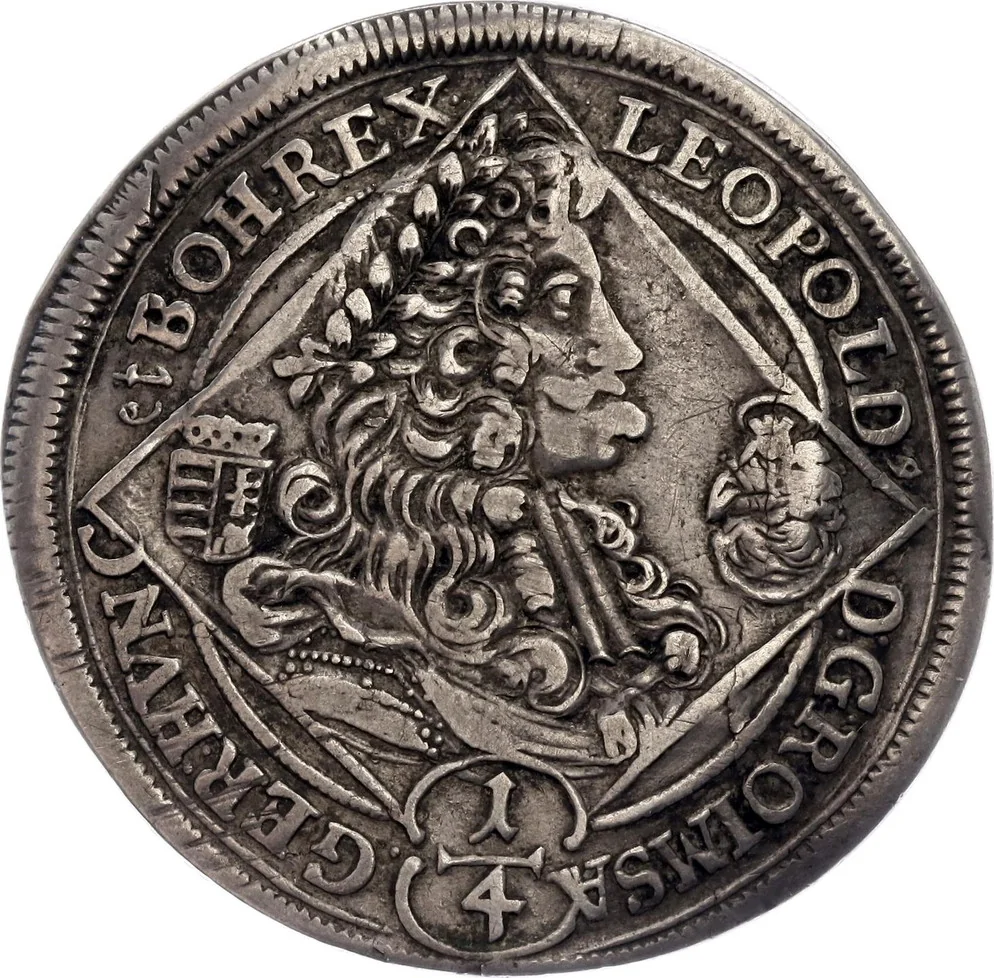
Bust, arms, and Madonna in a rhombus; value below. Legend encircled by four quartered pearl circles.
Inscription:
LEOPOLD · D · G · RO · IM · SA (1/4) GER · HVNG et BOH · REX ·
Script: Latin
Reverse
Description:
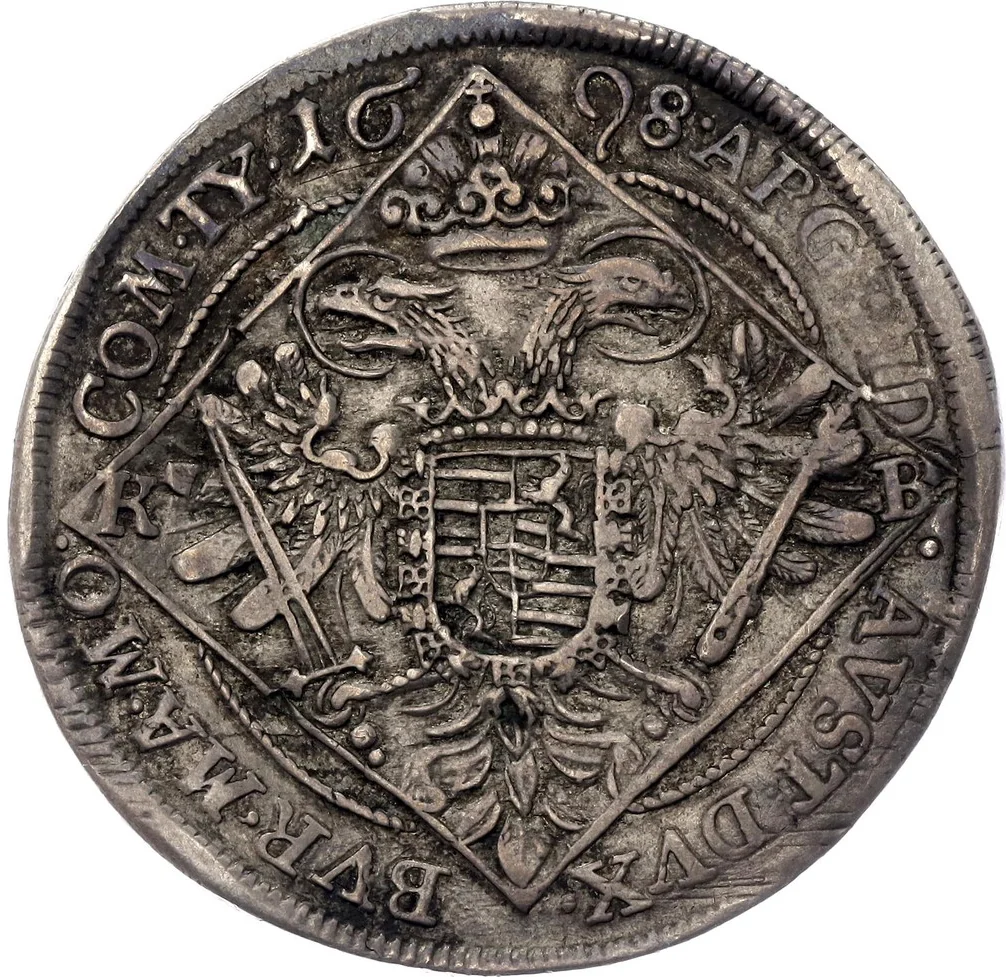
Imperial eagle in a rhombus. Legend within four quartered circles, date divided within it. Inscription varies: "MOR.MAR".
Inscription:
ARCHID · AVST · DVX · BVR · MA · MO : COM · TY 17 01
Script: Latin
Edge
Plain
Mints
| Name | Mark |
|---|---|
| Kremnica | KB |
Mintings
| Year | Mint Mark | Mintage | Quality | Collection |
|---|---|---|---|---|
| 1694 | K | — | ||
| 1695 | K | — | ||
| 1696 | K | — | ||
| 1698 | K | — | ||
| 1699 | K | — | ||
| 1700 | K | — | ||
| 1701 | K | — |
Historical background
In 1694, Hungary was a war-torn and fragmented kingdom, deeply entangled in the final stages of the Great Turkish War (1683-1699). The central authority was contested between the Habsburg Monarchy, which controlled Royal Hungary in the west and north, and the Ottoman Empire, which still held much of the central and southern territories. This political division created a chaotic and multi-layered monetary landscape. The primary circulating coins were the silver tallér (thaler) and the fractional krajcár (kreuzer), minted by the Habsburgs in places like Körmöcbánya (now Kremnica, Slovakia). However, these competed with older, often debased Hungarian issues, Ottoman akçe, and a flood of foreign coins from trade and mercenary armies, leading to widespread confusion over values.
The Habsburg government in Vienna, which was financing the massive military campaign against the Ottomans, faced severe fiscal strain. This pressure led to deliberate currency debasement. The silver content of the krajcár was steadily reduced to produce more coins from the same amount of bullion, a practice known as "coinage deterioration." The intent was to cover the immense costs of the war, but the consequence was rapid inflation and a loss of public trust in the currency. People hoarded older, full-weight coins, further exacerbating the shortage of reliable money in everyday transactions.
Furthermore, the economic devastation of decades of conflict crippled Hungary's productive capacity. Large swathes of arable land, particularly in the Great Hungarian Plain, were depopulated and laid waste, undermining the tax base and the kingdom's overall wealth. In this context, the currency situation of 1694 was not merely a monetary issue but a stark reflection of a country suffering from the compounded effects of foreign occupation, relentless warfare, and the Habsburg monarchy's expedient but damaging fiscal policies, all of which hindered economic stability and recovery.
The Habsburg government in Vienna, which was financing the massive military campaign against the Ottomans, faced severe fiscal strain. This pressure led to deliberate currency debasement. The silver content of the krajcár was steadily reduced to produce more coins from the same amount of bullion, a practice known as "coinage deterioration." The intent was to cover the immense costs of the war, but the consequence was rapid inflation and a loss of public trust in the currency. People hoarded older, full-weight coins, further exacerbating the shortage of reliable money in everyday transactions.
Furthermore, the economic devastation of decades of conflict crippled Hungary's productive capacity. Large swathes of arable land, particularly in the Great Hungarian Plain, were depopulated and laid waste, undermining the tax base and the kingdom's overall wealth. In this context, the currency situation of 1694 was not merely a monetary issue but a stark reflection of a country suffering from the compounded effects of foreign occupation, relentless warfare, and the Habsburg monarchy's expedient but damaging fiscal policies, all of which hindered economic stability and recovery.

💎 Extremely Rare