

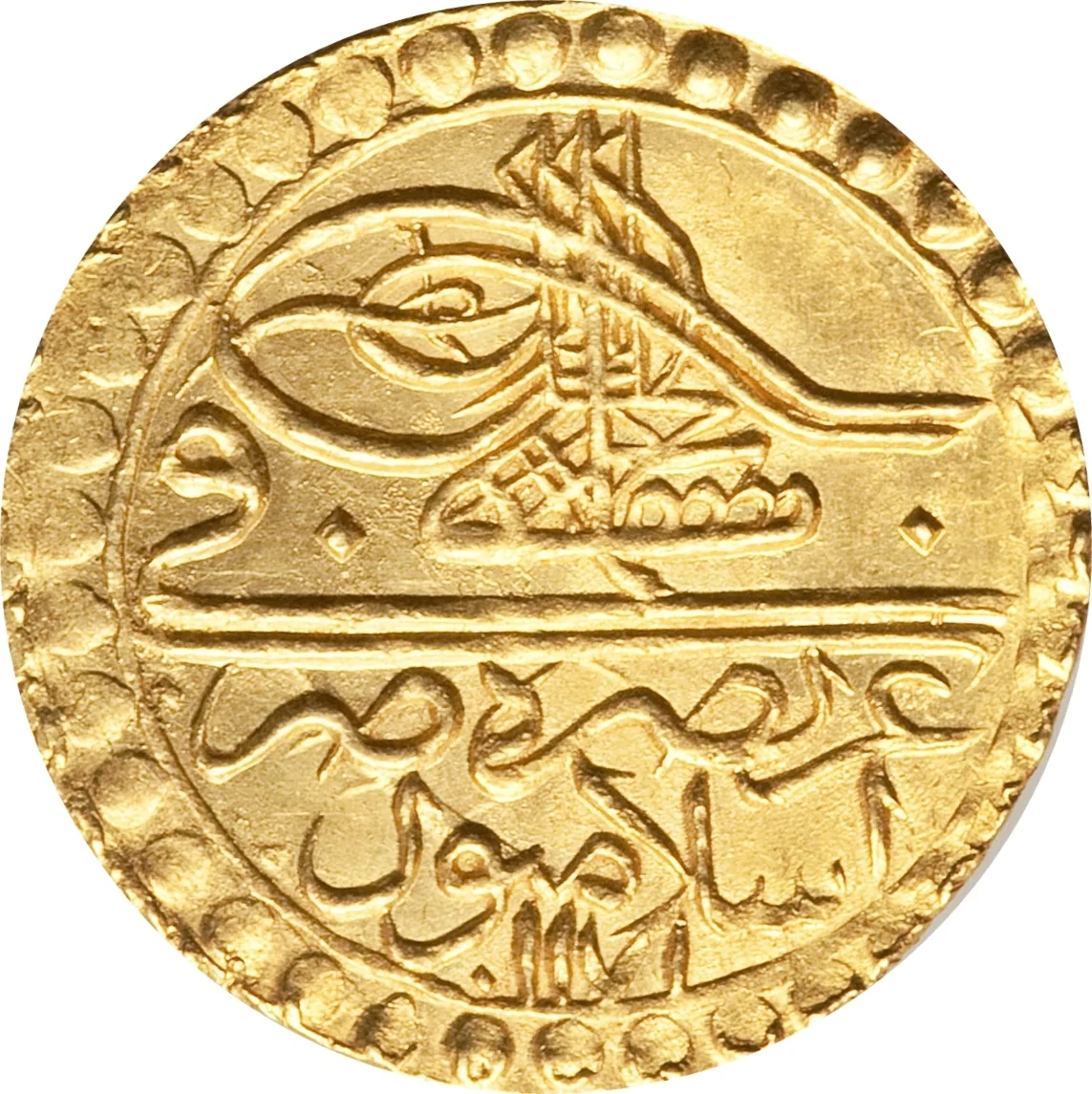
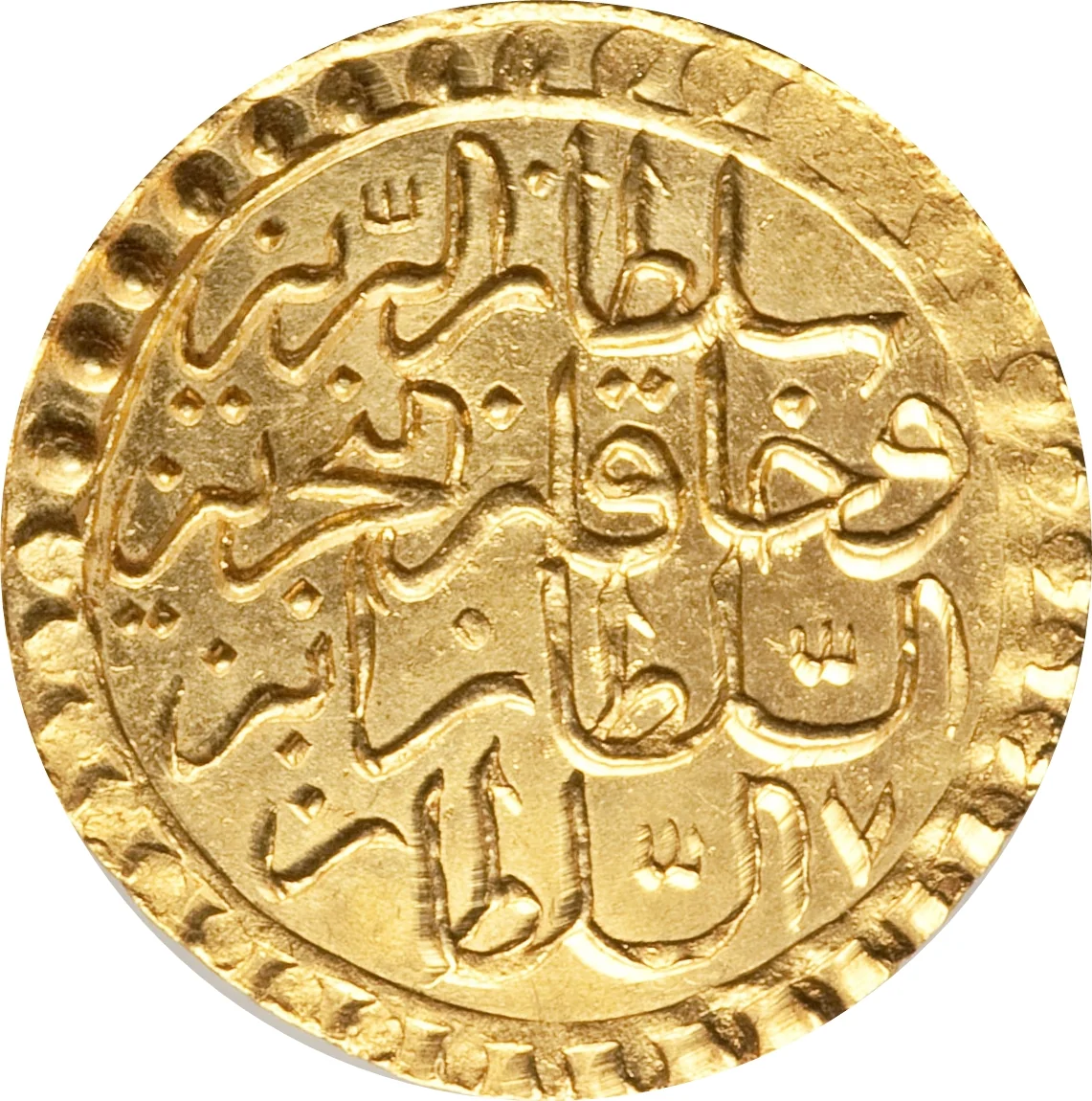
1 Zeri Mahbub – Ottoman Empire
Turkey
Context
Years: 1757–1765
Islamic (Hijri) Year: 1171
Country: Turkey 
Issuer: Ottoman Empire
Ruler: Mustafa III
Currency:
(1688—1844)
Demonetized: Yes
Material
References
KM: #Click to copy to clipboard334
Numista: #36941
Value
Bullion value: $433.40
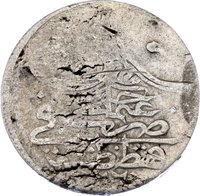
Obverse
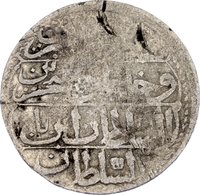
Reverse
Inscription:
Sultan ül berreyn
ve hakan ül bahreyn
es Sultan ibn
es Sultan 7
ve hakan ül bahreyn
es Sultan ibn
es Sultan 7
Script: Arabic
Edge
Mints
| Name | Mark |
|---|---|
| Constantinople | — |
Mintings
| Year | Mint Mark | Mintage | Quality | Collection |
|---|---|---|---|---|
| 1757 | — | — | ||
| 1758 | — | — | ||
| 1759 | — | — | ||
| 1760 | — | — | ||
| 1761 | — | — | ||
| 1762 | — | — | ||
| 1763 | — | — | ||
| 1764 | — | — | ||
| 1765 | — | — |
Historical background
In 1757, the Ottoman Empire's currency system was in a state of profound crisis, a direct consequence of prolonged fiscal mismanagement and the pressures of near-constant warfare. The empire operated on a bimetallic system, with the gold sultani and the silver akçe as its primary coins. However, decades of debasement—reducing the precious metal content in coins to fund state expenses—had severely eroded confidence. The silver akçe, once the backbone of daily transactions, had become so diminished and unstable that its value fluctuated wildly, disrupting markets and tax collection. This period fell within the "Great Debasement" era (c. 1585-1844), where the silver content of the akçe had been cut by over 90% across two centuries, with significant reductions occurring in the decades just prior to 1757.
The monetary chaos was exacerbated by the circulation of a multitude of foreign coins, particularly European silver thalers like the Dutch leeuwendaalder and the Austrian Conventionsthaler, which were preferred for their reliable silver content in both domestic and international trade. This effectively created a dual economy: stable foreign currency for large-scale commerce and devalued, unreliable Ottoman coinage for local and state affairs. The government's attempts to set fixed exchange rates (narh) between coin types repeatedly failed, as market rates diverged sharply from official decrees. Furthermore, provincial powers and local money-changers (sarrafs) often operated with significant autonomy, further fragmenting the monetary landscape.
Sultan Osman III, who ruled from 1754 to 1757, inherited this dire situation and his short reign did not allow for meaningful reform. The currency instability directly weakened the central state, as it struggled to pay its Janissary corps and bureaucracy with devalued coin, leading to unrest and corruption. It also strained the empire's economic vitality, discouraging long-term investment and complicating tax farming (iltizam), a primary revenue source. Thus, in 1757, the Ottoman monetary system was not merely an economic problem, but a critical symptom of imperial decline, reflecting a weakening central authority unable to control its most fundamental lever of economic power.
The monetary chaos was exacerbated by the circulation of a multitude of foreign coins, particularly European silver thalers like the Dutch leeuwendaalder and the Austrian Conventionsthaler, which were preferred for their reliable silver content in both domestic and international trade. This effectively created a dual economy: stable foreign currency for large-scale commerce and devalued, unreliable Ottoman coinage for local and state affairs. The government's attempts to set fixed exchange rates (narh) between coin types repeatedly failed, as market rates diverged sharply from official decrees. Furthermore, provincial powers and local money-changers (sarrafs) often operated with significant autonomy, further fragmenting the monetary landscape.
Sultan Osman III, who ruled from 1754 to 1757, inherited this dire situation and his short reign did not allow for meaningful reform. The currency instability directly weakened the central state, as it struggled to pay its Janissary corps and bureaucracy with devalued coin, leading to unrest and corruption. It also strained the empire's economic vitality, discouraging long-term investment and complicating tax farming (iltizam), a primary revenue source. Thus, in 1757, the Ottoman monetary system was not merely an economic problem, but a critical symptom of imperial decline, reflecting a weakening central authority unable to control its most fundamental lever of economic power.

✨ Legendary