

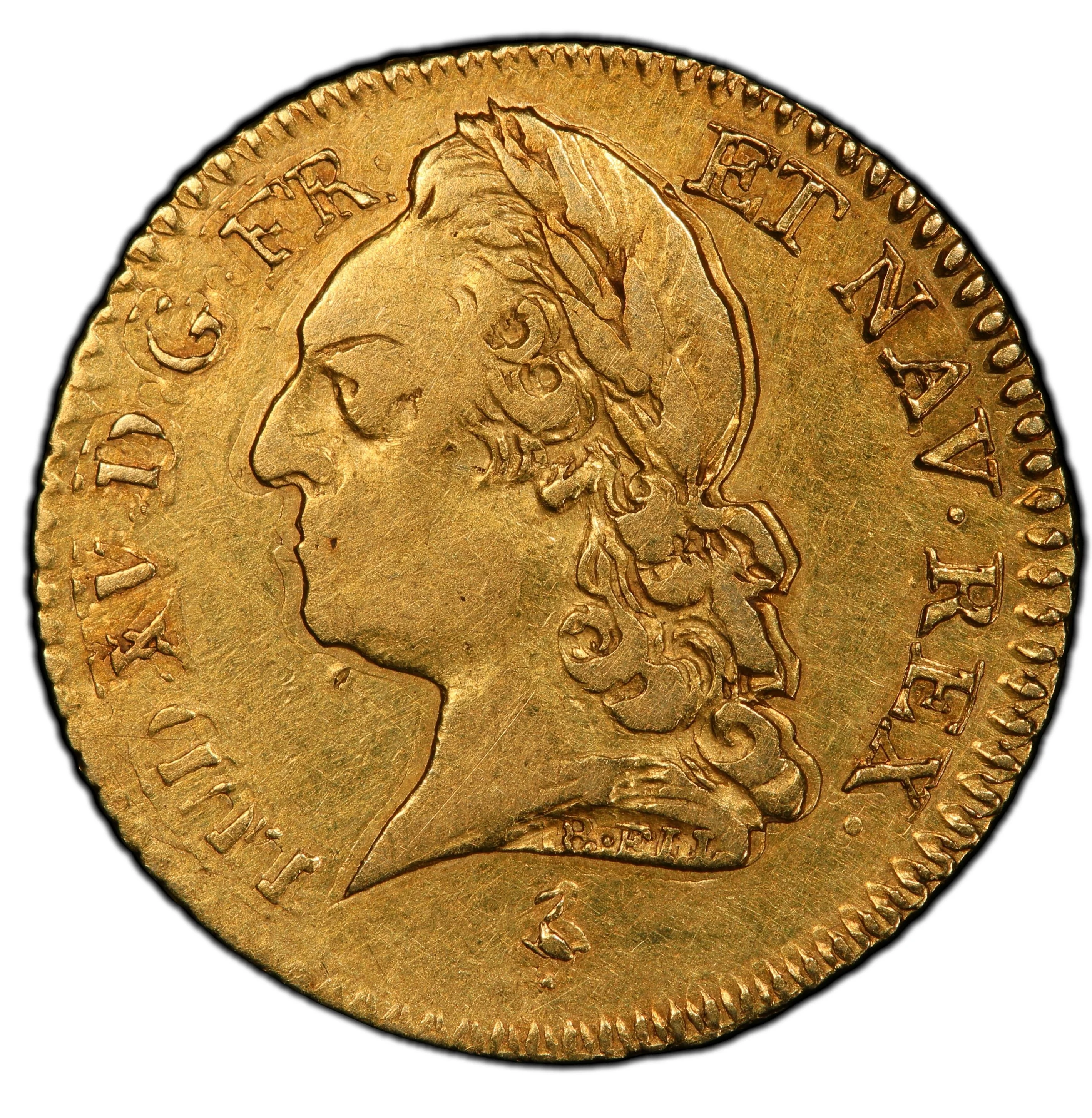
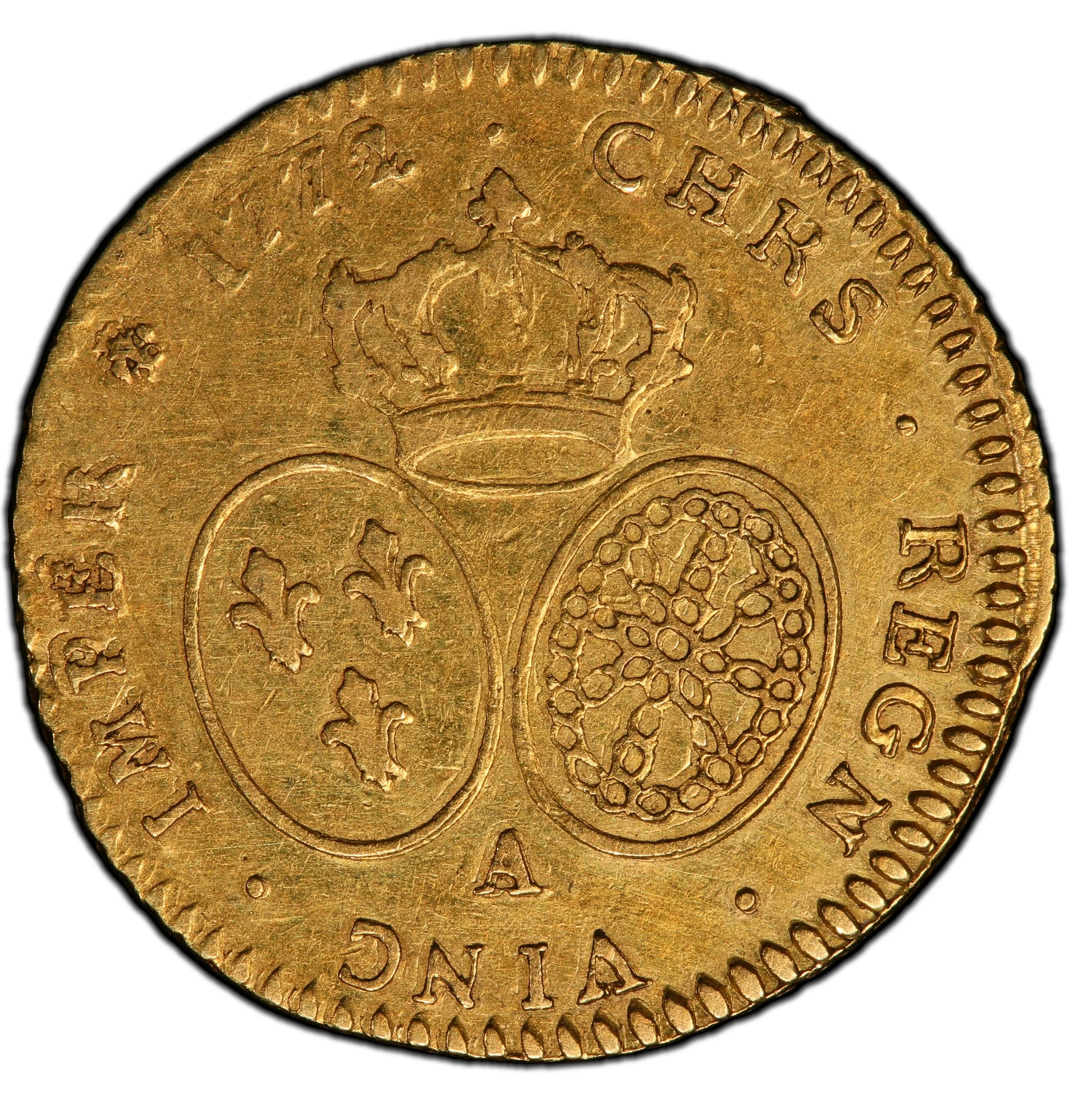
½ gold louis – France
Add to wishlist
France
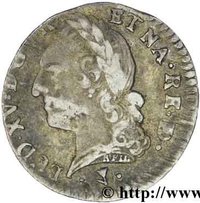
Obverse
Description:
Former Louis XV bust.
Inscription:
LUD • XV • D • G • FR • ET NAV • REX •
Script: Latin
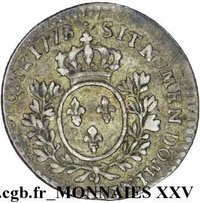
Reverse
Description:
Crown over the arms of France and Navarre.
Inscription:
CHRS • REGN • VINC • IMPER 1772
A
A
Script: Latin
Edge
Categories
| Person> Monarch |
| Symbols> Coat of Arms |
| Symbol> Fleur-de-lis |
Mints
| Name | Mark |
|---|---|
| Monnaie de Paris | A |
Mintings
| Year | Mint Mark | Mintage | Quality | Collection |
|---|---|---|---|---|
| 1772 | A | — |
Historical background
In 1772, France operated under a complex and strained monetary system that was a legacy of Louis XIV's costly wars and the financial experimentation of the previous decades. The official currency was the livre tournois, a unit of account, but the physical money in circulation was a chaotic mix of gold louis d'or, silver écus, and copper sous. Critically, the value of these coins was not fixed; it was periodically adjusted by royal decree, leading to confusion and instability. This system was further burdened by a proliferation of paper money—billets de monnaie—originally issued by the state to pay debts but which had severely depreciated due to over-issuance and lack of public confidence.
The core of the crisis lay in the disconnect between the nominal value of money and its metallic worth. France was on a de facto bimetallic standard, but the official ratios between gold and silver often failed to match market rates, causing one metal to be hoarded or exported. This, combined with the discredited paper notes, created chronic shortages of sound circulating currency for everyday commerce. The Controller General of Finances, Abbé Terray, who had taken office in 1769, was attempting a brutal stabilization. In 1770, he had partially repudiated the state's debt and was now pursuing a policy of revaluation, secretly recalling coins to be re-minted and issued with a higher face value, a form of devaluation that aimed to draw hoarded metal back into circulation and increase the crown's seigniorage revenue.
Terray's manipulations provided temporary fiscal relief for the monarchy but came at a significant economic and social cost. The sudden changes in coin values disrupted trade, penalized creditors, and bred deep distrust among merchants, financiers, and the public. This environment of monetary unpredictability exacerbated the Ancien Régime's fundamental fiscal weaknesses, where an inefficient tax system failed to support royal expenditures. While not the sole cause, the currency instability of this period, including the specific crises of the early 1770s, eroded confidence in royal financial management and contributed to the gathering storm of discontent that would culminate in the French Revolution less than two decades later.
The core of the crisis lay in the disconnect between the nominal value of money and its metallic worth. France was on a de facto bimetallic standard, but the official ratios between gold and silver often failed to match market rates, causing one metal to be hoarded or exported. This, combined with the discredited paper notes, created chronic shortages of sound circulating currency for everyday commerce. The Controller General of Finances, Abbé Terray, who had taken office in 1769, was attempting a brutal stabilization. In 1770, he had partially repudiated the state's debt and was now pursuing a policy of revaluation, secretly recalling coins to be re-minted and issued with a higher face value, a form of devaluation that aimed to draw hoarded metal back into circulation and increase the crown's seigniorage revenue.
Terray's manipulations provided temporary fiscal relief for the monarchy but came at a significant economic and social cost. The sudden changes in coin values disrupted trade, penalized creditors, and bred deep distrust among merchants, financiers, and the public. This environment of monetary unpredictability exacerbated the Ancien Régime's fundamental fiscal weaknesses, where an inefficient tax system failed to support royal expenditures. While not the sole cause, the currency instability of this period, including the specific crises of the early 1770s, eroded confidence in royal financial management and contributed to the gathering storm of discontent that would culminate in the French Revolution less than two decades later.
✨ Legendary