

½ gold louis – France
Add to wishlist
France
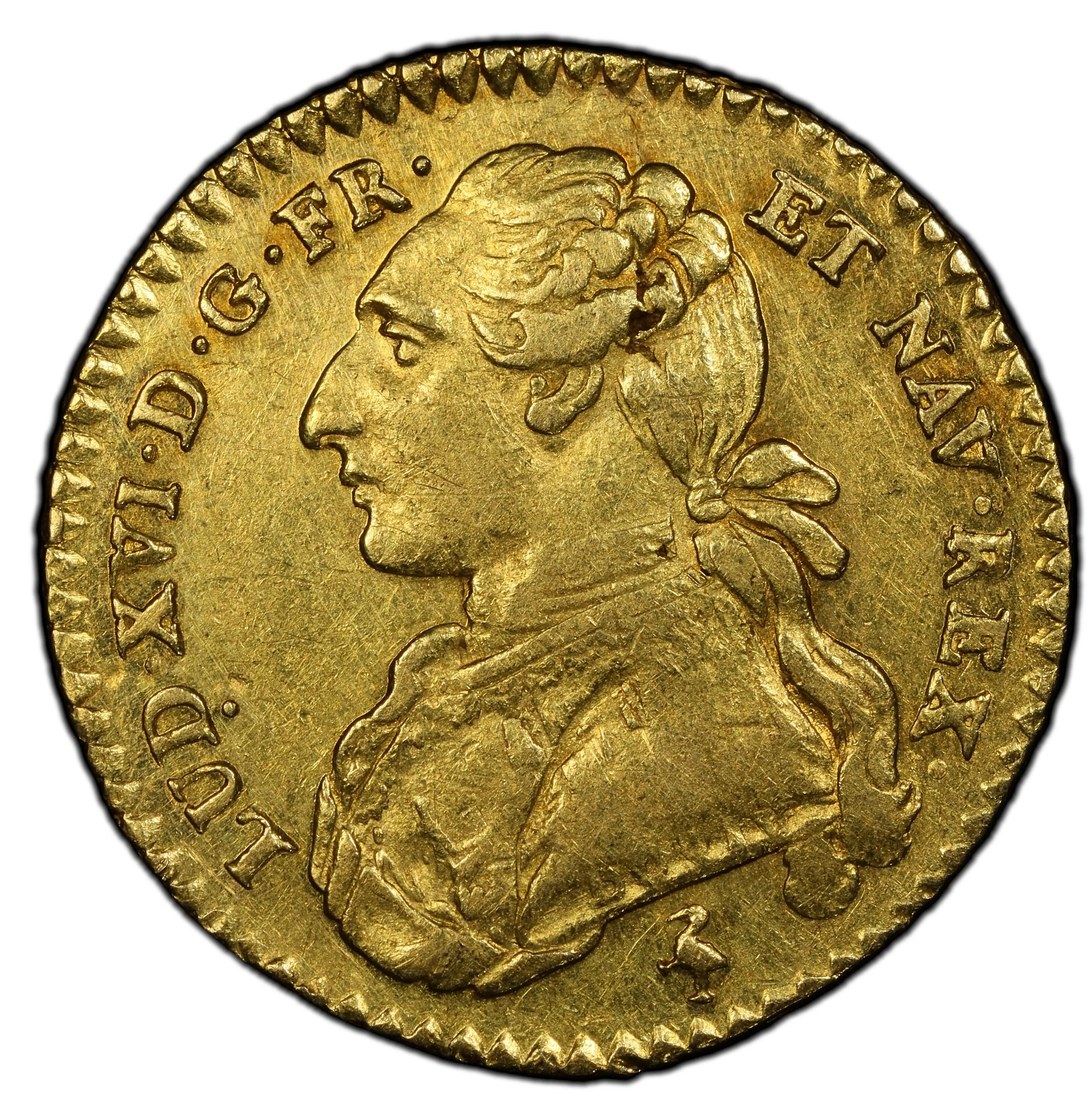
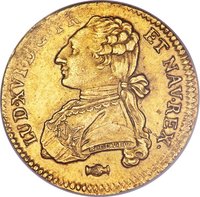
Obverse
Description:
Uniformed bust facing left.
Inscription:
LUD • XVI • D • G • FR • ET NAV • REX •
DUVIV
DUVIV
Script: Latin
Engraver: Pierre-Benjamin Duvivier
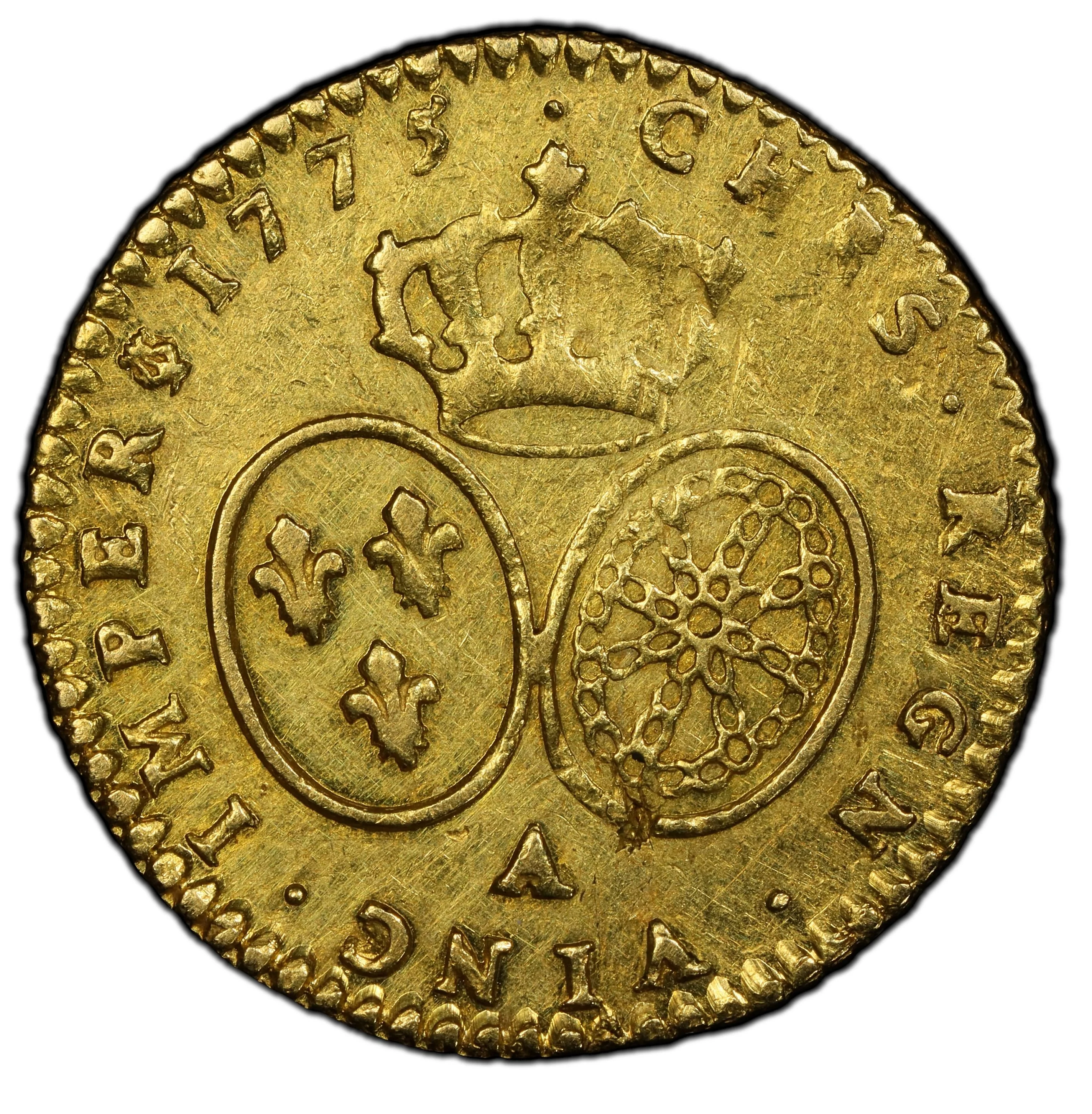
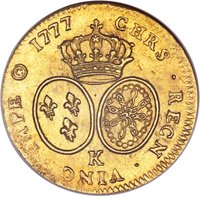
Reverse
Description:
Royal arms of France and Navarre.
Inscription:
CHRS • REGN • VINC • IMPER 1775
Script: Latin
Engraver: Pierre-Benjamin Duvivier
Edge
Categories
| Person> Monarch |
| Symbols> Coat of Arms |
| Symbol> Fleur-de-lis |
| Symbol> Crown |
Mints
| Name | Mark |
|---|---|
| Monnaie de Paris | A |
| Limoges | I |
| Bayonne | L |
Historical background
In 1775, France's currency system was a complex and fragile construct, teetering under the weight of the monarchy's profound financial crisis. The nation operated on a bimetallic standard, where both gold louis d'or and silver écus were legal tender, with their official exchange rates set by royal decree. However, these fixed rates often failed to reflect the fluctuating market values of the precious metals themselves, leading to chronic instability. More critically, the royal treasury was drowning in debt, exacerbated by the immense costs of the Seven Years' War (1756-1763) and ongoing support for the American Revolution. This necessitated repeated borrowing at high interest, pushing the state toward insolvency.
The financial strain manifested in a society already burdened by an archaic and unequal tax system. The peasantry and rising bourgeois class bore the heaviest obligations through the taille (land tax) and gabelle (salt tax), while the nobility and clergy were largely exempt. A series of poor harvests, culminating in the disastrous "Flour War" (Guerre des Farines) of 1775, saw grain prices skyrocket. This subsistence crisis caused widespread famine and popular riots, directly linking monetary instability to the daily suffering of the common people. The government's attempts to deregulate the grain trade, intended to stimulate the economy, only worsened public fury and distrust.
Against this backdrop, the currency itself became a point of tension. While not yet in a state of hyperinflation (that would come during the Revolution with the assignats), the monarchy's credit was evaporating. Controller-General of Finances Anne-Robert-Jacques Turgot, appointed in 1774, recognized the dire need for reform. His efforts to curb royal expenditure and introduce more equitable taxation, however, were fiercely opposed by the privileged parlements and court factions. Thus, in 1775, the currency situation was a symptom of a deeper structural malaise: a bankrupt absolute monarchy, unable to reform its finances without confronting the very foundations of its social order, setting the stage for the revolutionary turmoil to come.
The financial strain manifested in a society already burdened by an archaic and unequal tax system. The peasantry and rising bourgeois class bore the heaviest obligations through the taille (land tax) and gabelle (salt tax), while the nobility and clergy were largely exempt. A series of poor harvests, culminating in the disastrous "Flour War" (Guerre des Farines) of 1775, saw grain prices skyrocket. This subsistence crisis caused widespread famine and popular riots, directly linking monetary instability to the daily suffering of the common people. The government's attempts to deregulate the grain trade, intended to stimulate the economy, only worsened public fury and distrust.
Against this backdrop, the currency itself became a point of tension. While not yet in a state of hyperinflation (that would come during the Revolution with the assignats), the monarchy's credit was evaporating. Controller-General of Finances Anne-Robert-Jacques Turgot, appointed in 1774, recognized the dire need for reform. His efforts to curb royal expenditure and introduce more equitable taxation, however, were fiercely opposed by the privileged parlements and court factions. Thus, in 1775, the currency situation was a symptom of a deeper structural malaise: a bankrupt absolute monarchy, unable to reform its finances without confronting the very foundations of its social order, setting the stage for the revolutionary turmoil to come.
✨ Legendary