

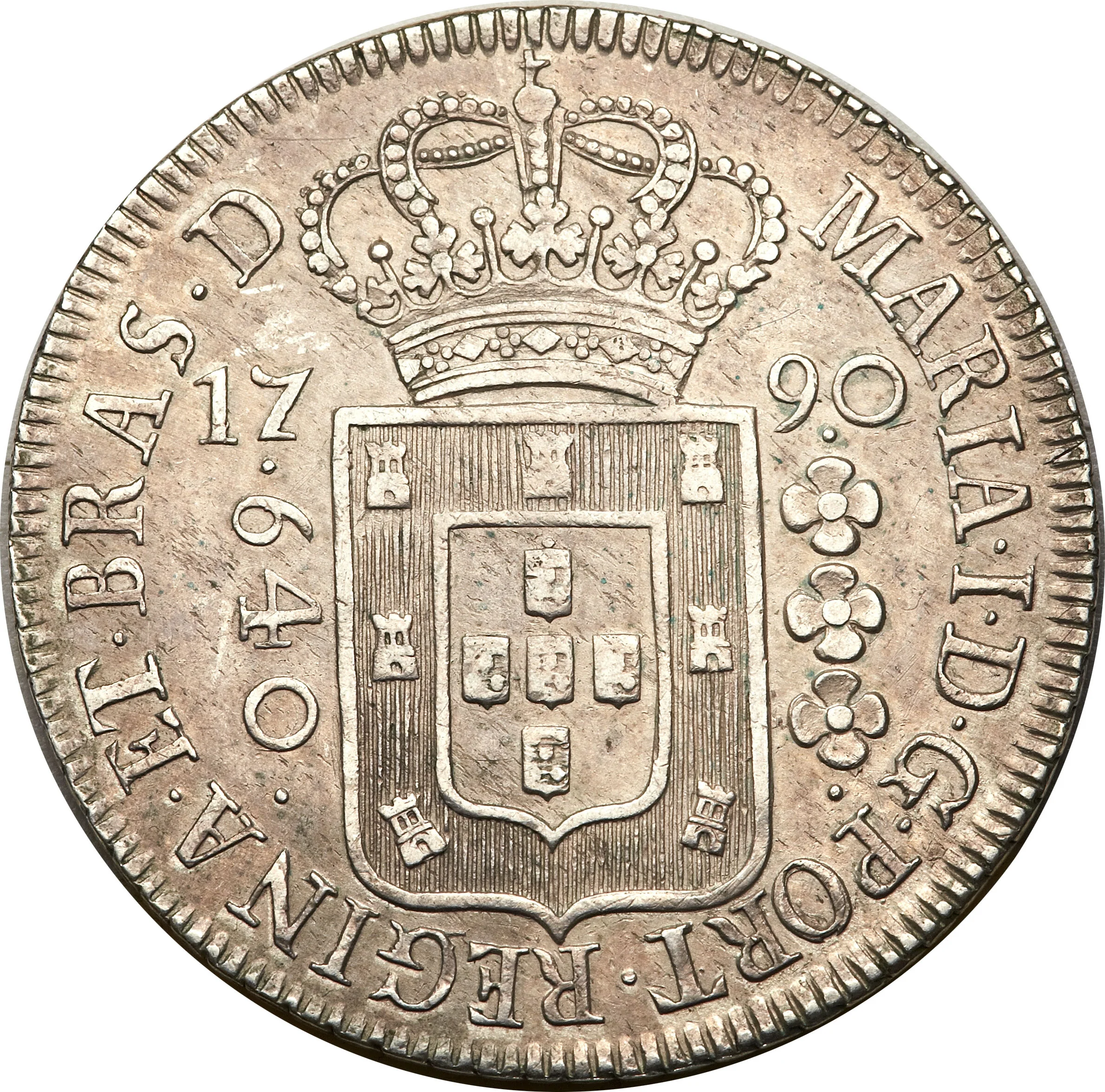

Obverse
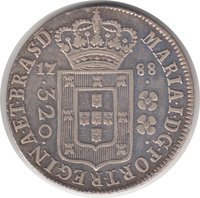
Description:
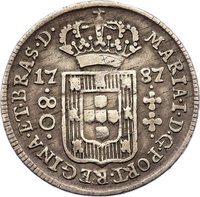
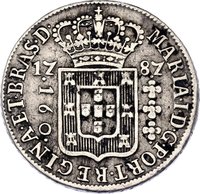
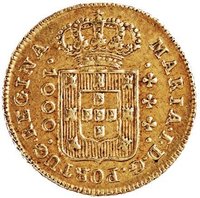
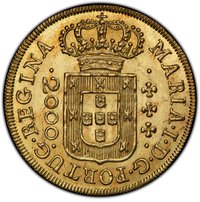
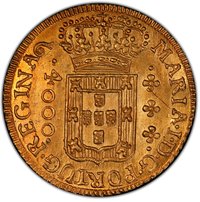
Portuguese arms between 640 and three flowers, with date.
Inscription:
MARIA. I. D. G. PORT. REGINA.ET. BRAS. D
640
+++
640
+++
Script: Latin
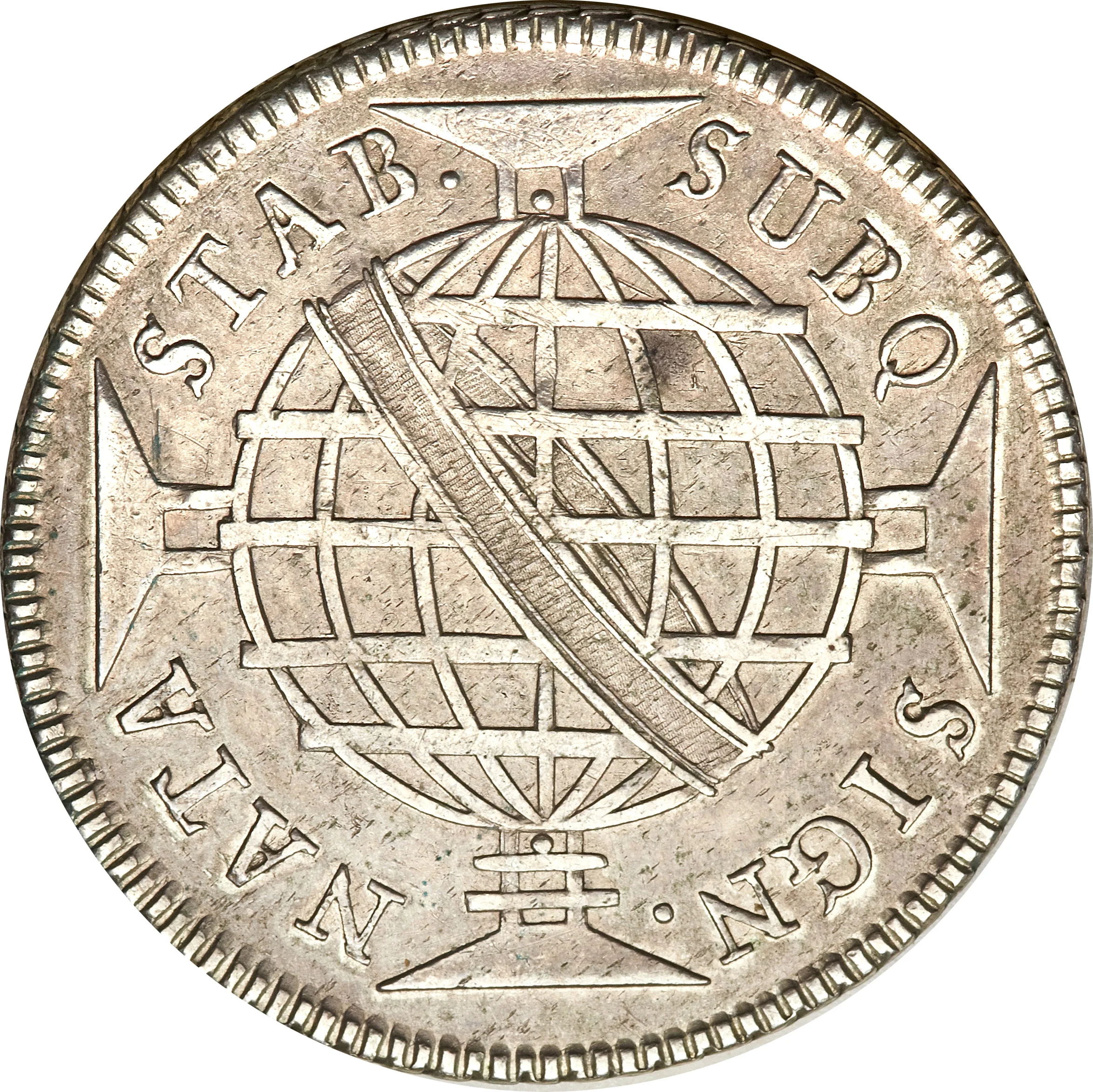
Reverse
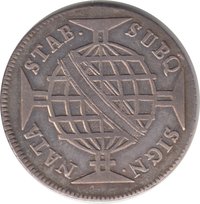
Description:
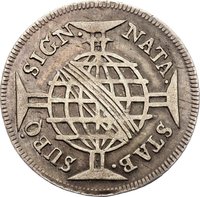
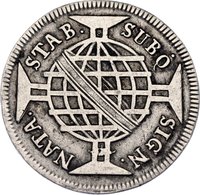
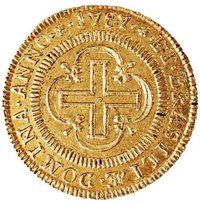
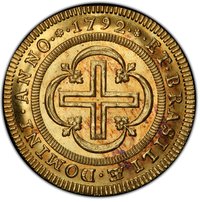
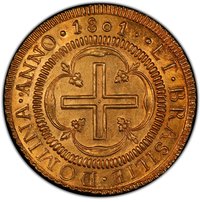
An armillary sphere before the Order of Christ cross, with or without mintmark.
Inscription:
SVBQ SIGN NATA STAB
Script: Latin
Edge
Reeded.
Mints
| Name | Mark |
|---|---|
| Imprensa Nacional - Casa da Moeda | — |
| Casa da Moeda do Brasil | R |
Mintings
Historical background
In 1787, Brazil operated under a complex and often chaotic monetary system inherited from its colonial status under Portugal. The primary circulating currency was the réis (plural: réis), a low-value copper coin that formed the backbone of everyday transactions. However, the money supply was a disorganized mix of coins from not only Portugal but also other European empires and their colonies, leading to chronic shortages of official currency. This scarcity was exacerbated by Portugal's mercantilist policies, which drained gold and silver from the Brazilian mines to the metropolis, leaving the colony with insufficient precious metal for minting higher-value coins.
To compensate for this shortage, a widespread practice of using provisional money emerged. Local authorities, merchants, and even religious brotherhoods issued their own paper notes, known as bilhetes or vales, which promised to pay the bearer in official currency. While these notes facilitated local commerce, they lacked standardization and were prone to counterfeiting and depreciation. Furthermore, the Portuguese crown had officially banned such practices, creating a tension between the economic necessities of the colony and the legal authority of the metropole. The system was further complicated by the use of commodity money, such as sugar and tobacco, in certain regions, especially in the northeast.
The year 1787 fell within the administration of the Viceroy Luís de Vasconcelos e Sousa (1778-1790), a period marked by attempts at administrative reform but little resolution of the monetary crisis. The underlying issue was Brazil's dependent economic structure: its role was to export raw materials (gold, sugar, cotton) and import manufactured goods, a relationship that systematically drained hard currency. This unstable and fragmented monetary environment hindered internal trade, fostered regional economic disparities, and contributed to growing discontent among the colonial elite. It was a symptom of the broader tensions that would, within a few decades, fuel the movements for Brazilian independence.
To compensate for this shortage, a widespread practice of using provisional money emerged. Local authorities, merchants, and even religious brotherhoods issued their own paper notes, known as bilhetes or vales, which promised to pay the bearer in official currency. While these notes facilitated local commerce, they lacked standardization and were prone to counterfeiting and depreciation. Furthermore, the Portuguese crown had officially banned such practices, creating a tension between the economic necessities of the colony and the legal authority of the metropole. The system was further complicated by the use of commodity money, such as sugar and tobacco, in certain regions, especially in the northeast.
The year 1787 fell within the administration of the Viceroy Luís de Vasconcelos e Sousa (1778-1790), a period marked by attempts at administrative reform but little resolution of the monetary crisis. The underlying issue was Brazil's dependent economic structure: its role was to export raw materials (gold, sugar, cotton) and import manufactured goods, a relationship that systematically drained hard currency. This unstable and fragmented monetary environment hindered internal trade, fostered regional economic disparities, and contributed to growing discontent among the colonial elite. It was a symptom of the broader tensions that would, within a few decades, fuel the movements for Brazilian independence.
Series: 1787 Brazil circulation coins
💎 Very Rare