

cruzado novo – Portugal
Add to wishlist
Portugal
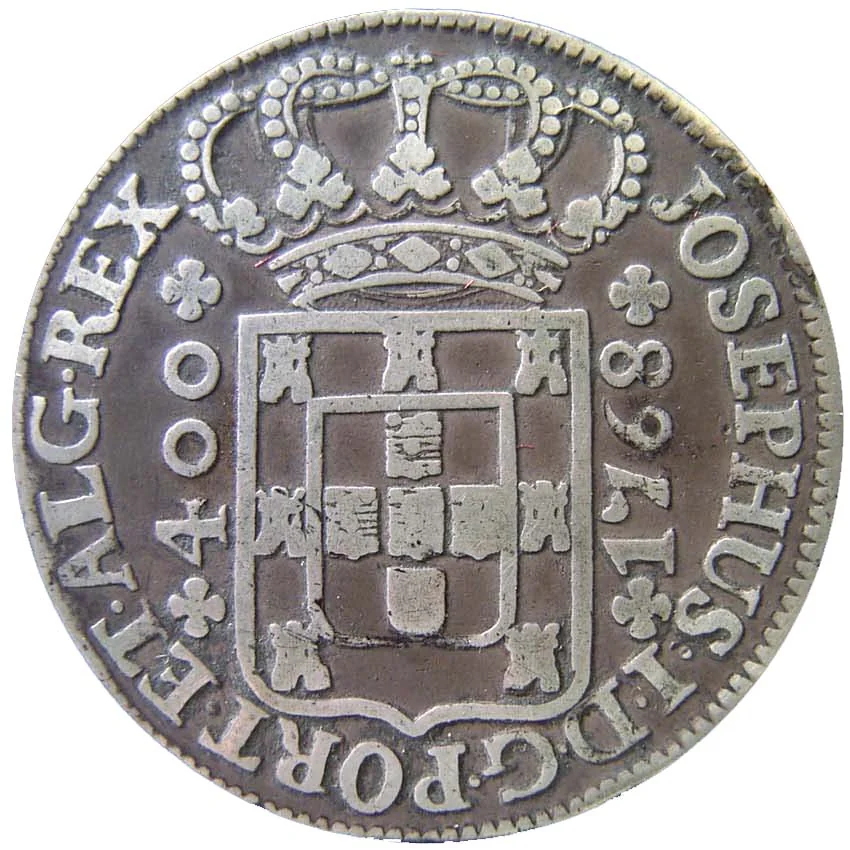
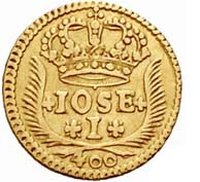
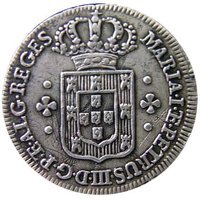
Obverse
Description:
Crowned Portuguese arms flanked by value and year, with Latin inscriptions around the edge.
Inscription:
JOSEPHUS I D G PORT ET ALG REX
*400*
*1768*
*400*
*1768*
Script: Latin
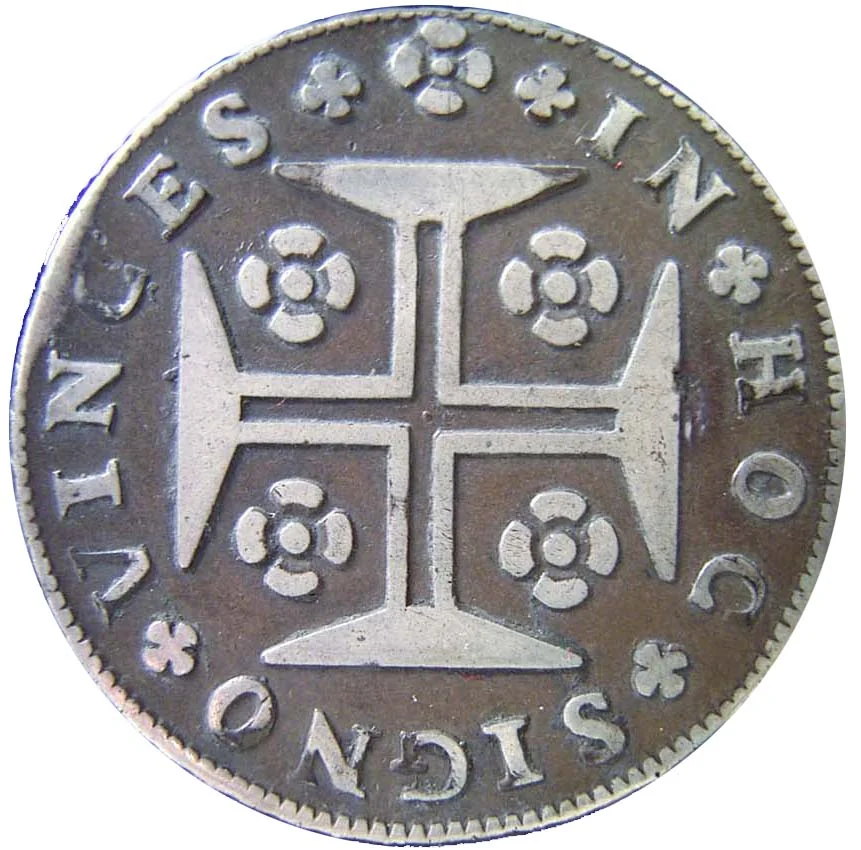
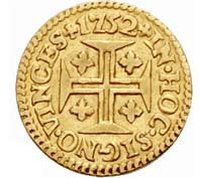
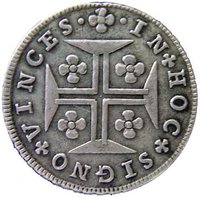
Reverse
Description:
Cross of the Order of Christ with corner rosettes and peripheral Latin inscriptions.
Inscription:
IN HOC SIGNO VINCES
Script: Latin
Edge
Rope shaped
Categories
| Symbols> Coat of Arms |
| Symbol> Cross |
Mints
| Name | Mark |
|---|---|
| Imprensa Nacional - Casa da Moeda | — |
Mintings
| Year | Mint Mark | Mintage | Quality | Collection |
|---|---|---|---|---|
| 1762 | — | — | ||
| 1763 | — | — | ||
| 1766 | — | — | ||
| 1768 | — | — | ||
| 1774 | — | — | ||
| 1775 | — | — |
Historical background
In 1762, Portugal's currency situation was one of profound instability and debasement, a direct consequence of the immense economic strain caused by the Seven Years' War (1756-1763). Under the reformist government of the Marquis of Pombal, King José I's chief minister, the treasury was desperately financing military campaigns, particularly during the brief Spanish invasion of 1762 known as the Fantastic War. To meet these colossal expenses, the royal mint in Lisbon engaged in aggressive monetary debasement, significantly reducing the precious metal content—especially silver—in newly minted coins like the cruzado and tostão. This practice, while providing immediate liquidity, eroded public trust and fueled inflation, as the intrinsic value of coins fell far below their face value.
This crisis was exacerbated by a long-standing scarcity of gold, despite Brazil being a major source of the metal for the Portuguese Empire. Much of the Brazilian gold was shipped directly to England to service trade deficits and pay for manufactured goods, under the terms of the Methuen Treaty (1703), leaving the domestic economy chronically short of specie. Furthermore, the widespread circulation of foreign coins, particularly Spanish pieces of eight, alongside devalued domestic coinage, created a chaotic and inefficient monetary environment. Gresham's law—where "bad money drives out good"—was in full effect, as people hoarded older, higher-value coins and used the new, inferior ones for transactions.
Pombal's government recognized the severity of the problem and had already begun to lay the groundwork for a solution. In the years leading up to 1762, efforts were made to curb the outflow of gold and establish more state control over the economy. The immediate response to the wartime crisis, however, was further debasement. The full reckoning and a major monetary reform would come shortly after the war's end, culminating in the sweeping reforms of 1766-1768. These later reforms aimed to stabilize the currency by introducing new, standardized coinage and attempting to restore confidence in the Portuguese monetary system, marking the end of the particularly acute crisis witnessed in 1762.
This crisis was exacerbated by a long-standing scarcity of gold, despite Brazil being a major source of the metal for the Portuguese Empire. Much of the Brazilian gold was shipped directly to England to service trade deficits and pay for manufactured goods, under the terms of the Methuen Treaty (1703), leaving the domestic economy chronically short of specie. Furthermore, the widespread circulation of foreign coins, particularly Spanish pieces of eight, alongside devalued domestic coinage, created a chaotic and inefficient monetary environment. Gresham's law—where "bad money drives out good"—was in full effect, as people hoarded older, higher-value coins and used the new, inferior ones for transactions.
Pombal's government recognized the severity of the problem and had already begun to lay the groundwork for a solution. In the years leading up to 1762, efforts were made to curb the outflow of gold and establish more state control over the economy. The immediate response to the wartime crisis, however, was further debasement. The full reckoning and a major monetary reform would come shortly after the war's end, culminating in the sweeping reforms of 1766-1768. These later reforms aimed to stabilize the currency by introducing new, standardized coinage and attempting to restore confidence in the Portuguese monetary system, marking the end of the particularly acute crisis witnessed in 1762.
💎 Very Rare