

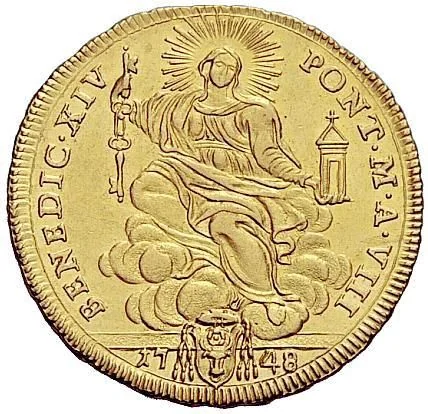
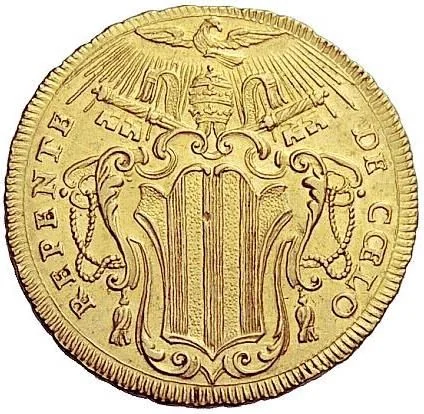
2 Zecchini – Papal States
Vatican City
Context
Year: 1748
Country: Vatican City 
Issuer: Papal States
Ruler: Benedict XIV
Currency:
(1534—1835)
Demonetized: Yes
References
KM: #Click to copy to clipboard956
Numista: #360797
Value
Bullion value: $1148.16
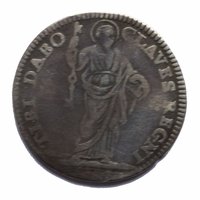
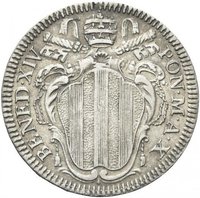
Obverse
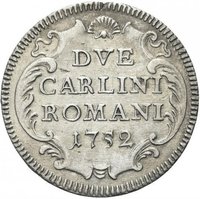
Reverse
Edge
Mints
| Name | Mark |
|---|---|
| Rome | — |
Mintings
| Year | Mint Mark | Mintage | Quality | Collection |
|---|---|---|---|---|
| 1748 | — | — |
Historical background
In 1748, the Papal States found itself in a complex and challenging monetary situation, typical of many Italian states in the mid-18th century. The system was characterized by a bewildering multiplicity of coins in circulation, including those issued by the papal mint in Rome, older regional issues from cities like Bologna and Ancona, and a vast array of foreign currencies from other Italian states, Spain, France, and the Austrian Empire. This created a chaotic exchange environment where the value of money was not uniform across the territories, hindering trade and efficient taxation. Furthermore, the intrinsic metal value of coins often differed from their nominal face value, leading to frequent speculation, clipping, and the outflow of full-weight silver.
The underlying problem was one of chronic fiscal weakness. The Papal States' revenue, derived from land taxes, customs duties, and ecclesiastical levies, was often insufficient to cover the administrative costs and the lavish expenditures of the papal court. To meet shortfalls, the government frequently resorted to debasement—reducing the precious metal content in new coinage while maintaining the old face value. This practice, essentially a form of inflation, eroded public trust in the currency and exacerbated economic instability. The year 1748 fell within the pontificate of Benedict XIV (1740-1758), who was notably reform-minded but faced an entrenched and inefficient financial bureaucracy that resisted systematic modernization.
Consequently, while there were no major monetary reforms enacted specifically in 1748, the year existed within a period of acknowledged crisis and slow-moving administrative response. Pope Benedict XIV was aware of the issues and had begun efforts to centralize and improve the management of state finances, which included attempts to standardize measures and address the coinage problem. However, a comprehensive reform of the monetary system would not be achieved until later in the century. Thus, the currency situation in 1748 was one of fragmented complexity, fiscal pressure, and a growing recognition of the need for reform that was difficult to implement within the ancient structures of the temporal papal government.
The underlying problem was one of chronic fiscal weakness. The Papal States' revenue, derived from land taxes, customs duties, and ecclesiastical levies, was often insufficient to cover the administrative costs and the lavish expenditures of the papal court. To meet shortfalls, the government frequently resorted to debasement—reducing the precious metal content in new coinage while maintaining the old face value. This practice, essentially a form of inflation, eroded public trust in the currency and exacerbated economic instability. The year 1748 fell within the pontificate of Benedict XIV (1740-1758), who was notably reform-minded but faced an entrenched and inefficient financial bureaucracy that resisted systematic modernization.
Consequently, while there were no major monetary reforms enacted specifically in 1748, the year existed within a period of acknowledged crisis and slow-moving administrative response. Pope Benedict XIV was aware of the issues and had begun efforts to centralize and improve the management of state finances, which included attempts to standardize measures and address the coinage problem. However, a comprehensive reform of the monetary system would not be achieved until later in the century. Thus, the currency situation in 1748 was one of fragmented complexity, fiscal pressure, and a growing recognition of the need for reform that was difficult to implement within the ancient structures of the temporal papal government.
✨ Legendary