

12 Vinténs – Portugal
Portugal
Context
Material
References
KM: #Click to copy to clipboard247
Numista: #36011
Value
Bullion value: $18.37
Obverse
Description:
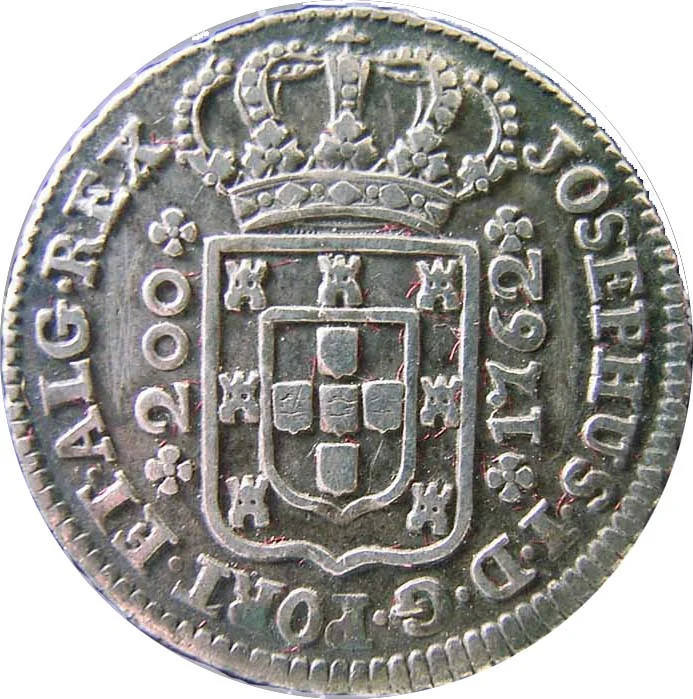
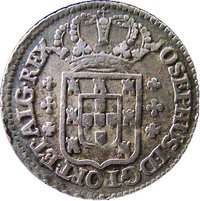
Portuguese royal arms, crowned. Value left, year right. Legends around.
Inscription:
JOSEPHUS.I.D.G.PORT.ET.ALG.REX
200
200
Script: Latin
Reverse
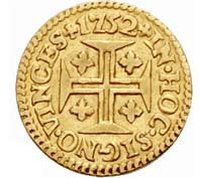
Description:
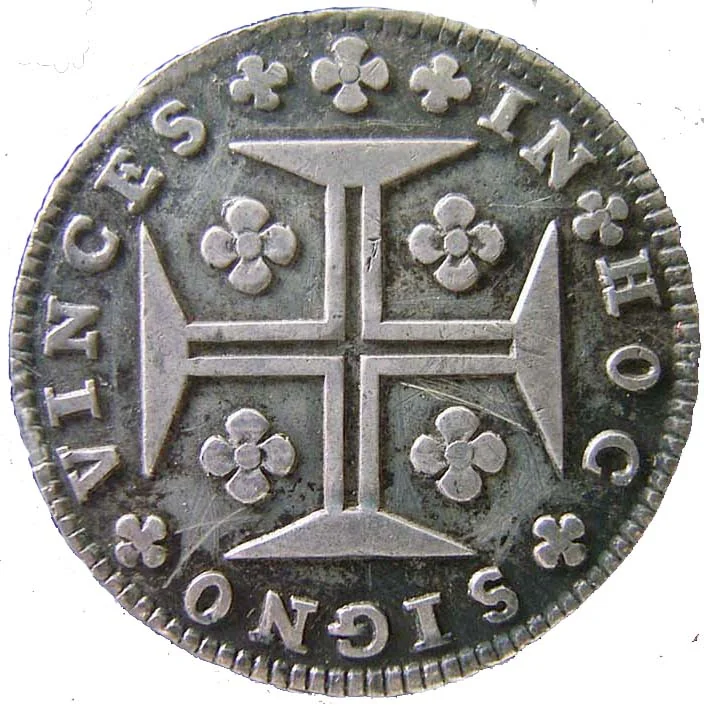
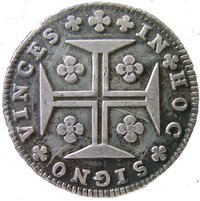
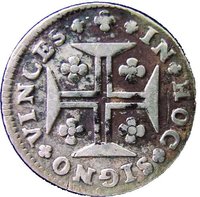
Cross of Christ with corner rosettes, encircled by motto.
Inscription:
IN HOC SIGNO VINCES
Script: Latin
Edge
Rope shaped
Mints
| Name | Mark |
|---|---|
| Imprensa Nacional - Casa da Moeda | — |
Mintings
| Year | Mint Mark | Mintage | Quality | Collection |
|---|---|---|---|---|
| 1752 | — | 281,876 | ||
| 1753 | — | 34,591 | ||
| 1762 | — | — | ||
| 1763 | — | — | ||
| 1766 | — | — | ||
| 1767 | — | — | ||
| 1768 | — | — | ||
| 1774 | — | 30,961 | ||
| 1775 | — | 44,603 |
Historical background
In 1752, Portugal's currency situation was characterized by significant instability and complexity, largely a legacy of the preceding decades. The discovery of vast gold deposits in Brazil, particularly in Minas Gerais, had led to a massive influx of precious metals into the Portuguese economy starting in the late 1600s. However, rather than stabilizing the currency, this wealth contributed to inflation and a chronic shortage of small-denomination coinage for daily transactions. The monetary system was a confusing patchwork, with values often calculated in the old unit of account, the réis, but with a circulation of both domestic and foreign coins, including Spanish pieces of eight and gold moedas, all subject to fluctuating valuations.
This chaotic environment was a major concern for the powerful Prime Minister, Sebastião José de Carvalho e Melo, the future Marquês de Pombal, who was then consolidating his authority. The kingdom faced a specific crisis: a severe shortage of fractional copper coinage, which crippled market exchanges and petty commerce. In response, 1752 saw a direct and consequential intervention—the issuance of a new series of copper coins, ordered by royal decree. These coins, minted in Lisbon and Porto, were intended to standardize the lower end of the monetary spectrum and stimulate the internal economy by providing a reliable medium for everyday trade.
The 1752 coinage reform was a pragmatic step within Pombal's broader mercantilist agenda to strengthen the Portuguese state and economy. While it addressed the immediate shortage, the underlying structural weaknesses, including a trade deficit with England paid in gold, persisted. Thus, the currency situation in this period reflects a transitional moment: an attempt to impose order on a system still fundamentally strained by colonial wealth, external dependencies, and the challenges of modernizing a pre-industrial economy.
This chaotic environment was a major concern for the powerful Prime Minister, Sebastião José de Carvalho e Melo, the future Marquês de Pombal, who was then consolidating his authority. The kingdom faced a specific crisis: a severe shortage of fractional copper coinage, which crippled market exchanges and petty commerce. In response, 1752 saw a direct and consequential intervention—the issuance of a new series of copper coins, ordered by royal decree. These coins, minted in Lisbon and Porto, were intended to standardize the lower end of the monetary spectrum and stimulate the internal economy by providing a reliable medium for everyday trade.
The 1752 coinage reform was a pragmatic step within Pombal's broader mercantilist agenda to strengthen the Portuguese state and economy. While it addressed the immediate shortage, the underlying structural weaknesses, including a trade deficit with England paid in gold, persisted. Thus, the currency situation in this period reflects a transitional moment: an attempt to impose order on a system still fundamentally strained by colonial wealth, external dependencies, and the challenges of modernizing a pre-industrial economy.
⭐ Somewhat Rare