

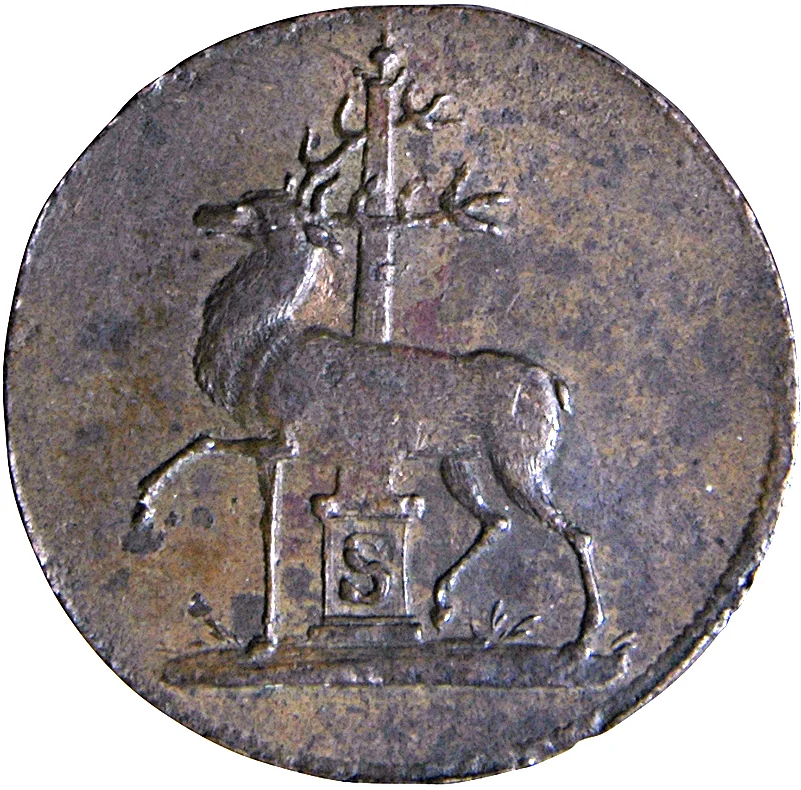
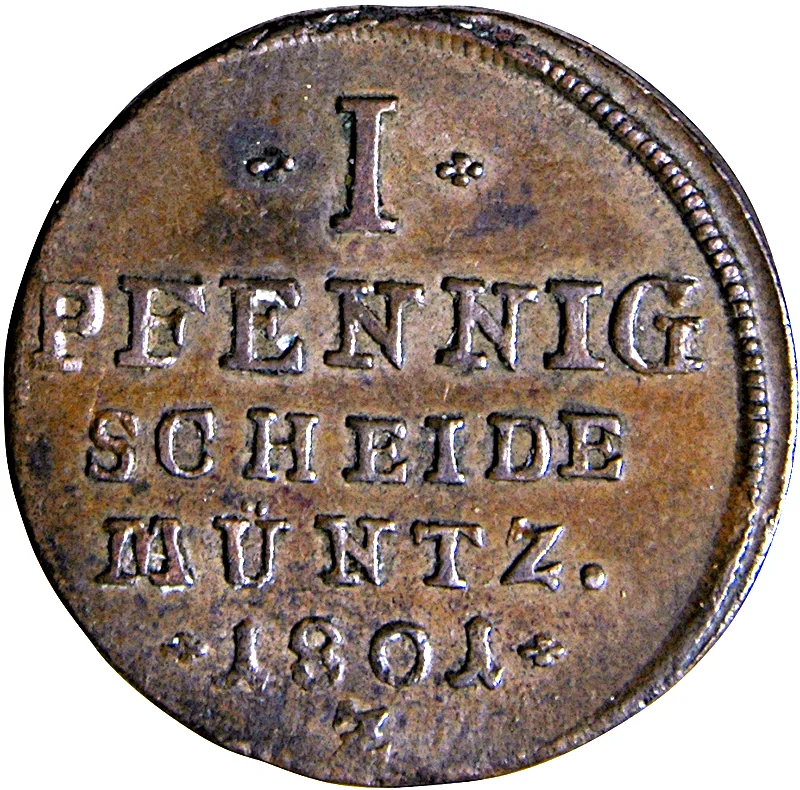
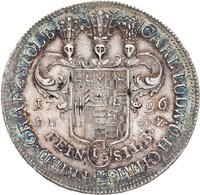
Obverse
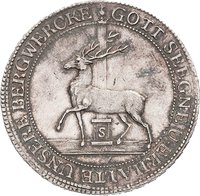
Reverse
Description:
Denomination and date in five lines.
Inscription:
* I *
PFENNIG
SCHEIDE
MUNTZ.
* 1801 *
Z
PFENNIG
SCHEIDE
MUNTZ.
* 1801 *
Z
Script: Latin
Edge
Plain
Mints
| Name | Mark |
|---|---|
| Stolberg, Harz | — |
Mintings
| Year | Mint Mark | Mintage | Quality | Collection |
|---|---|---|---|---|
| 1799 | — | — | ||
| 1801 | — | — |
Historical background
In 1799, the currency situation in the County of Stolberg-Stolberg and the County of Stolberg-Rossla was complex and fragmented, reflecting the broader monetary disarray of the Holy Roman Empire. Both counties, though ruled by separate branches of the House of Stolberg, were small, non-sovereign territories embedded within the economic sphere of larger states. Consequently, they did not issue their own independent coinage but operated within a multi-currency environment. The most authoritative and widely accepted currency in daily transactions and official matters was the Reichsthaler (Imperial Thaler), as defined by the imperial coinage ordinances of the Empire. However, its physical circulation was limited, serving more as a unit of account.
In practice, a variety of actual circulating coins were used, primarily those minted by neighboring and influential regional powers. The most prominent of these were the Prussian Thaler and Groschen, given Prussia's political and economic dominance in northern Germany. Additionally, coins from the Electorate of Saxony and other adjacent states would have circulated freely, their value determined by local exchange rates that often fluctuated. This necessitated the constant use of currency conversion tables (Wechseltabellen) published by merchants and authorities, as the intrinsic silver content and nominal values of coins from different mints varied significantly.
The year 1799 placed this system under particular strain due to the inflationary pressures and economic dislocation caused by the ongoing French Revolutionary Wars. While the Stolberg counties were not direct battlefields, the conflict disrupted trade and exacerbated the chronic shortage of high-quality small change (Kleingeld), leading to inconveniences in everyday market transactions. Ultimately, the monetary landscape in Stolberg-Stolberg and Stolberg-Rossla was one of dependent complexity, lacking sovereignty, defined by the circulation of foreign coins, and strained by the wider economic turmoil of the era—a microcosm of the Empire's archaic financial structures on the eve of the Napoleonic reorganizations.
In practice, a variety of actual circulating coins were used, primarily those minted by neighboring and influential regional powers. The most prominent of these were the Prussian Thaler and Groschen, given Prussia's political and economic dominance in northern Germany. Additionally, coins from the Electorate of Saxony and other adjacent states would have circulated freely, their value determined by local exchange rates that often fluctuated. This necessitated the constant use of currency conversion tables (Wechseltabellen) published by merchants and authorities, as the intrinsic silver content and nominal values of coins from different mints varied significantly.
The year 1799 placed this system under particular strain due to the inflationary pressures and economic dislocation caused by the ongoing French Revolutionary Wars. While the Stolberg counties were not direct battlefields, the conflict disrupted trade and exacerbated the chronic shortage of high-quality small change (Kleingeld), leading to inconveniences in everyday market transactions. Ultimately, the monetary landscape in Stolberg-Stolberg and Stolberg-Rossla was one of dependent complexity, lacking sovereignty, defined by the circulation of foreign coins, and strained by the wider economic turmoil of the era—a microcosm of the Empire's archaic financial structures on the eve of the Napoleonic reorganizations.
✨ Legendary