

Spain

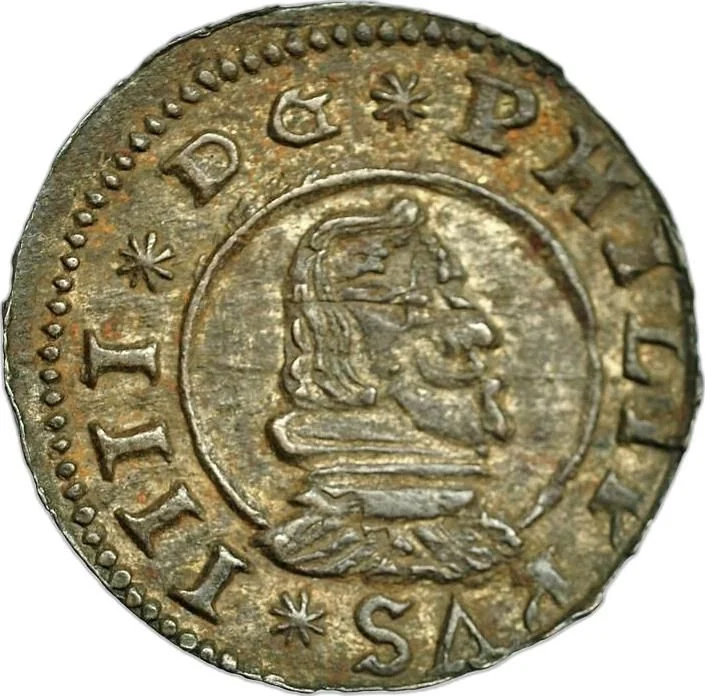
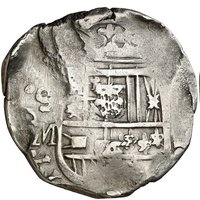
Obverse
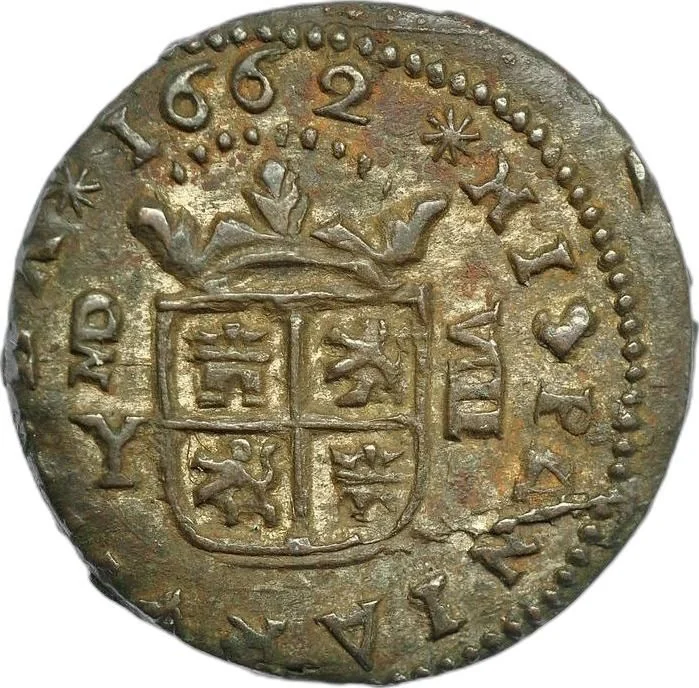
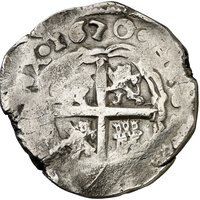
Reverse
Description:
Crowned arms with initials left, value 8 right, legend and date around.
Inscription:
HISPANIARVM REX 1664
M
Y
VIII
M
Y
VIII
Script: Latin
Edge
Mints
| Name | Mark |
|---|---|
| Alcalá Gate of Madrid | — |
Mintings
| Year | Mint Mark | Mintage | Quality | Collection |
|---|---|---|---|---|
| 1664 | MY | — |
Historical background
In 1664, the Spanish monetary system was in a state of profound crisis, a legacy of the "Price Revolution" and decades of fiscal mismanagement. The primary currency, the silver real, had been repeatedly debased by the Crown to finance its immense military commitments in the Thirty Years' War and ongoing conflicts. This created a chaotic environment where coins of varying intrinsic values, including older, purer coins and newer, adulterated ones, circulated simultaneously. The situation was exacerbated by the widespread circulation of foreign coins, particularly Portuguese and Dutch currency, which further undermined confidence in the domestic monetary standard.
The core of the problem was a severe shortage of precious metals, the lifeblood of the Habsburg economy. While silver and gold still arrived from the Americas, the quantities were declining and were immediately siphoned off to pay foreign bankers and armies. This bullion famine meant there was insufficient specie to mint enough high-value coins, leading to a reliance on vast quantities of low-denomination vellón coinage—coins made from a copper alloy. The government had resorted to issuing massive amounts of this cheap currency, causing rampant inflation and a collapse in public trust. People hoarded older silver coins, removing them from circulation (Gresham's Law in action), which only worsened the scarcity of reliable money.
King Philip IV and his minister, the Count of Peñaranda, were acutely aware of the destabilizing effects. The monetary chaos disrupted trade, crippled tax collection (as revenues were collected in devalued coin), and caused social unrest. Efforts at reform were piecemeal and often counterproductive; in 1660, a drastic attempt to call in and re-mint the vellón had failed. Therefore, in 1664, the monarchy was essentially managing a broken system, caught between the urgent need for fiscal solvency and the impossibility of implementing a successful stabilization without a radical restructuring of state finances, which would not occur until the Bourbon reforms of the next century.
The core of the problem was a severe shortage of precious metals, the lifeblood of the Habsburg economy. While silver and gold still arrived from the Americas, the quantities were declining and were immediately siphoned off to pay foreign bankers and armies. This bullion famine meant there was insufficient specie to mint enough high-value coins, leading to a reliance on vast quantities of low-denomination vellón coinage—coins made from a copper alloy. The government had resorted to issuing massive amounts of this cheap currency, causing rampant inflation and a collapse in public trust. People hoarded older silver coins, removing them from circulation (Gresham's Law in action), which only worsened the scarcity of reliable money.
King Philip IV and his minister, the Count of Peñaranda, were acutely aware of the destabilizing effects. The monetary chaos disrupted trade, crippled tax collection (as revenues were collected in devalued coin), and caused social unrest. Efforts at reform were piecemeal and often counterproductive; in 1660, a drastic attempt to call in and re-mint the vellón had failed. Therefore, in 1664, the monarchy was essentially managing a broken system, caught between the urgent need for fiscal solvency and the impossibility of implementing a successful stabilization without a radical restructuring of state finances, which would not occur until the Bourbon reforms of the next century.
💎 Extremely Rare