

1 Teston – Papal States
Vatican City
Context
Years: 1785–1786
Country: Vatican City 
Issuer: Papal States
Ruler: Pius VI
Currency:
(1534—1835)
Demonetized: Yes
Material
Diameter: 30 mm
Weight: 7.9 g
Silver weight: 7.24 g
Shape: Round
Composition: 91.7% Silver
Standard: Silver quarter ounce
Magnetic: No
Technique: Milled
Alignment: Medal alignment
flip
References
KM: #Click to copy to clipboard1048
Numista: #112380
Value
Bullion value: $20.98
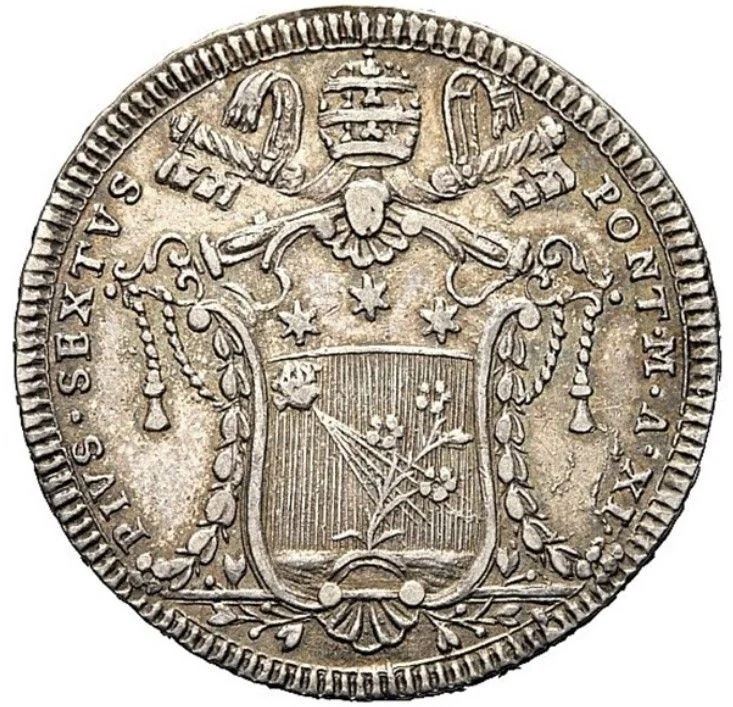
Obverse
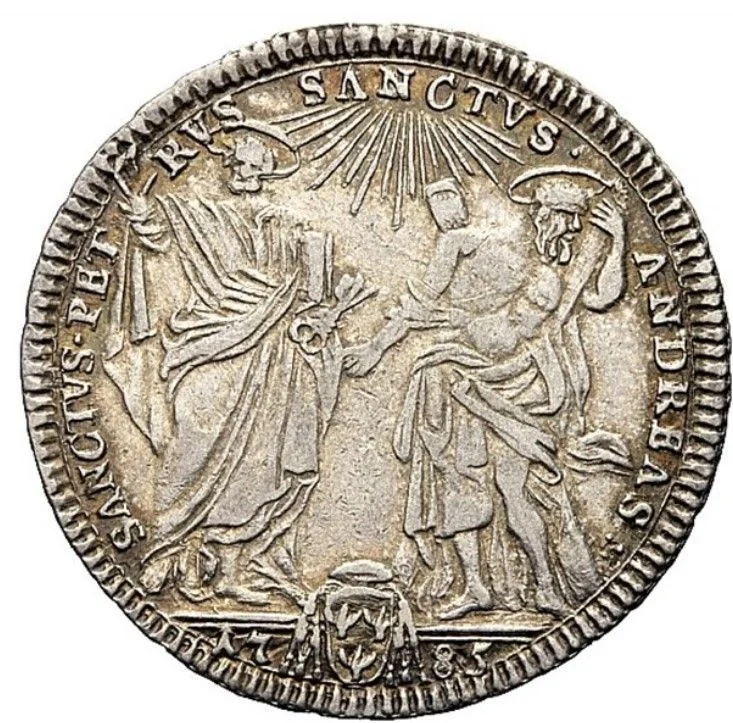
Reverse
Description:
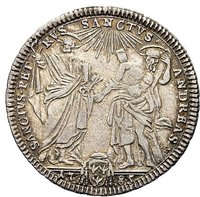
Saints Peter and Andrew standing.
Inscription:
SANCTVS·PET RVS·SANCTVS· ANDREAS
17 85
17 85
Script: Latin
Edge
Embossed leaves
Mints
| Name | Mark |
|---|---|
| Rome | — |
Mintings
| Year | Mint Mark | Mintage | Quality | Collection |
|---|---|---|---|---|
| 1785 | — | — | ||
| 1786 | — | — |
Historical background
In 1785, the Papal States’ monetary system was a complex and fragmented reflection of its political structure, characterized by multiple coinages and chronic instability. The central Roman mint issued coins like the scudo and the baiocco, but various papal legations and key cities, including Bologna and Ancona, also exercised the right to strike their own subsidiary coinage. This resulted in a confusing patchwork of currencies with differing values and metallic contents, complicating trade and taxation across the territories. Furthermore, the system was strained by a long-standing reliance on debasement—reducing the precious metal content in coins—as a method to generate short-term revenue for the papal treasury, eroding public trust in the currency's real value.
The economic backdrop was one of stagnation and fiscal pressure. The Papal States' economy remained largely agrarian and feudal, with limited industrial development, while the government faced persistent budget deficits. To meet obligations, authorities frequently resorted to issuing copper moneta erosa (worn or debased coinage) while simultaneously manipulating the exchange rates between silver and copper coins. This practice created a destructive cycle: good silver coins were hoarded or exported, leaving an overabundance of inferior copper in circulation, which in turn drove inflation, particularly harming the poor who used small-denomination copper for daily transactions.
Pope Pius VI, reigning during this period, was aware of these monetary disorders but was often preoccupied with larger political threats and ambitious (and expensive) civil engineering projects like the draining of the Pontine Marshes. While there were occasional attempts at monetary reform, such as adjusting minting standards or recalling old coinage, they were typically partial and ineffective against entrenched systemic issues. Consequently, the currency situation of 1785 was symptomatic of the broader administrative and economic weaknesses that would leave the Papal States increasingly vulnerable in the face of the revolutionary upheavals that would sweep Europe just a few years later.
The economic backdrop was one of stagnation and fiscal pressure. The Papal States' economy remained largely agrarian and feudal, with limited industrial development, while the government faced persistent budget deficits. To meet obligations, authorities frequently resorted to issuing copper moneta erosa (worn or debased coinage) while simultaneously manipulating the exchange rates between silver and copper coins. This practice created a destructive cycle: good silver coins were hoarded or exported, leaving an overabundance of inferior copper in circulation, which in turn drove inflation, particularly harming the poor who used small-denomination copper for daily transactions.
Pope Pius VI, reigning during this period, was aware of these monetary disorders but was often preoccupied with larger political threats and ambitious (and expensive) civil engineering projects like the draining of the Pontine Marshes. While there were occasional attempts at monetary reform, such as adjusting minting standards or recalling old coinage, they were typically partial and ineffective against entrenched systemic issues. Consequently, the currency situation of 1785 was symptomatic of the broader administrative and economic weaknesses that would leave the Papal States increasingly vulnerable in the face of the revolutionary upheavals that would sweep Europe just a few years later.
💎 Extremely Rare