

25 fils – People's Democratic Republic of Yemen
Add to wishlist
Yemen
Context
Years: 1976–1984
Country: Yemen
Period:
(1967—1990)
Currency:
(1967—1996)
Demonetized: Yes
Total mintage: 3,000,000
Material
References
KM: #
Numista: #11718
Value
Exchange value: 0.025 YDD
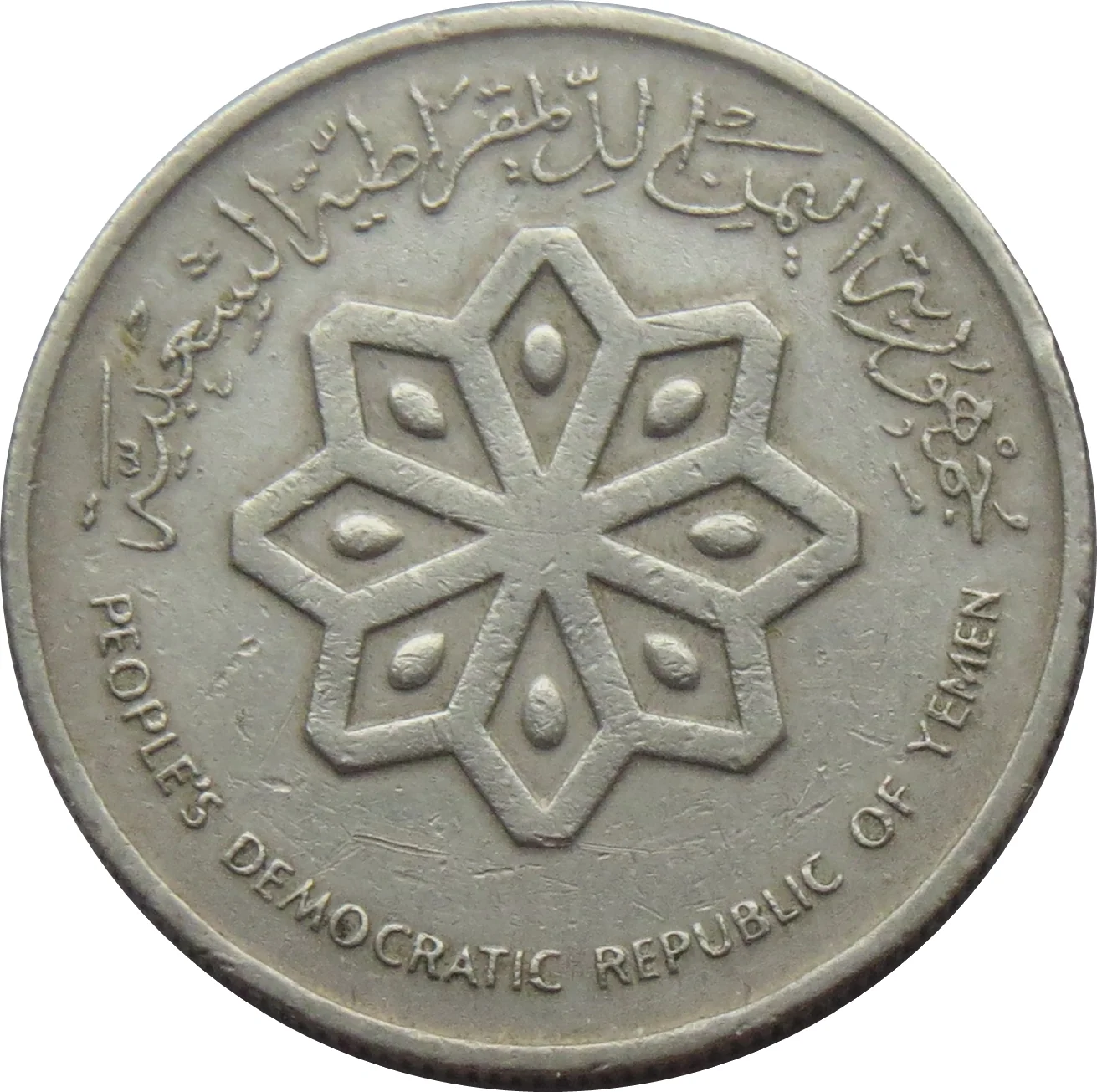
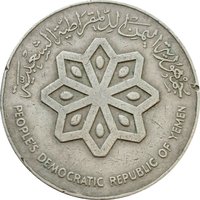
Obverse
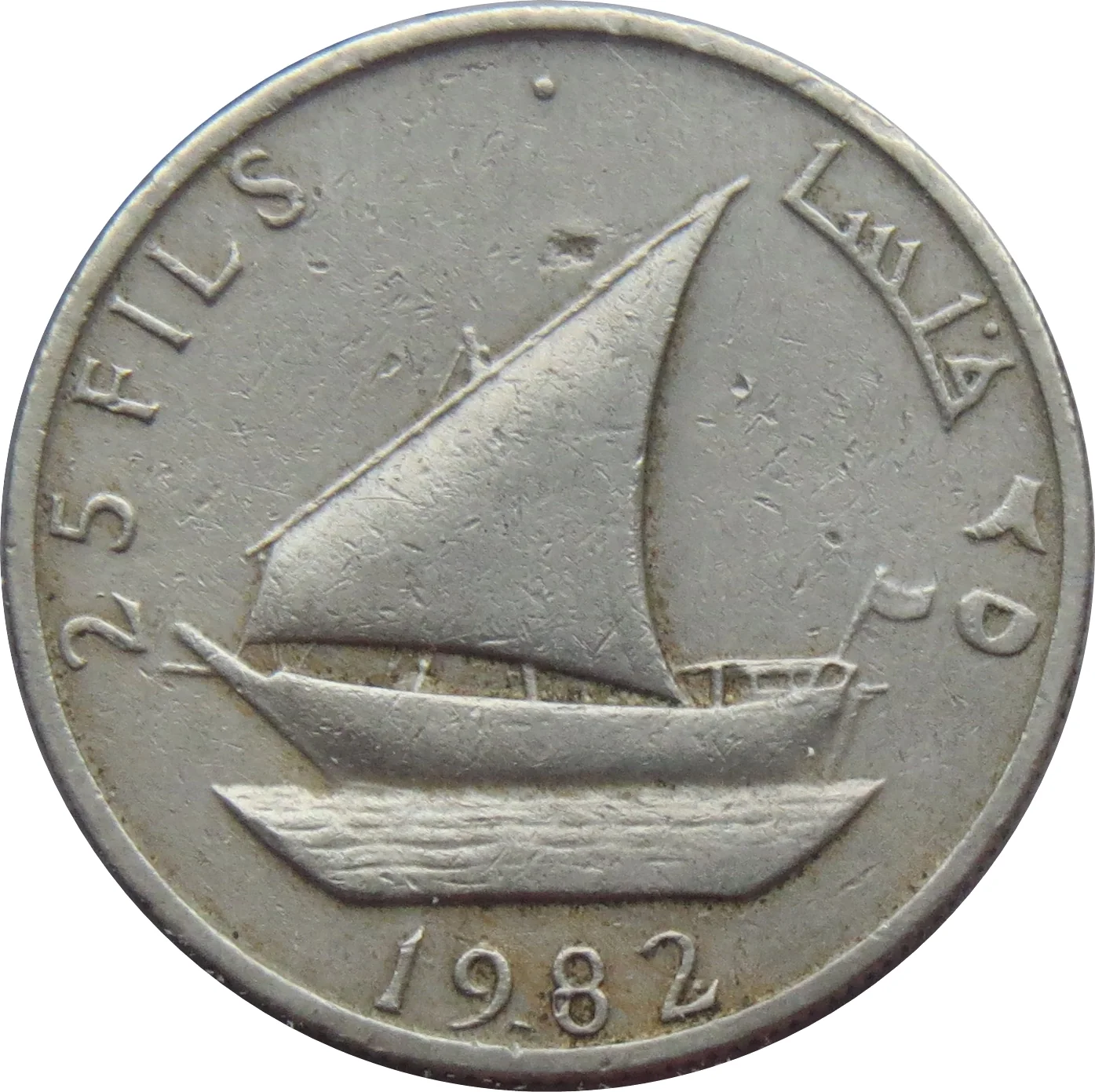
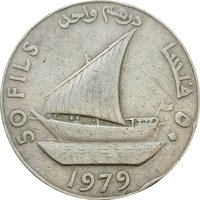
Reverse
Description:
Dhow, dated below.
Inscription:
25 FILS ٢٥ فلسا
1982
1982
Translation:
25 Fils 25 Fils
1982
1982
Language: Arabic
Designer: Thomas Humphrey Paget
Edge
Reeded
Categories
| Transportation> Watercraft |
Mints
| Name | Mark |
|---|---|
| Royal Mint | — |
Mintings
| Year | Mint Mark | Mintage | Quality | Collection |
|---|---|---|---|---|
| 1976 | — | 2,000,000 | ||
| 1977 | — | 1,000,000 | ||
| 1979 | — | — | ||
| 1982 | — | — | ||
| 1984 | — | — |
Historical background
In 1976, the currency situation in the People's Democratic Republic of Yemen (PDRY, or South Yemen) was characterized by the exclusive use of the South Yemeni Dinar (YDD). Introduved in 1972 to replace the South Arabian Dinar, the currency was a symbol of the state's sovereignty following its independence from British rule in 1967. The dinar was a relatively strong, non-convertible currency, pegged to a basket of currencies rather than solely to the British pound sterling or the US dollar, reflecting the government's Marxist-Leninist orientation and its distancing from Western financial systems.
Economically, the currency operated within a tightly controlled, centrally planned economy. The state, governed by the National Liberation Front, had nationalized major industries and banks, meaning the circulation and value of the dinar were strictly managed by the government and the Bank of Yemen (the central bank). This control aimed to support state-led development and social programs but also limited foreign exchange availability. Consequently, a black market for hard currencies like US dollars and British pounds existed, particularly in the port city of Aden, to facilitate transactions that the official system could not accommodate.
Internationally, the PDRY's currency reflected its geopolitical alignment with the Eastern Bloc and reliance on financial and technical aid from the Soviet Union, East Germany, and China. While the dinar was stable on paper, the underlying economy was fragile, dependent on remittances from Yemeni workers abroad, a declining port in Aden, and limited agricultural output. The currency situation in 1976 thus encapsulated the state's attempt to assert economic independence through strict control, while simultaneously grappling with the constraints of a weak productive base and dependence on foreign socialist aid.
Economically, the currency operated within a tightly controlled, centrally planned economy. The state, governed by the National Liberation Front, had nationalized major industries and banks, meaning the circulation and value of the dinar were strictly managed by the government and the Bank of Yemen (the central bank). This control aimed to support state-led development and social programs but also limited foreign exchange availability. Consequently, a black market for hard currencies like US dollars and British pounds existed, particularly in the port city of Aden, to facilitate transactions that the official system could not accommodate.
Internationally, the PDRY's currency reflected its geopolitical alignment with the Eastern Bloc and reliance on financial and technical aid from the Soviet Union, East Germany, and China. While the dinar was stable on paper, the underlying economy was fragile, dependent on remittances from Yemeni workers abroad, a declining port in Aden, and limited agricultural output. The currency situation in 1976 thus encapsulated the state's attempt to assert economic independence through strict control, while simultaneously grappling with the constraints of a weak productive base and dependence on foreign socialist aid.
🌱 Common