

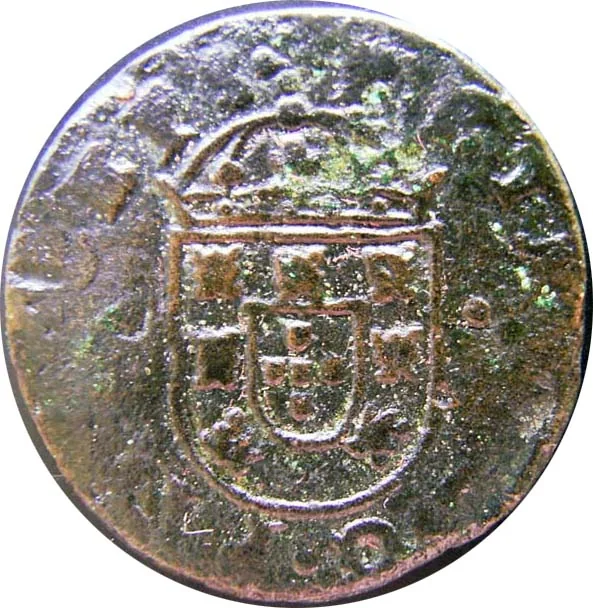
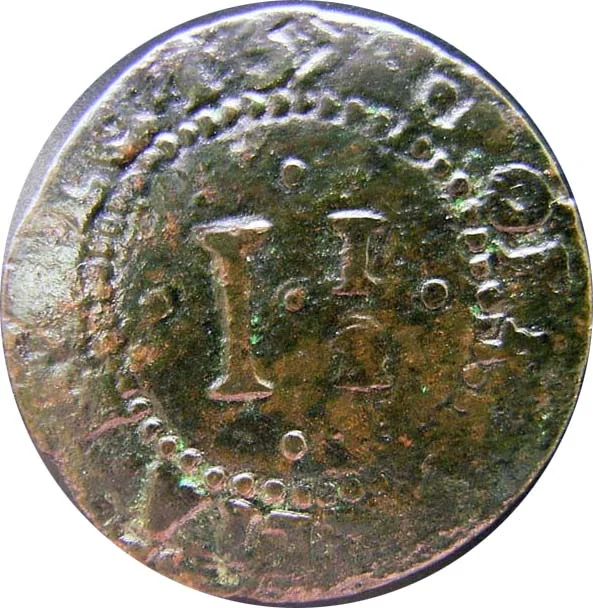
1½ Real – Portugal
Portugal
Obverse
Inscription:
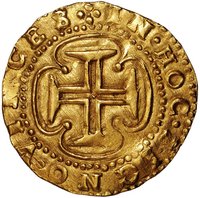
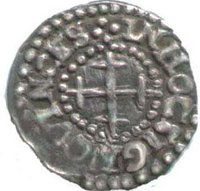
PETRVS.D.G.PRINCES
Script: Latin
Reverse
Inscription:
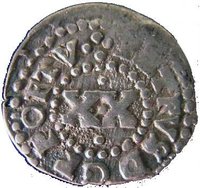
1677 PORTVGALIA.ET.ALG
*I*½*
*I*½*
Script: Latin
Edge
Mints
| Name | Mark |
|---|---|
| Imprensa Nacional - Casa da Moeda | — |
Mintings
| Year | Mint Mark | Mintage | Quality | Collection |
|---|---|---|---|---|
| 1670 | — | — | ||
| 1673 | — | — | ||
| 1674 | — | — | ||
| 1675 | — | — | ||
| 1676 | — | — | ||
| 1677 | — | — | ||
| 1678 | — | — |
Historical background
In 1670, Portugal's currency situation was characterized by significant instability and debasement, a legacy of the prolonged struggle to restore independence from Spain, which had ended in 1668. The costly wars of the Restoration period (1640-1668) had drained the treasury, forcing the crown, under King Afonso VI and the influential Count of Castelo Melhor, to repeatedly reduce the silver content of the principal coin, the real. This practice led to a proliferation of coins of varying intrinsic values, causing confusion in trade, price inflation, and a loss of public confidence in the monetary system. The state's finances were precarious, reliant on Brazilian gold, which was not yet arriving in substantial quantities.
The monetary chaos was compounded by the circulation of a vast array of foreign coins, particularly Spanish pieces of eight, which were often preferred in commerce due to their more reliable silver content. Domestically, the system was a complex patchwork of old and new réis, with the cruzado (originally 400 réis) serving as a key unit of account but whose physical coin was increasingly scarce and undervalued. This environment hampered economic recovery and state-building efforts, as the crown struggled to collect taxes in a stable standard of value and to fund its administrative and military apparatus.
Efforts at reform were underway but faced immense challenges. The government recognized the need for a uniform and trustworthy currency to facilitate trade and strengthen royal authority. However, a comprehensive stabilization would have to wait until the 1680s, with more decisive action occurring under King Pedro II and, most successfully, after the flood of Brazilian gold began in the 1690s. Thus, in 1670, Portugal's currency remained a symptom and a cause of its post-war economic fragility, caught between the fiscal pressures of the past and the transformative wealth of the near future.
The monetary chaos was compounded by the circulation of a vast array of foreign coins, particularly Spanish pieces of eight, which were often preferred in commerce due to their more reliable silver content. Domestically, the system was a complex patchwork of old and new réis, with the cruzado (originally 400 réis) serving as a key unit of account but whose physical coin was increasingly scarce and undervalued. This environment hampered economic recovery and state-building efforts, as the crown struggled to collect taxes in a stable standard of value and to fund its administrative and military apparatus.
Efforts at reform were underway but faced immense challenges. The government recognized the need for a uniform and trustworthy currency to facilitate trade and strengthen royal authority. However, a comprehensive stabilization would have to wait until the 1680s, with more decisive action occurring under King Pedro II and, most successfully, after the flood of Brazilian gold began in the 1690s. Thus, in 1670, Portugal's currency remained a symptom and a cause of its post-war economic fragility, caught between the fiscal pressures of the past and the transformative wealth of the near future.
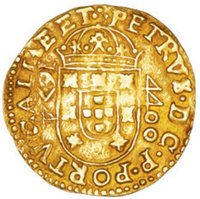
💎 Extremely Rare