

2 Sovereigns – Spanish Netherlands
Netherlands
Context
Years: 1611–1620
Country: Netherlands 
Issuer: Spanish Netherlands
Currency:
(1506—1713)
Demonetized: Yes
Total mintage: 176
Material
Weight: 11.08 g
Gold weight: 10.49 g
Shape: Irregular round
Composition: 94.7% Gold
Magnetic: No
Technique: Hammered
References
KM: #Click to copy to clipboard16
Numista: #347382
Value
Bullion value: $1749.90
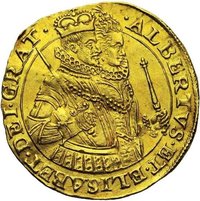
Obverse
Description:
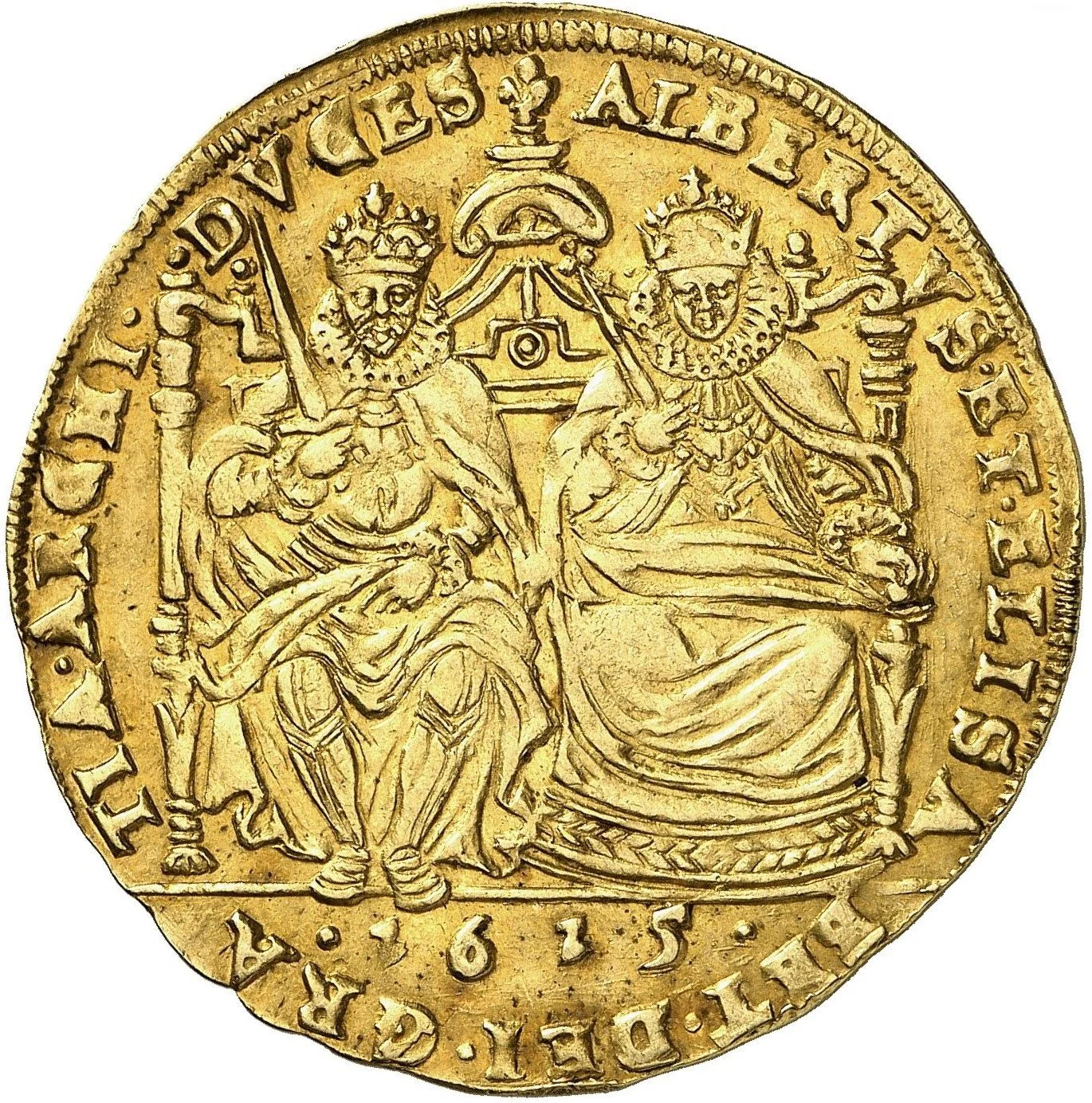
Archdukes enthroned, facing; Albert holds a sword, Isabella a scepter. Date below, mint mark above.
Inscription:
ALBERTVS ET ELISABET DEI GRATIA ARCHI DVCES
1615
1615
Script: Latin
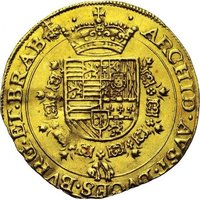
Reverse
Description:
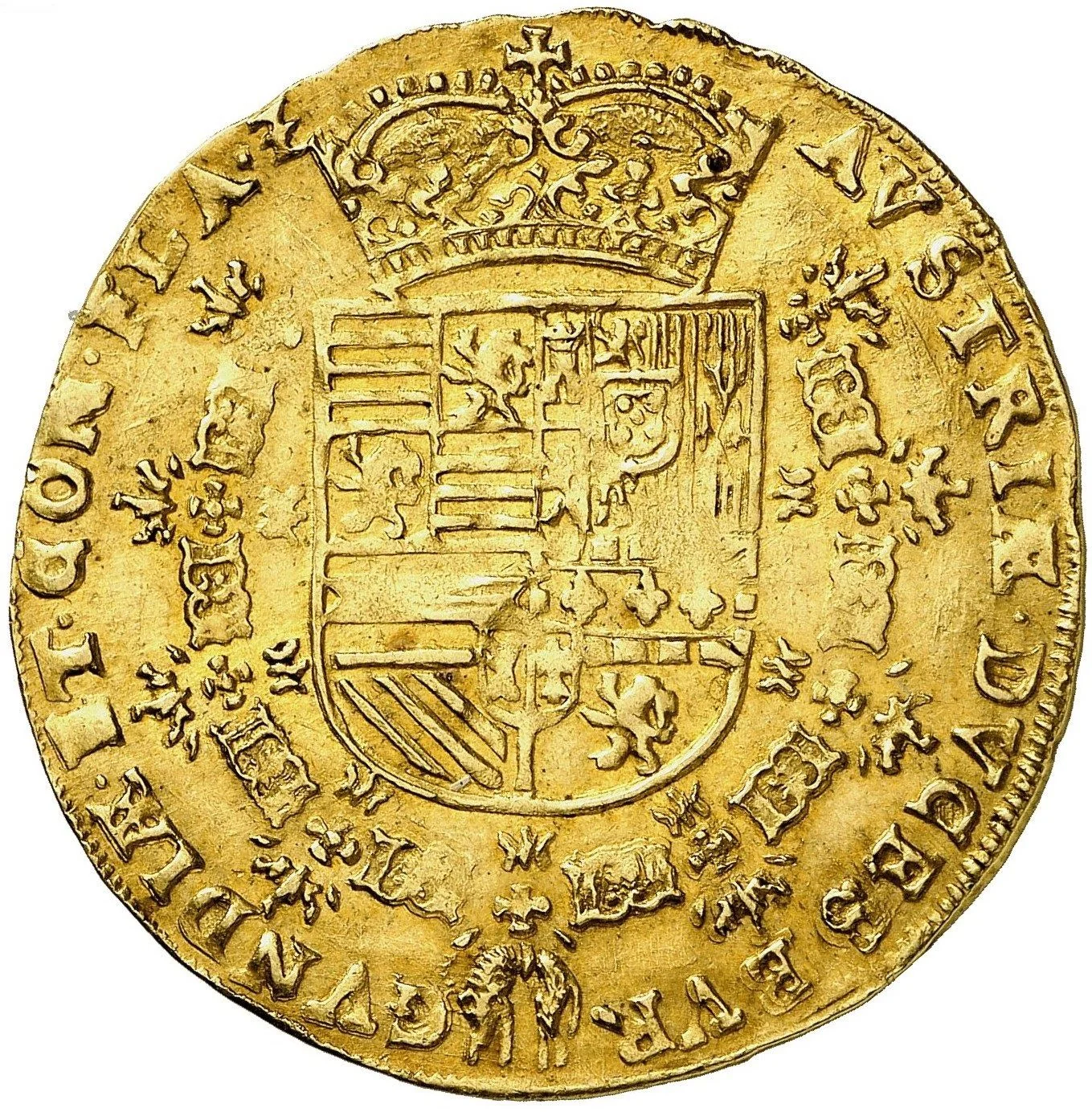
Shield with crown and collar of the Order of the Golden Fleece.
Inscription:
AVSTRIÆ DVCES BVRGVNDIÆ ET COM FLA Z
Script: Latin
Edge
Mints
| Name | Mark |
|---|---|
| Bruges | — |
Mintings
| Year | Mint Mark | Mintage | Quality | Collection |
|---|---|---|---|---|
| 1611 | — | — | ||
| 1612 | — | — | ||
| 1613 | — | — | ||
| 1614 | — | — | ||
| 1615 | — | — | ||
| 1616 | — | — | ||
| 1617 | — | — | ||
| 1618 | — | — | ||
| 1620 | — | 176 |
Historical background
In 1611, the Spanish Netherlands found itself in a protracted and debilitating monetary crisis, a direct consequence of the ongoing Eighty Years' War (1568-1648). The region, a vital but war-torn hub of European commerce, suffered from severe currency instability characterized by the widespread circulation of heavily debased coinage. Prolonged military conflict had drained the Habsburg treasury, leading authorities to repeatedly lower the silver content of coins to fund the army, a practice known as "crying up" the currency. This resulted in a chaotic mix of old "good" money and new "bad" money, driving Gresham's Law ("bad money drives out good") into full effect, as merchants and citizens hoarded full-weight coins and only passed the debased ones.
The situation was exacerbated by the economic warfare waged by the Dutch Republic. The Republic, by 1611, had established a stable and trusted currency, the rijksdaalder and leeuwendaalder, which circulated widely and competed with the debased Habsburg coins. Furthermore, the Dutch blockade of the Flemish coast severely disrupted Antwerp's trade, strangling the economic lifeblood of the Spanish Netherlands and reducing the inflow of sound bullion. Internally, the circulation of countless counterfeit coins and clipped pieces eroded public trust in the monetary system to a breaking point, hampering daily transactions and creating price inflation.
Facing economic paralysis, the Habsburg authorities in Brussels under Archdukes Albert and Isabella enacted a major monetary ordinance in 1611. This decree aimed to standardize the chaotic system by officially recognizing and fixing the value of the myriad coins in circulation, both foreign and domestic. While an attempt to impose order, the reform was only partially successful. It could not instantly restore the intrinsic value of the coinage or end the structural pressures of war finance. Thus, in 1611, the currency situation remained one of fragile and enforced stability, a testament to the severe economic toll of the conflict and a significant challenge to the governance of the archdukes.
The situation was exacerbated by the economic warfare waged by the Dutch Republic. The Republic, by 1611, had established a stable and trusted currency, the rijksdaalder and leeuwendaalder, which circulated widely and competed with the debased Habsburg coins. Furthermore, the Dutch blockade of the Flemish coast severely disrupted Antwerp's trade, strangling the economic lifeblood of the Spanish Netherlands and reducing the inflow of sound bullion. Internally, the circulation of countless counterfeit coins and clipped pieces eroded public trust in the monetary system to a breaking point, hampering daily transactions and creating price inflation.
Facing economic paralysis, the Habsburg authorities in Brussels under Archdukes Albert and Isabella enacted a major monetary ordinance in 1611. This decree aimed to standardize the chaotic system by officially recognizing and fixing the value of the myriad coins in circulation, both foreign and domestic. While an attempt to impose order, the reform was only partially successful. It could not instantly restore the intrinsic value of the coinage or end the structural pressures of war finance. Thus, in 1611, the currency situation remained one of fragile and enforced stability, a testament to the severe economic toll of the conflict and a significant challenge to the governance of the archdukes.
✨ Legendary