

1 Ducat – Brunswick-Lüneburg-Celle
Germany
Context
Years: 1638–1641
Country: Germany 
Issuer: Brunswick-Lüneburg-Celle
Ruler: Frederick IV
Currency:
Demonetized: Yes
Material
Weight: 3.5 g
Gold weight: 3.45 g
Shape: Irregular round
Composition: 98.6% Gold
Magnetic: No
Technique: Hammered
References
KM: #Click to copy to clipboard150
Numista: #346076
Value
Bullion value: $574.89
Obverse
Description:
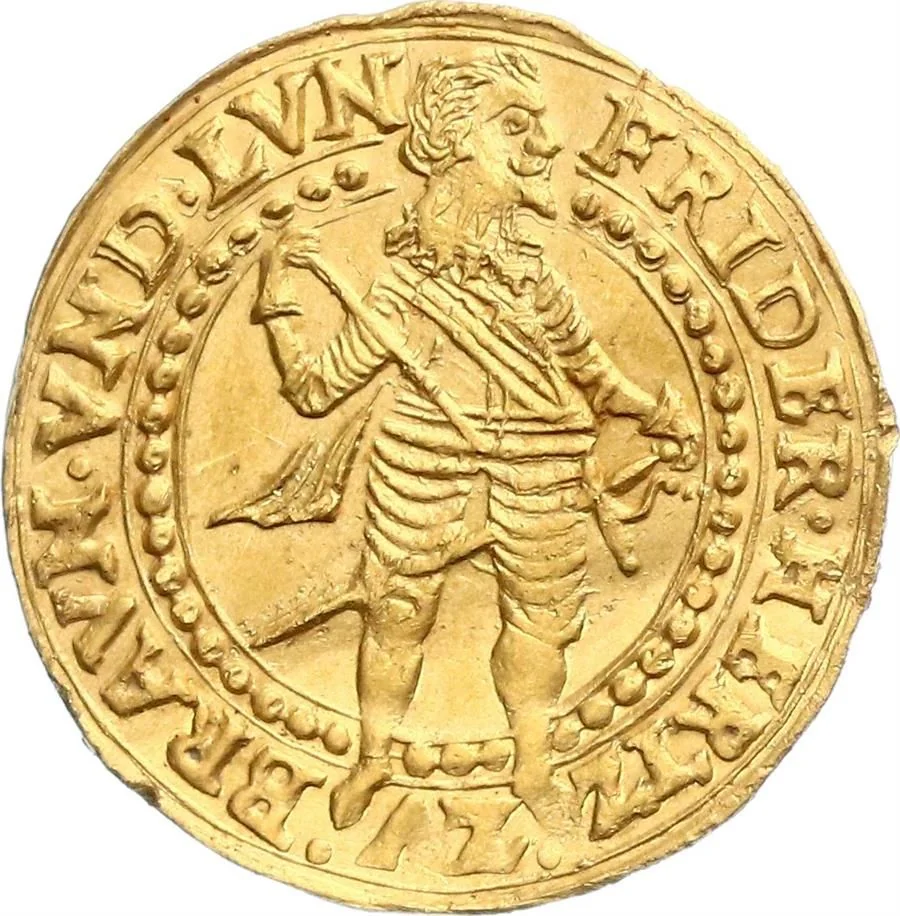
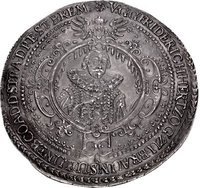
Duke statue, head turned right.
Inscription:
FRIDER. HERTZ. ZV. BRAVN. VND. LVN
Script: Latin
Reverse
Description:
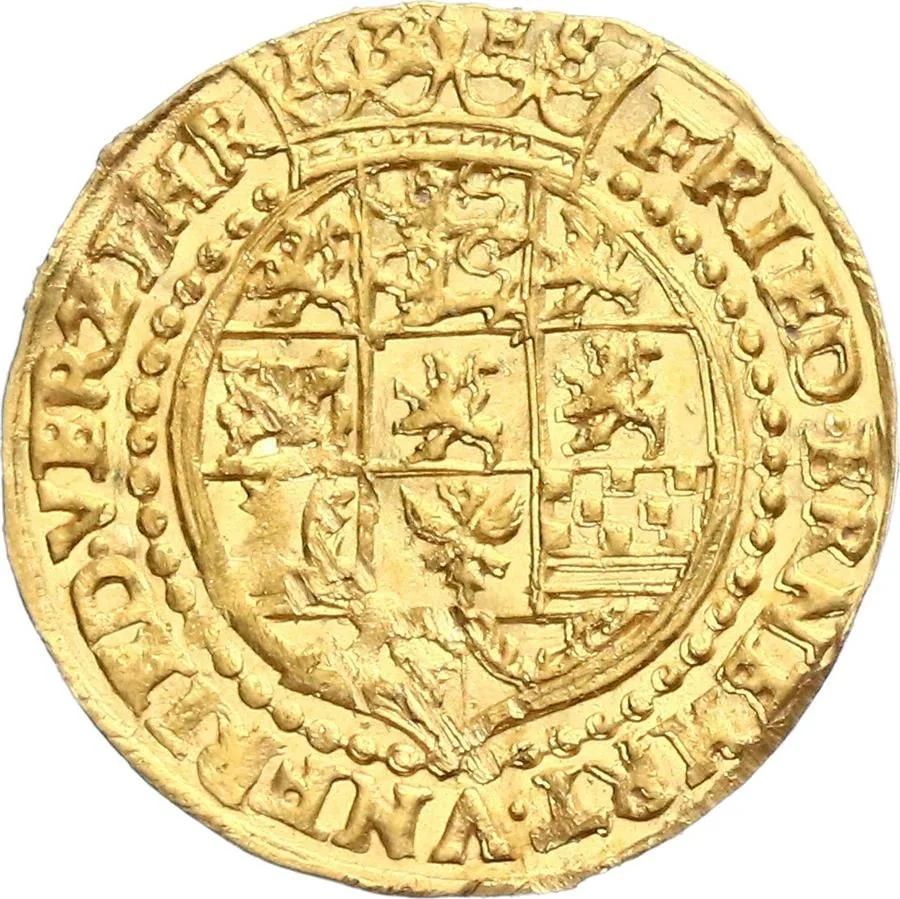
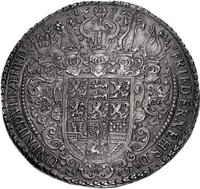
Crowned oval shield with 11 arms, date above.
Script: Latin
Edge
Mints
| Name | Mark |
|---|---|
| Clausthal | — |
Mintings
| Year | Mint Mark | Mintage | Quality | Collection |
|---|---|---|---|---|
| 1638 | — | — | ||
| 1641 | — | — |
Historical background
In 1638, the Duchy of Brunswick-Lüneburg, specifically the Principality of Lüneburg-Celle under Duke George William, was deeply entangled in the financial and physical devastation of the Thirty Years' War. The region served as a frequent battleground and transit route for marauding armies, leading to severe population decline, economic disruption, and the crippling burden of war contributions (forced payments to occupying forces). This context of crisis fundamentally undermined the territory's monetary system, as the ducal treasury was exhausted and traditional economic activity was paralyzed.
The currency situation was characterized by rampant inflation and chaotic debasement. To meet relentless war expenses, the ducal mint, like many others in the Empire, engaged in the practice of Kipper- und Wipperzeit tactics, though the peak of that crisis had passed a decade earlier. The circulating coinage was a chaotic mix of older, higher-value Reichsthalers and a flood of newly minted, inferior-quality coins with reduced silver content. Furthermore, a plethora of foreign and occupation currency, particularly Swedish coins and Klippe coins (emergency square money), circulated alongside local issues, destroying public trust in the money's value.
Duke George William's administration faced an impossible task: restoring monetary stability while the war itself continued to drain all resources. Any attempts at currency regulation or recall were undermined by the sheer lack of bullion and the pressing need to fund the army for self-defence. Consequently, the monetary landscape of Lüneburg-Celle in 1638 was one of severe instability, reflecting the broader collapse of the Holy Roman Empire's monetary order and the desperate fiscal strategies of a ruler struggling to maintain his territory's survival amidst the war's chaos.
The currency situation was characterized by rampant inflation and chaotic debasement. To meet relentless war expenses, the ducal mint, like many others in the Empire, engaged in the practice of Kipper- und Wipperzeit tactics, though the peak of that crisis had passed a decade earlier. The circulating coinage was a chaotic mix of older, higher-value Reichsthalers and a flood of newly minted, inferior-quality coins with reduced silver content. Furthermore, a plethora of foreign and occupation currency, particularly Swedish coins and Klippe coins (emergency square money), circulated alongside local issues, destroying public trust in the money's value.
Duke George William's administration faced an impossible task: restoring monetary stability while the war itself continued to drain all resources. Any attempts at currency regulation or recall were undermined by the sheer lack of bullion and the pressing need to fund the army for self-defence. Consequently, the monetary landscape of Lüneburg-Celle in 1638 was one of severe instability, reflecting the broader collapse of the Holy Roman Empire's monetary order and the desperate fiscal strategies of a ruler struggling to maintain his territory's survival amidst the war's chaos.
✨ Legendary