

1 Ducat – Kingdom of Bohemia
Context
Years: 1711–1712
Country: Bohemia
Issuer: Kingdom of Bohemia
Ruler: Charles VI
Currency:
(1520—1754)
Demonetized: Yes
Material
References
KM: #Click to copy to clipboard651
Numista: #343066
Value
Bullion value: $573.62
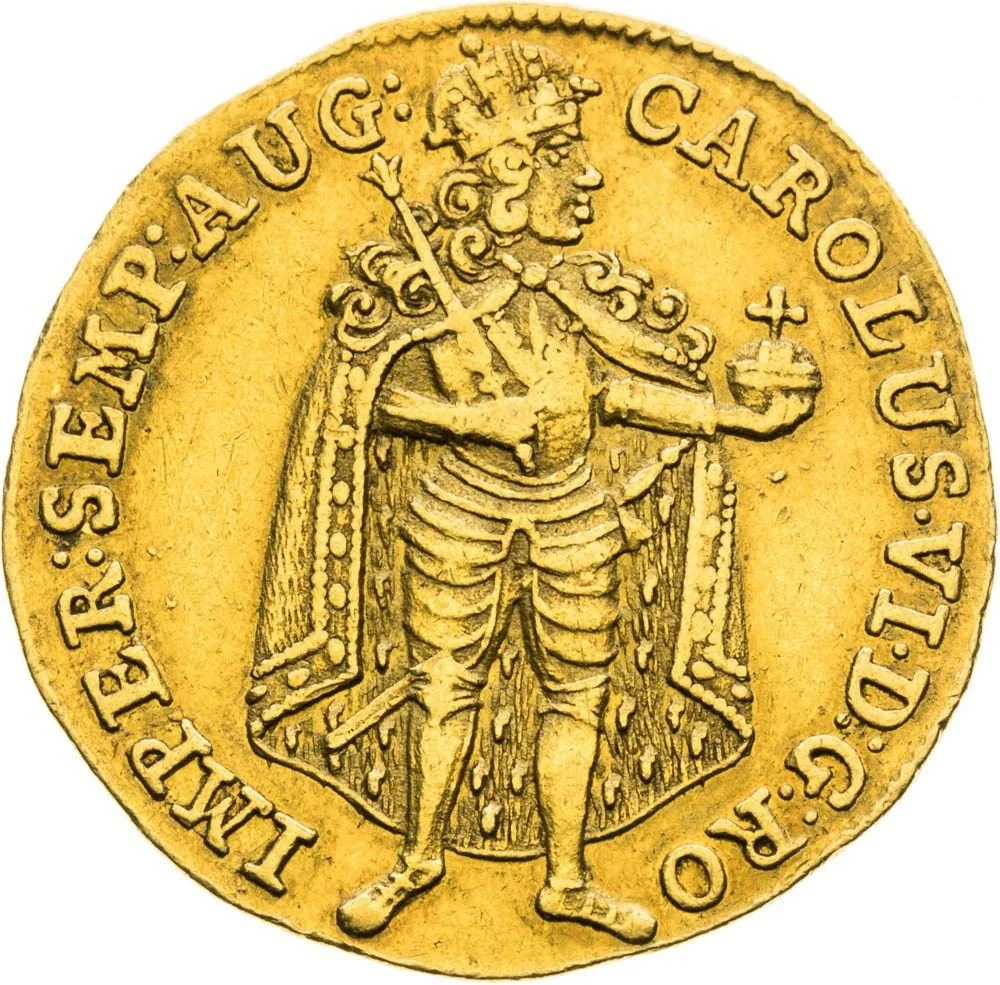
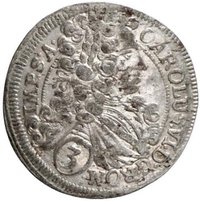
Obverse
Description:
Karl VI, full-length, 3/4 right, holding orb and scepter.
Inscription:
CAROLUS VI D G RO IMPER SEMP AUG
Script: Latin
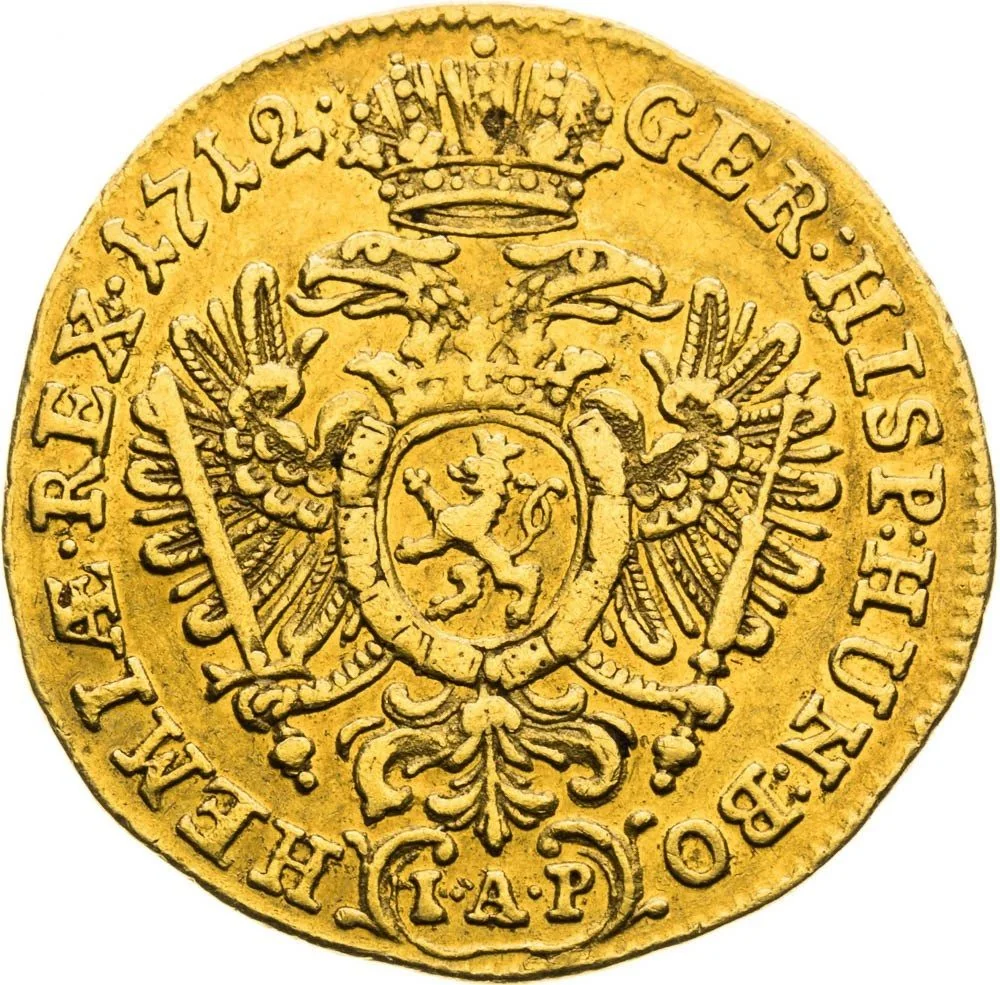
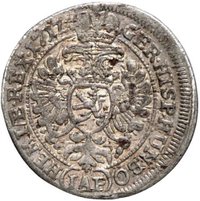
Reverse
Description:
Imperial two-headed eagle
Inscription:
GER HISP HUN BO HEMIÆ REX 1712
I A P
I A P
Script: Latin
Edge
Mints
| Name | Mark |
|---|---|
| Prague | — |
Mintings
| Year | Mint Mark | Mintage | Quality | Collection |
|---|---|---|---|---|
| 1711 | — | — | ||
| 1712 | — | — |
Historical background
In 1711, the Kingdom of Bohemia, a core crownland of the Habsburg Monarchy, operated within a complex and strained currency system. The primary circulating coin was the silver Konventionstaler, established by a 1704 imperial agreement that aimed to standardize currency across the Habsburg domains. However, the reality was one of monetary confusion, as older, debased coins from the previous century, particularly small kreuzers and denars, remained in widespread daily use among the common populace. This created a dual system where large transactions and state finances were conducted in stable silver, while the local economy relied on a degraded petty coinage.
The root of this instability lay in the preceding decades of warfare, notably the Great Turkish War and the ongoing War of the Spanish Succession. To finance massive military expenditures, the Habsburg state had repeatedly resorted to debasement—reducing the precious metal content in coins—which led to severe inflation and a loss of public trust. Although the 1704 Konvention standard was a corrective measure, its benefits were slow to permeate the entire economy. Furthermore, Bohemia's economy was still recovering from the devastating Counter-Reformation policies and population changes following the Thirty Years' War, which had left its productive capacity diminished.
Consequently, the currency situation in 1711 was one of fragile transition. While the government attempted to impose monetary order from above, the everyday experience was marked by the inconvenience of exchanging between different coinage systems, uncertainty about the true value of small change, and the lingering effects of inflation. This environment hindered commerce and taxation, posing a persistent challenge to the Habsburg administration's efforts to consolidate and centralize its financial resources in the final years of the War of the Spanish Succession.
The root of this instability lay in the preceding decades of warfare, notably the Great Turkish War and the ongoing War of the Spanish Succession. To finance massive military expenditures, the Habsburg state had repeatedly resorted to debasement—reducing the precious metal content in coins—which led to severe inflation and a loss of public trust. Although the 1704 Konvention standard was a corrective measure, its benefits were slow to permeate the entire economy. Furthermore, Bohemia's economy was still recovering from the devastating Counter-Reformation policies and population changes following the Thirty Years' War, which had left its productive capacity diminished.
Consequently, the currency situation in 1711 was one of fragile transition. While the government attempted to impose monetary order from above, the everyday experience was marked by the inconvenience of exchanging between different coinage systems, uncertainty about the true value of small change, and the lingering effects of inflation. This environment hindered commerce and taxation, posing a persistent challenge to the Habsburg administration's efforts to consolidate and centralize its financial resources in the final years of the War of the Spanish Succession.
✨ Legendary