

1 Rupee – Bengal Presidency
India
Context
Years: 1793–1818
Country: India 
Issuer: Bengal Presidency
Issuing organization: East India Company
Currency:
(1765—1835)
Demonetized: Yes
Material
References
KM: #Click to copy to clipboard99.1
Numista: #341344
Value
Bullion value: $32.76
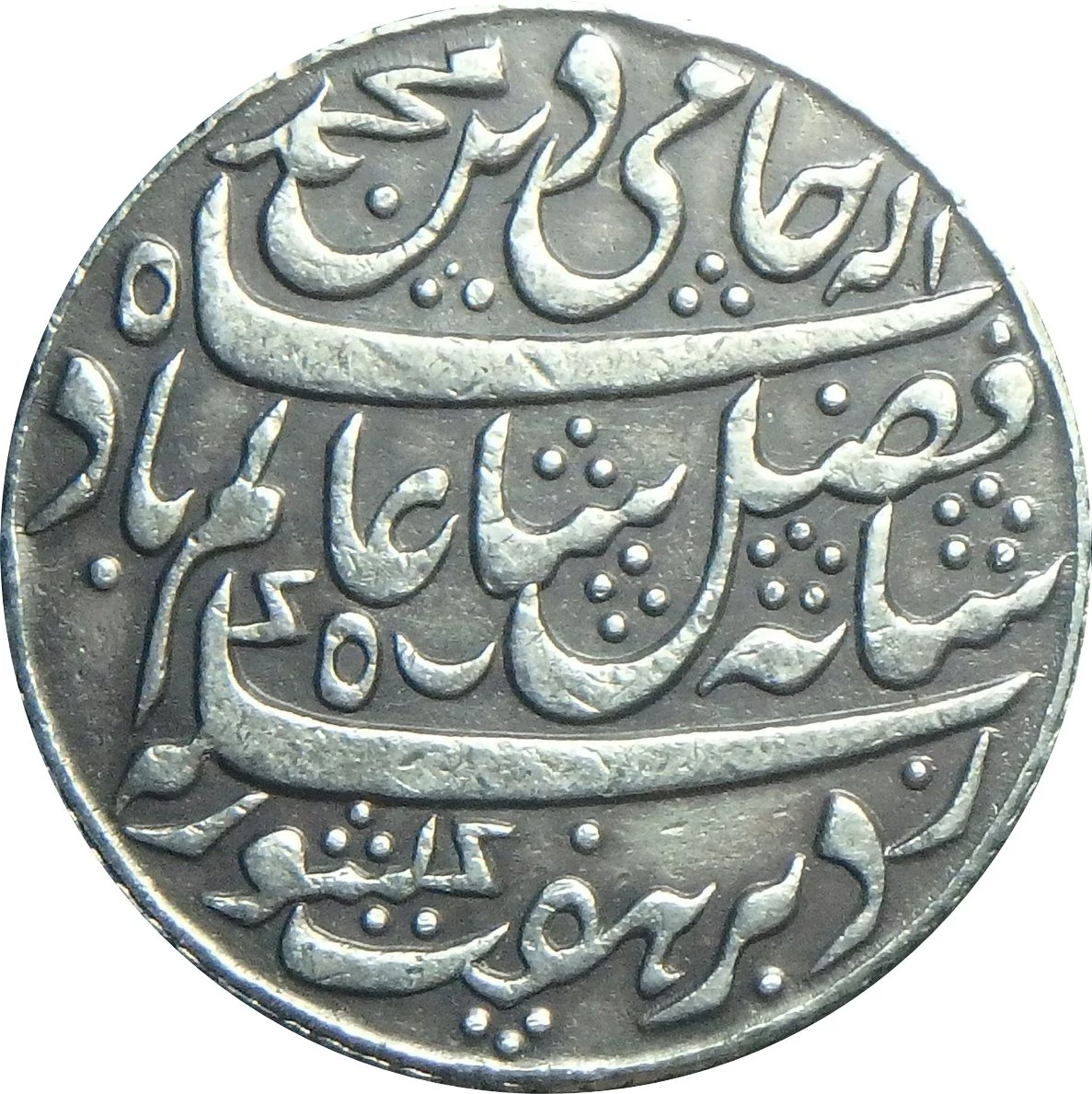
Obverse
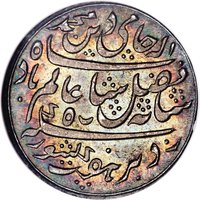
Description:
Couplet inscription.
Script: Persian (nastaliq)
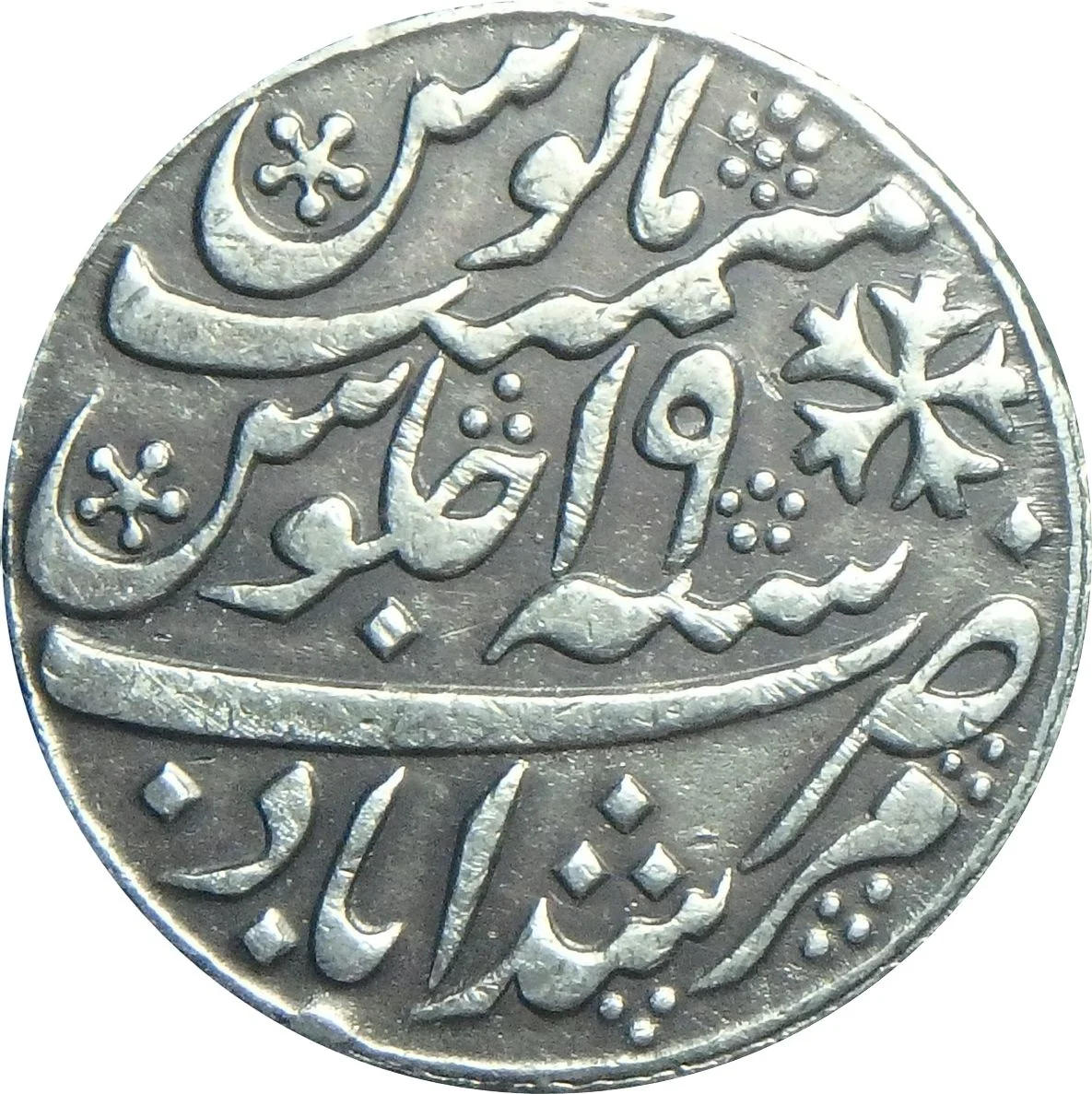
Reverse
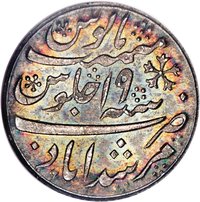
Description:
Inscription with mint name.
Script: Persian (nastaliq)
Edge
Edge grained right
Mints
| Name | Mark |
|---|---|
| Kolkata / Calcutta / Murshidabad | — |
Mintings
| Year | Mint Mark | Mintage | Quality | Collection |
|---|---|---|---|---|
| — | — | — |
Historical background
In 1793, the Bengal Presidency's currency situation was defined by the aftermath of the Permanent Settlement and the ongoing struggle to establish a unified, trustworthy monetary system. The East India Company, having transitioned from trader to ruler, faced a chaotic landscape of both indigenous and foreign coins. The primary silver currency was the sicca rupee, but its value and purity varied significantly from the older, discounted sanat rupees still in circulation, creating confusion and facilitating fraud. Furthermore, a multitude of gold mohurs, copper paise, and even remnants of Mughal and regional issues created a complex and inefficient marketplace, hindering revenue collection and commercial transactions.
This monetary disarray directly impacted the Company's most critical reform of the year: the Permanent Settlement of land revenue. This system fixed land tax demands in perpetuity, but those demands were stipulated in sicca rupees. The variability in coin values became a source of exploitation, as zamindars (landlords) could collect revenue in heavier, purer sicca rupees but often paid their fixed dues to the Company in older, discounted coins, pocketing the difference. This not only undermined the intended stability of the Settlement but also caused widespread hardship for ryots (peasants) who bore the brunt of these arbitrary conversions.
Recognizing that fiscal control required monetary control, the Company had already taken steps toward reform. The Calcutta Mint was active, and in 1793, regulations were issued to standardize the sicca rupee and define its value against the gold mohur and copper coinage. However, a truly uniform and effective system remained elusive. The core challenge was to suppress the circulation of myriad obsolete coins and assert a single, Company-managed currency—a process that would only be fully realized with the Coinage Act of 1835, which finally introduced the uniform "Company Rupee" across British India. Thus, 1793 represents a pivotal moment of acute monetary strain, caught between the newly imposed land revenue system and the yet-to-be-achieved goal of a standardized currency.
This monetary disarray directly impacted the Company's most critical reform of the year: the Permanent Settlement of land revenue. This system fixed land tax demands in perpetuity, but those demands were stipulated in sicca rupees. The variability in coin values became a source of exploitation, as zamindars (landlords) could collect revenue in heavier, purer sicca rupees but often paid their fixed dues to the Company in older, discounted coins, pocketing the difference. This not only undermined the intended stability of the Settlement but also caused widespread hardship for ryots (peasants) who bore the brunt of these arbitrary conversions.
Recognizing that fiscal control required monetary control, the Company had already taken steps toward reform. The Calcutta Mint was active, and in 1793, regulations were issued to standardize the sicca rupee and define its value against the gold mohur and copper coinage. However, a truly uniform and effective system remained elusive. The core challenge was to suppress the circulation of myriad obsolete coins and assert a single, Company-managed currency—a process that would only be fully realized with the Coinage Act of 1835, which finally introduced the uniform "Company Rupee" across British India. Thus, 1793 represents a pivotal moment of acute monetary strain, caught between the newly imposed land revenue system and the yet-to-be-achieved goal of a standardized currency.
💎 Very Rare