

1 Liard – Prince-bishopric of Liege
Belgium
Context
Years: 1581–1612
Country: Belgium 
Issuer: Prince-bishopric of Liege
Ruler: Ernest of Bavaria
Currency:
(1545—1650)
Subdivision: 1 Liard = 1 Aidant
Demonetized: Yes
Material
References
KM: #Click to copy to clipboard10
Numista: #341288
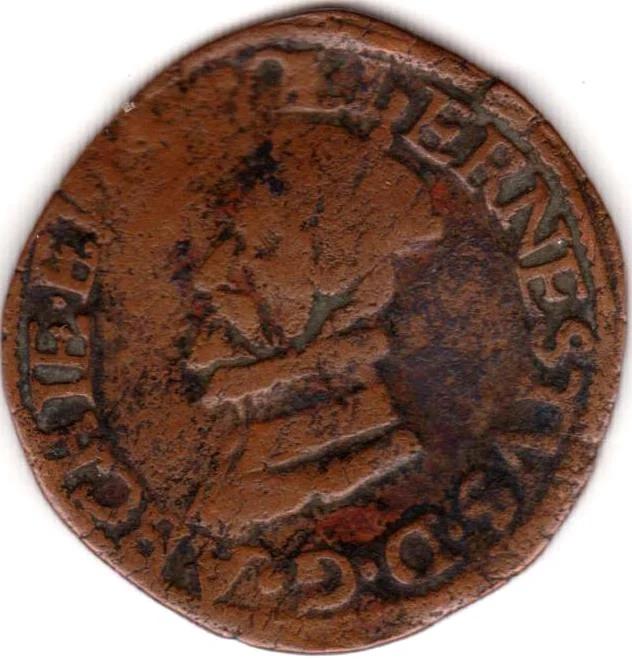
Obverse
Description:
Bust left in liberty cap.
Inscription:
ERNESTVS · D · G · ARCHIEPIS · COL ·
Script: Latin
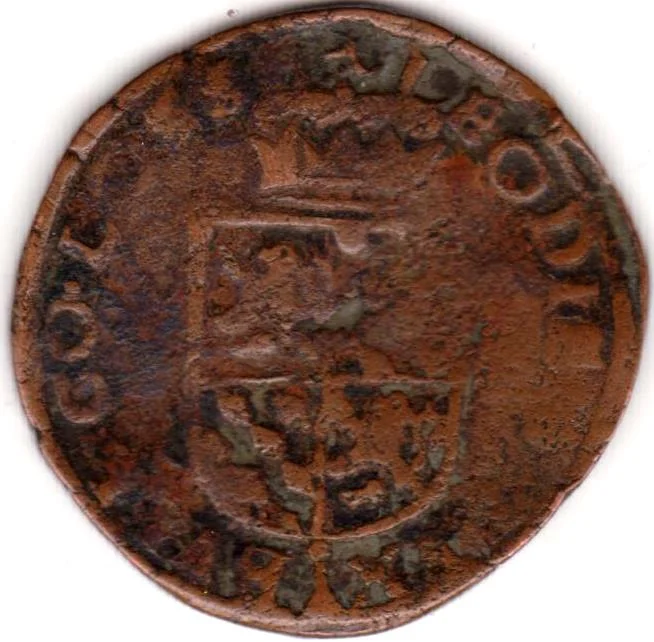
Reverse
Description:
Crowned shield quartered with Bavarian and Palatine arms.
Inscription:
LEODIEN.DVX.BVLL.CO.LOSSE
Script: Latin
Edge
Mints
| Name | Mark |
|---|---|
| Liège | — |
Mintings
| Year | Mint Mark | Mintage | Quality | Collection |
|---|---|---|---|---|
| — | — | — |
Historical background
In 1581, the Prince-Bishopric of Liège found itself in a precarious monetary situation, caught in the crossfire of the wider economic turmoil of the Dutch Revolt. As a nominally neutral ecclesiastical state, Liège was geographically and economically entangled with the warring Spanish Habsburgs and the rebellious Dutch provinces. This neutrality was strained by rampant currency debasement and inflation sweeping the region. Neighboring states, particularly the Spanish Netherlands, were aggressively reducing the silver content of their coinage to finance military campaigns, flooding the market with poor-quality money. This practice triggered Gresham's Law in Liège, where "bad" foreign coins drove "good" full-weight Liègeois coins out of circulation, either into hoards or across borders, depleting the bishopric's monetary stock.
Internally, the monetary authority struggled to respond. The Prince-Bishop, Gerard de Groesbeek, and the mint officials faced a dilemma: maintain the integrity of Liège's currency and risk economic suffocation as sound money vanished, or engage in competitive debasement to retain circulating coinage and seigniorage revenue. The latter course risked destroying public trust and provoking social unrest among commoners and merchants whose buying power eroded. The city's important trade in metal goods (arms and coal) and its position on the Meuse River made a stable medium of exchange crucial, yet the bishopric had limited power to insulate itself from the monetary policies of its more powerful, warring neighbors.
Consequently, the year 1581 was marked by a period of monetary instability and ad-hoc measures. While Liège did not embark on debasement as severe as its neighbors, it was forced to constantly adjust exchange rates and regulations for the myriad of foreign coins circulating within its borders. This was a defensive struggle to manage inflation, prevent famine (as grain prices soared), and maintain a functioning local economy. The situation underscored the vulnerability of the prince-bishopric's sovereignty, as its economic health was dictated by external conflict and the relentless flow of destabilized currency across its porous frontiers.
Internally, the monetary authority struggled to respond. The Prince-Bishop, Gerard de Groesbeek, and the mint officials faced a dilemma: maintain the integrity of Liège's currency and risk economic suffocation as sound money vanished, or engage in competitive debasement to retain circulating coinage and seigniorage revenue. The latter course risked destroying public trust and provoking social unrest among commoners and merchants whose buying power eroded. The city's important trade in metal goods (arms and coal) and its position on the Meuse River made a stable medium of exchange crucial, yet the bishopric had limited power to insulate itself from the monetary policies of its more powerful, warring neighbors.
Consequently, the year 1581 was marked by a period of monetary instability and ad-hoc measures. While Liège did not embark on debasement as severe as its neighbors, it was forced to constantly adjust exchange rates and regulations for the myriad of foreign coins circulating within its borders. This was a defensive struggle to manage inflation, prevent famine (as grain prices soared), and maintain a functioning local economy. The situation underscored the vulnerability of the prince-bishopric's sovereignty, as its economic health was dictated by external conflict and the relentless flow of destabilized currency across its porous frontiers.
✨ Legendary