

½ Real – Prince-bishopric of Liege
Belgium
Context
Years: 1622–1623
Country: Belgium 
Issuer: Prince-bishopric of Liege
Ruler: Ferdinand of Bavaria
Currency:
(1545—1650)
Subdivision: ½ Real = 3 Patards
Demonetized: Yes
Material
References
KM: #Click to copy to clipboardE35
Numista: #340484
Value
Bullion value: $6.58
Obverse
Description:
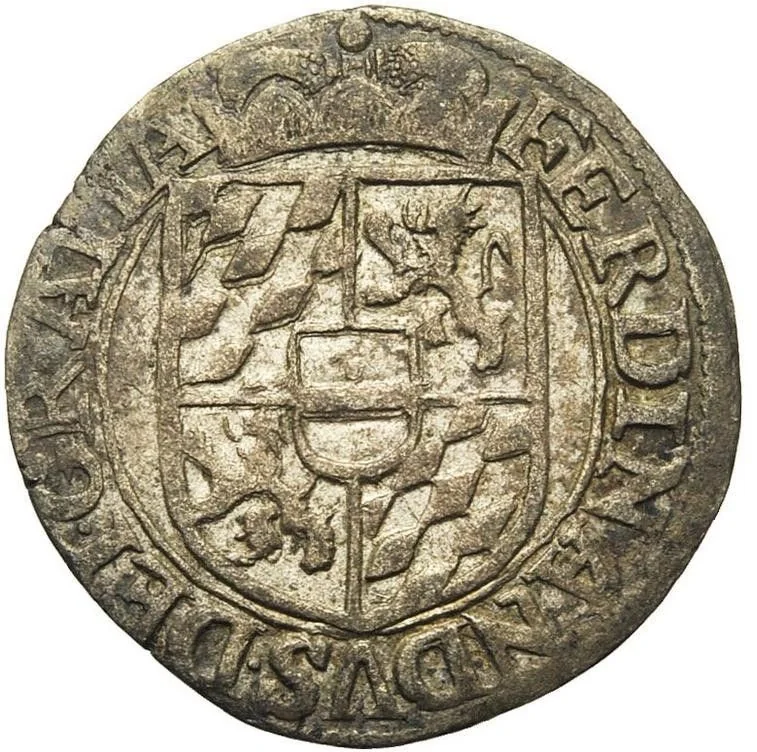
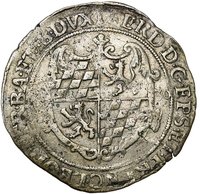
Capped arms of Bavaria-Palatinate-Bouillon.
Inscription:
FERDINANDVS · DEI · GRATIA
Script: Latin
Reverse
Description:
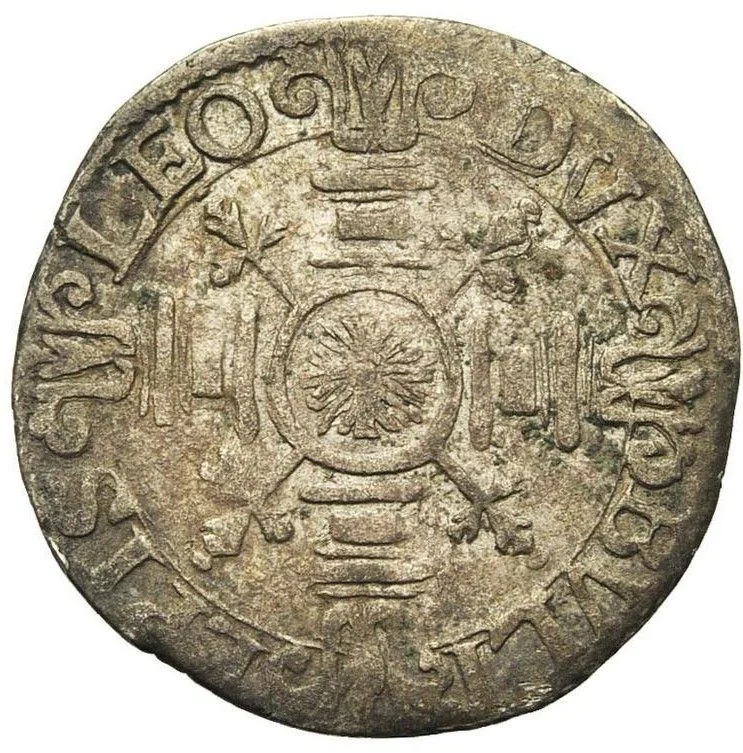
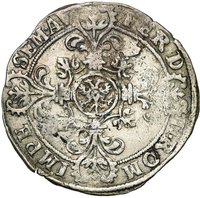
Floriate cross with a central sunburst and crosses in each angle.
Inscription:
DVX BVLI EPIS LEO
Script: Latin
Edge
Categories
| Symbols> Coat of Arms |
| Symbol> Cross |
Mints
| Name | Mark |
|---|---|
| Liège | — |
Mintings
| Year | Mint Mark | Mintage | Quality | Collection |
|---|---|---|---|---|
| — | — | — |
Historical background
In 1622, the Prince-Bishopric of Liège found itself in a severe monetary crisis, a direct consequence of the wider economic turmoil of the Thirty Years' War. The region, though officially neutral, was surrounded by conflict and suffered from the rampant currency debasement practiced by its neighbors, particularly the Spanish Netherlands. These states engaged in "crying up" or "crying down" coin values and issuing heavily debased monnaie noire (black money), flooding the Liège market with inferior coinage and causing good silver money to be hoarded or exported.
Faced with this invasive monetary instability, Prince-Bishop Ferdinand of Bavaria attempted to assert control. His government issued ordinances aimed at stabilizing the currency by setting official exchange rates for the myriad of foreign coins in circulation and banning the import of the most debased foreign money. However, these measures were largely ineffective against market forces and the sheer volume of poor-quality coinage. The result was a classic "bad money drives out good" scenario (Gresham's Law), leading to price inflation, commercial disruption, and widespread public confusion and discontent.
Thus, the currency situation in 1622 was characterized by a fragile and failing defensive policy against an overwhelming tide of regional monetary chaos. The bishopric's lack of sovereign monetary authority left it vulnerable, its economy becoming a battleground for competing currencies. This crisis underscored Liège's precarious position as a small, neutral territory struggling to maintain economic order amidst the vast financial upheavals of the warring great powers around it.
Faced with this invasive monetary instability, Prince-Bishop Ferdinand of Bavaria attempted to assert control. His government issued ordinances aimed at stabilizing the currency by setting official exchange rates for the myriad of foreign coins in circulation and banning the import of the most debased foreign money. However, these measures were largely ineffective against market forces and the sheer volume of poor-quality coinage. The result was a classic "bad money drives out good" scenario (Gresham's Law), leading to price inflation, commercial disruption, and widespread public confusion and discontent.
Thus, the currency situation in 1622 was characterized by a fragile and failing defensive policy against an overwhelming tide of regional monetary chaos. The bishopric's lack of sovereign monetary authority left it vulnerable, its economy becoming a battleground for competing currencies. This crisis underscored Liège's precarious position as a small, neutral territory struggling to maintain economic order amidst the vast financial upheavals of the warring great powers around it.
✨ Legendary