

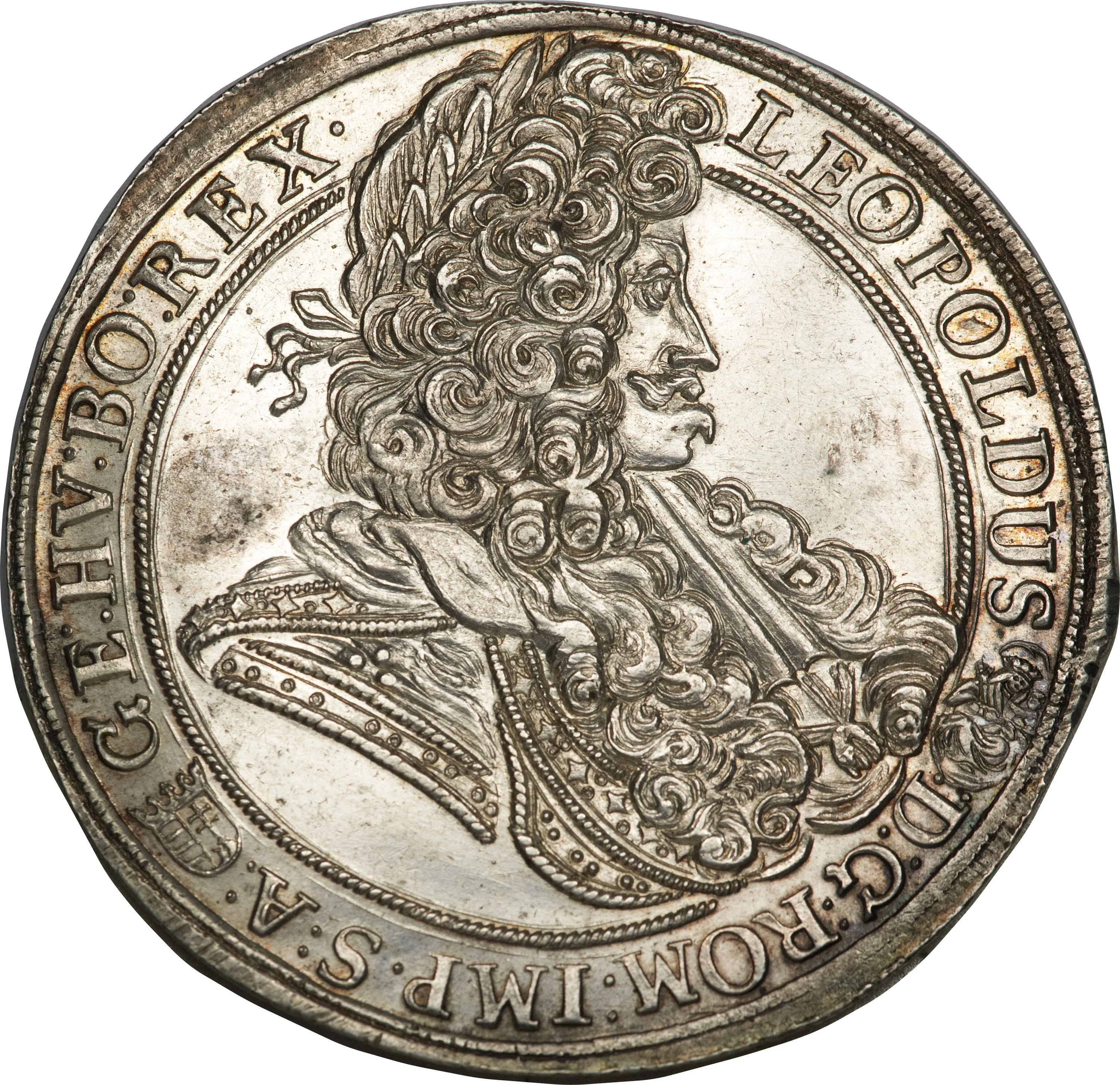

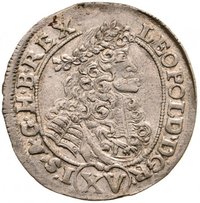
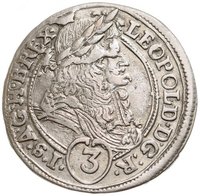
Obverse
Description:
Laureate bust right, curly wig, shield and Madonna breaking inner circle.
Inscription:
LEOPOLDVS · D · G · RO · I · S · AVG · GER · HV · BOH · REX ·
Script: Latin
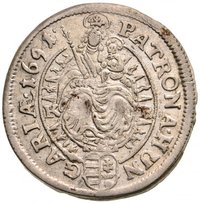
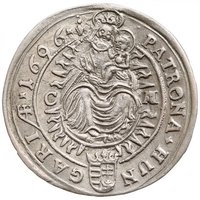
Reverse
Description:
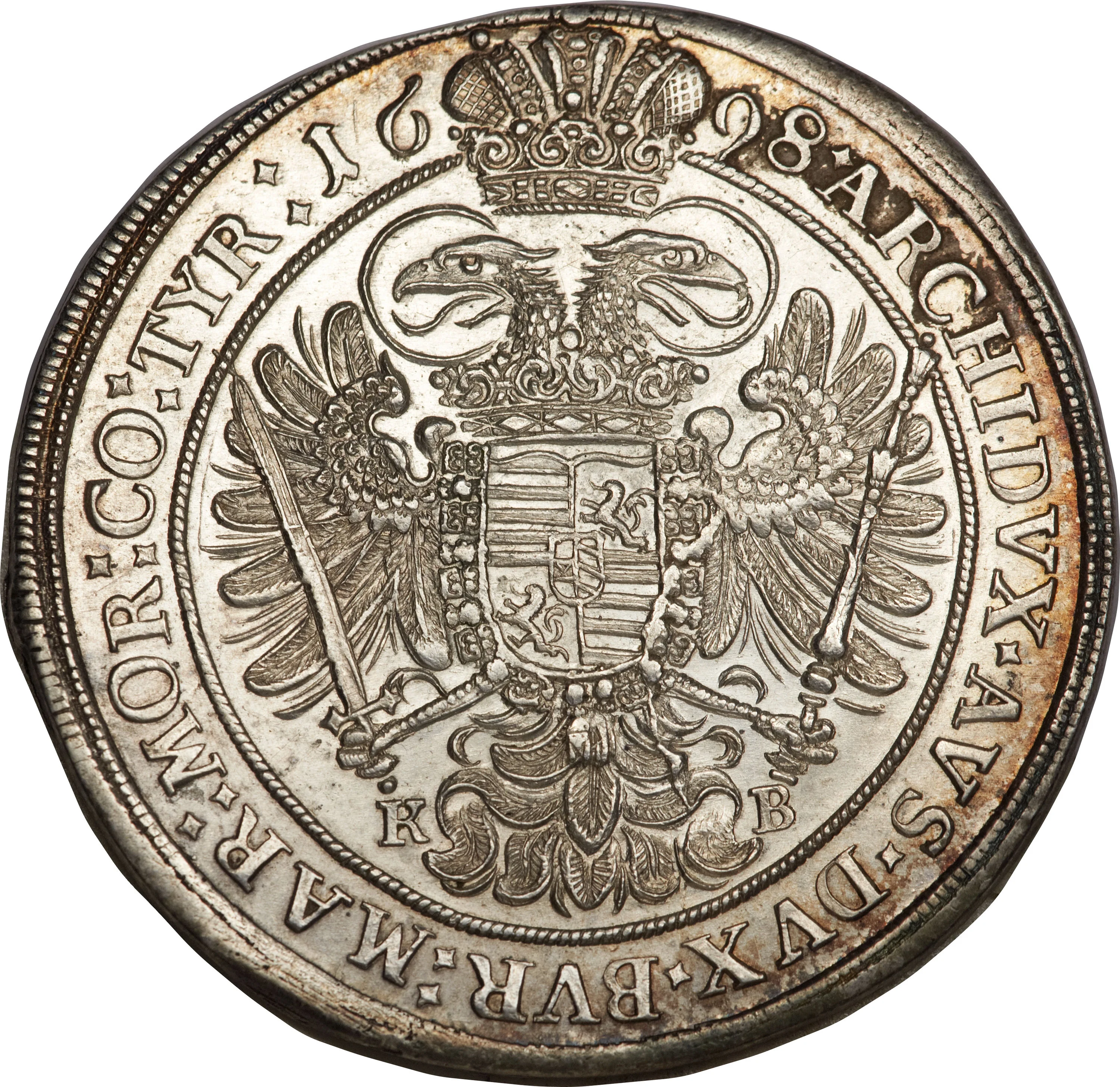
Imperial eagle in circle, crown above date, K B mintmark split by tail. U-shaped cartouche with crowned quadripartite shield (Árpád stripes/Bohemian lion). Central shield with uncrowned Austrian and Burgundian arms.
Inscription:
ARCHIDVX · AVS · DVX · BVR · MAR · MOR · CO · TY · 16 90
K B
K B
Script: Latin
Edge
Plain
Mints
| Name | Mark |
|---|---|
| Kremnica | KB |
Mintings
Historical background
In 1687, Hungary was in a state of profound monetary instability and transition, deeply tied to its political circumstances. The country was largely under Habsburg control following the reconquest of Buda from the Ottomans in 1686, but the long Ottoman occupation and ongoing War of the Holy League had devastated the economy. The circulating currency was a chaotic mix, including debased Ottoman akçe, older Hungarian silver coins (like the talár), and various German and Dutch thalers. This lack of a unified, high-quality coinage severely hampered trade and state finances.
The primary monetary issue was the severe shortage of high-value silver coinage, exacerbated by the Habsburgs' own practices. To finance their continuous warfare, the Vienna Court frequently reduced the silver content of coins minted for Hungary, such as the poltura and krajcár. This deliberate debasement, alongside the circulation of worn and clipped coins, led to rampant inflation and a loss of public trust. People hoarded older, purer coins, which further contracted the money supply and created a vicious cycle where the authorities minted ever-cheaper coins to meet expenses.
Furthermore, the Habsburg government treated Hungary as a fiscal resource rather than an integrated part of the empire. Much of the silver mined in Royal Hungary (modern-day Slovakia) was directed to central mints in Vienna or Kremnica, often struck into coins not intended for the Hungarian economy. This extraction, combined with the war-torn countryside, meant that by 1687 Hungary lacked a sovereign, stable monetary system. The situation would eventually lead to formal reforms, but in that year, the currency landscape remained a fragmented and inflationary tool of imperial war finance.
The primary monetary issue was the severe shortage of high-value silver coinage, exacerbated by the Habsburgs' own practices. To finance their continuous warfare, the Vienna Court frequently reduced the silver content of coins minted for Hungary, such as the poltura and krajcár. This deliberate debasement, alongside the circulation of worn and clipped coins, led to rampant inflation and a loss of public trust. People hoarded older, purer coins, which further contracted the money supply and created a vicious cycle where the authorities minted ever-cheaper coins to meet expenses.
Furthermore, the Habsburg government treated Hungary as a fiscal resource rather than an integrated part of the empire. Much of the silver mined in Royal Hungary (modern-day Slovakia) was directed to central mints in Vienna or Kremnica, often struck into coins not intended for the Hungarian economy. This extraction, combined with the war-torn countryside, meant that by 1687 Hungary lacked a sovereign, stable monetary system. The situation would eventually lead to formal reforms, but in that year, the currency landscape remained a fragmented and inflationary tool of imperial war finance.
💎 Very Rare