

1 Thaler – Kingdom of Bohemia
Context
Years: 1728–1740
Country: Bohemia
Issuer: Kingdom of Bohemia
Ruler: Charles VI
Currency:
(1520—1754)
Demonetized: Yes
References
KM: #Click to copy to clipboard1503.1
Numista: #33777
Obverse
Description:
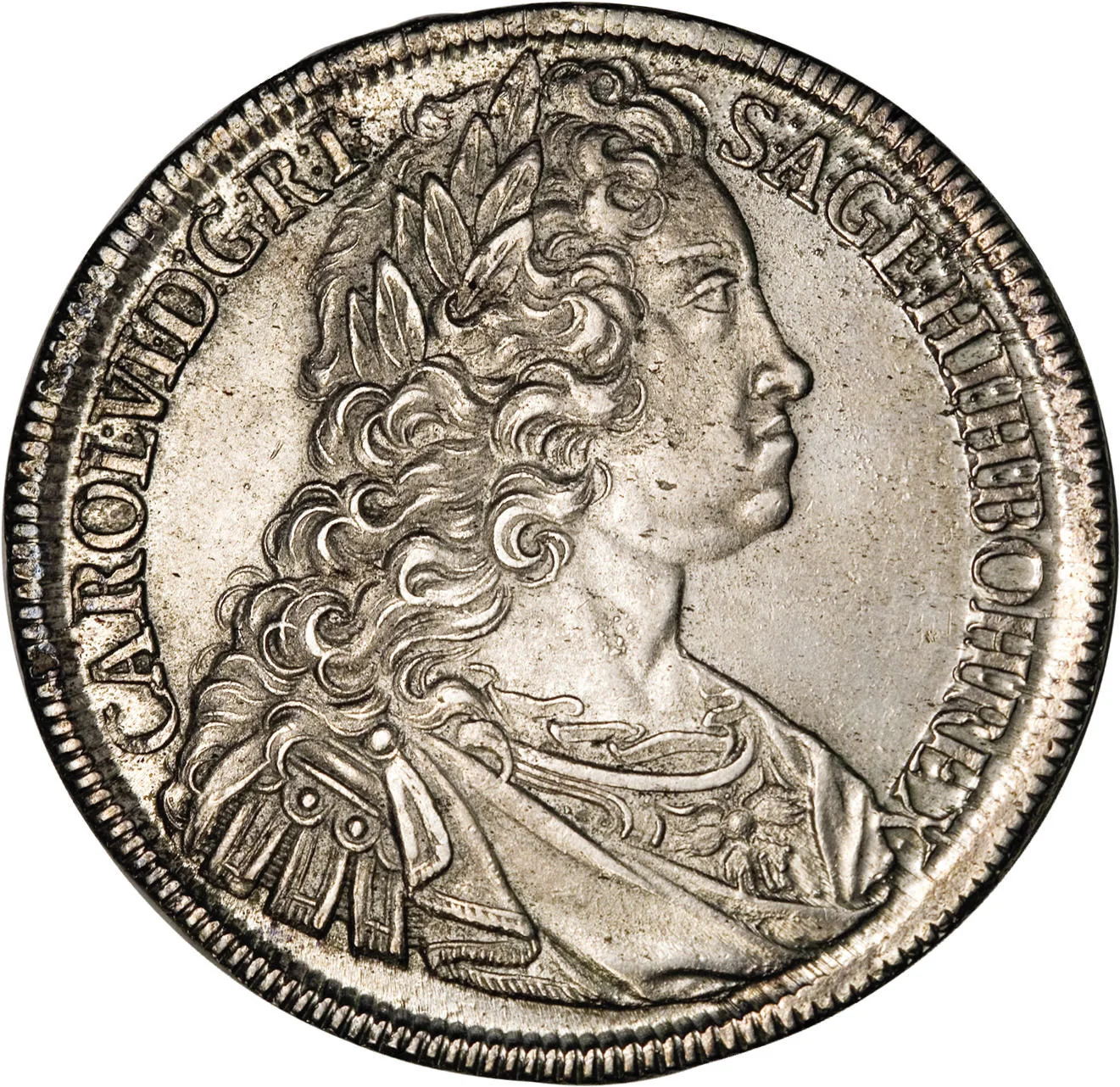
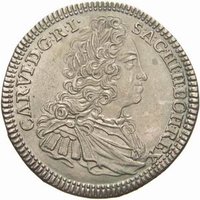
Laureate bust as Roman emperor, dividing the legend above and below.
Inscription:
CAROL VI D G R I S A GE HI H BOH REX
CAR VI D G R I
CAR VI D G R I
Script: Latin
Reverse
Description:
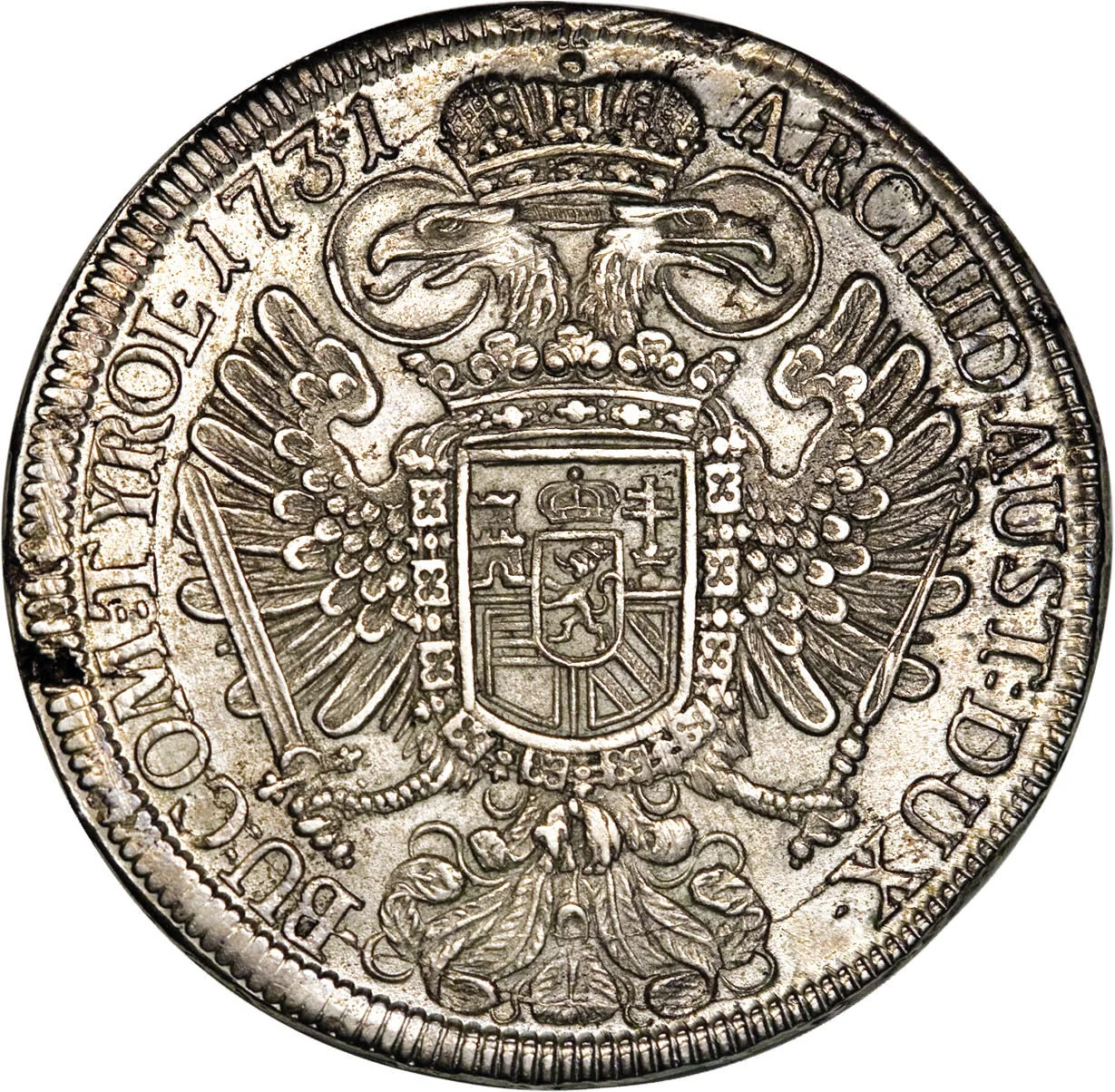
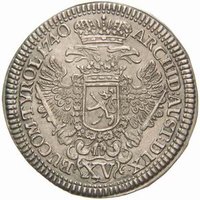
Double-headed eagle with a crowned shield of Castile, Hungary, Aragon, and Burgundy; central arms of Bohemia. Tail feathers frame the legend and date.
Inscription:
ARCHID AUST DUX BU COM TYRL 1731
Script: Latin
Edge
Mints
| Name | Mark |
|---|---|
| Prague | — |
Mintings
| Year | Mint Mark | Mintage | Quality | Collection |
|---|---|---|---|---|
| 1728 | — | — | ||
| 1729 | — | — | ||
| 1730 | — | — | ||
| 1731 | — | — | ||
| 1732 | — | — | ||
| 1733 | — | — | ||
| 1735 | — | — | ||
| 1736 | — | — | ||
| 1737 | — | — | ||
| 1738 | — | — | ||
| 1739 | — | — | ||
| 1740 | — | — |
Historical background
In 1728, the Kingdom of Bohemia, a core crown land of the Habsburg Monarchy, operated under a complex and strained currency system. The official currency was the Conventionsthaler, a large silver coin introduced in the mid-18th century, but the everyday reality for most Bohemians was a proliferation of smaller, often debased coins. The monetary landscape was a legacy of the great recoinage of 1725-1727, initiated by Emperor Charles VI to standardize the currency across his Austrian and Bohemian lands. This reform aimed to replace the wildly varying and debased coins from the expensive War of the Spanish Succession with a stable, unified silver standard based on the Conventionsthaler (equal to 2 Gulden or 120 Kreuzer).
Despite this official reform, the currency situation remained challenging. While large transactions and state finances used the high-quality silver Conventionsthaler, the lower-denomination coins in daily circulation—kreuzers, groschen, and polturas—were often minted from inferior alloys. Furthermore, older, pre-reform coins of dubious value still circulated alongside the new ones, causing confusion and friction in market exchanges. The Bohemian economy, heavily reliant on agriculture and textile production, thus depended on a monetary base that was theoretically standardized but practically inconsistent and prone to localized valuation disputes.
The stability of this system was also fundamentally tied to Vienna's fiscal health and the silver supply from Habsburg mines. Any strain on the imperial treasury or a fluctuation in silver imports from the New World could threaten the integrity of the coinage. Consequently, while the recoinage of the 1720s provided a necessary reset, the Bohemian currency situation in 1728 was one of fragile stability, caught between a modernizing central policy and the persistent, messy realities of early modern commerce and metallurgy.
Despite this official reform, the currency situation remained challenging. While large transactions and state finances used the high-quality silver Conventionsthaler, the lower-denomination coins in daily circulation—kreuzers, groschen, and polturas—were often minted from inferior alloys. Furthermore, older, pre-reform coins of dubious value still circulated alongside the new ones, causing confusion and friction in market exchanges. The Bohemian economy, heavily reliant on agriculture and textile production, thus depended on a monetary base that was theoretically standardized but practically inconsistent and prone to localized valuation disputes.
The stability of this system was also fundamentally tied to Vienna's fiscal health and the silver supply from Habsburg mines. Any strain on the imperial treasury or a fluctuation in silver imports from the New World could threaten the integrity of the coinage. Consequently, while the recoinage of the 1720s provided a necessary reset, the Bohemian currency situation in 1728 was one of fragile stability, caught between a modernizing central policy and the persistent, messy realities of early modern commerce and metallurgy.
✨ Legendary