Logo Title
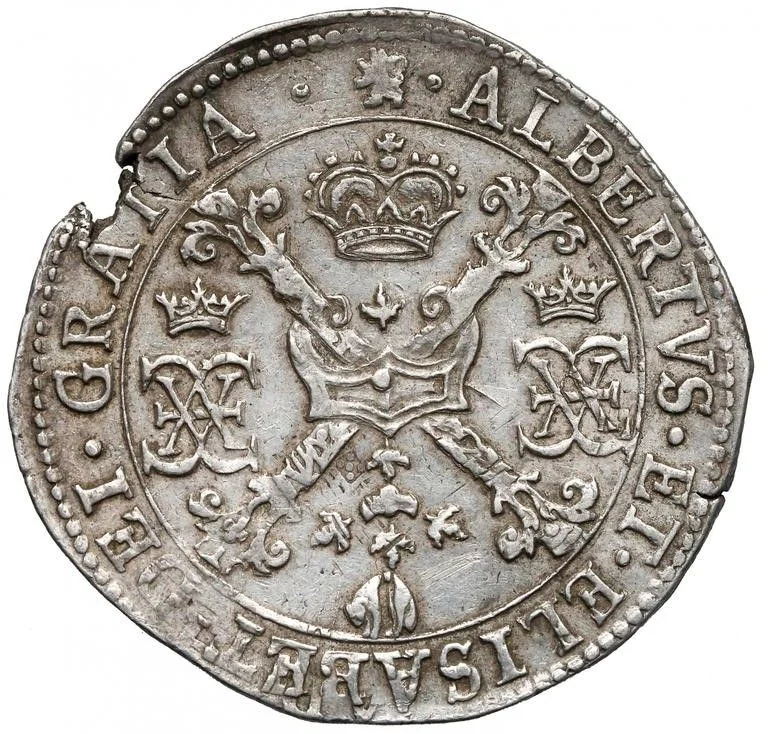
obverse
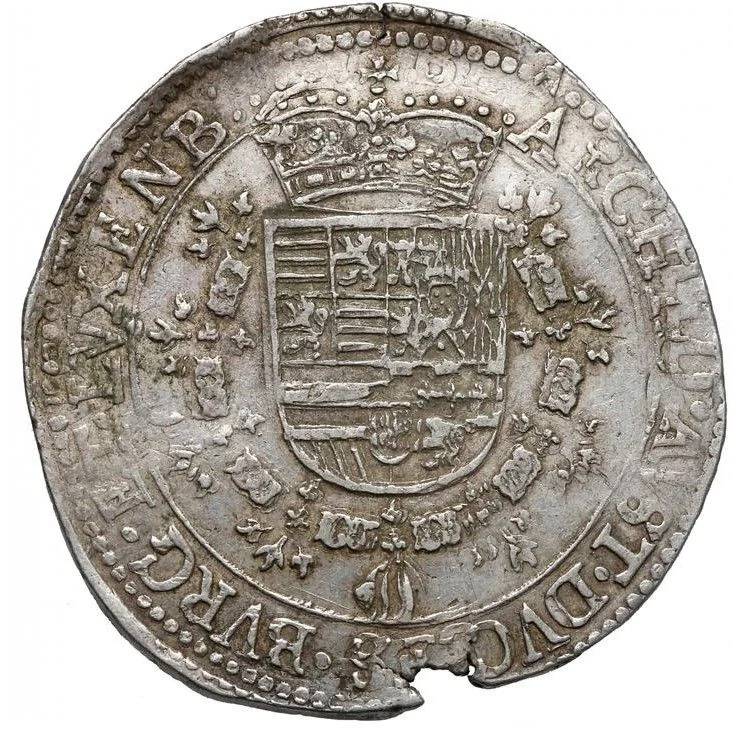
reverse
Gabinet Numizmatyczny D. Marciniak

1 Patagon – Duchy of Luxembourg

Luxembourg
Context
Years: 1616–1619
Country: Luxembourg Country flag
Currency:
(1353—1713)
Demonetized: Yes
Total mintage: 5,697
Material
Diameter: 44 mm
Weight: 27.9 g
Silver weight: 24.36 g
Composition: 87.3% Silver
Magnetic: No
Technique: Hammered
References
KM: #Click to copy to clipboard10
Numista: #337458
Value
Bullion value: $69.67

Obverse

Description:
Crowned Burgundian cross with central firesteel, sparks, and Golden Fleece jewel, flanked by two crowned monograms.
Inscription:
• ALBERTVS • ET • ELISABET • DEI • GRATIA •
Script: Latin

Reverse

Description:
Arms crowned and encircled by the Golden Fleece collar.
Inscription:
ARCHID • AVST • DVCES • BVRG • ET • LVXENB •
Script: Latin

Edge

Mintings

YearMint MarkMintageQualityCollection
5,697

Historical background

In 1616, the Duchy of Luxembourg, a province of the Spanish Habsburg Netherlands, was entangled in a complex and deteriorating currency situation typical of the early modern period. The primary unit of account was the livre (pound) of Luxembourg, subdivided into 20 sols or 240 deniers, but its actual value was unstable. The circulating medium was a chaotic mix of physical coins: domestic issues from the Luxembourg mint, coins from other Habsburg territories like Brabant, and a flood of foreign currency, particularly debased patards from the neighboring Prince-Bishopric of Liège and French écus. This proliferation of coins of varying weight and fineness made trade cumbersome and fostered widespread distrust.

The core problem was a severe debasement driven by the financial demands of the Eighty Years' War (1568-1648). The Spanish Crown, perpetually in need of funds to maintain its military, frequently engaged in practices that eroded currency value. This included reducing the precious metal content in newly minted coins (augmentation) and officially raising the nominal value of existing coins (criée). As "bad" debased money drove "good" full-weight money out of circulation (Gresham's Law), the result was rampant inflation, price volatility, and economic hardship for the populace, whose wages failed to keep pace.

Local authorities in Luxembourg were largely powerless to enact effective monetary reform, as control over minting and currency policy ultimately resided with the Spanish central government in Brussels. Their efforts were reactive, often limited to issuing ordinances that attempted to fix exchange rates for the myriad of coins or to ban specific foreign pieces—edicts that were frequently ignored in practice. Consequently, the currency situation in 1616 was one of profound instability, undermining local commerce and acting as a persistent strain on the duchy's economy within the wider context of Habsburg imperial finance and warfare.
Legendary