

¼ real – New Spain
Add to wishlist
Mexico
Context
Years: 1796–1816
Country: Mexico
Issuer: New Spain
Ruler: Charles IV
Currency:
(1535—1897)
Demonetized: Yes
Material
References
KM: #
Numista: #33345
Value
Bullion value: $1.85
Obverse
Description:
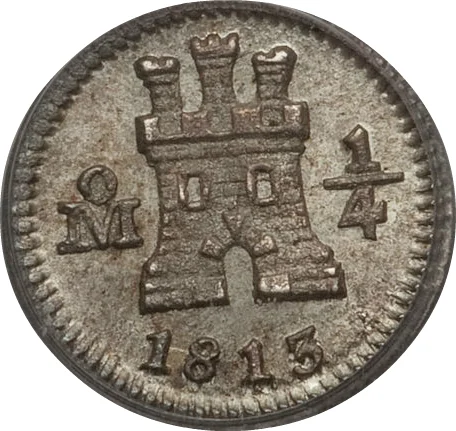
Castle left, denomination right, date below.
Inscription:
Mo 1/4
1815
1815
Reverse
Description:
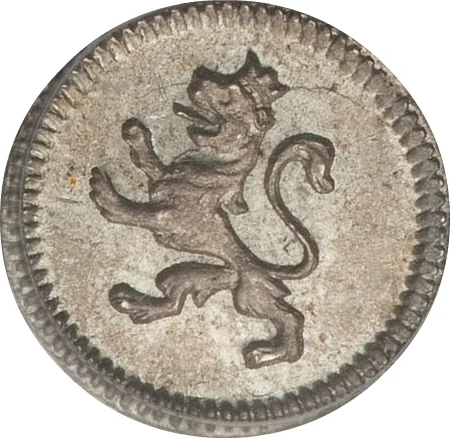
Lion rampant crowned.
Edge
Plain
Mints
| Name | Mark |
|---|---|
| Mexican Mint | — |
Mintings
| Year | Mint Mark | Mintage | Quality | Collection |
|---|---|---|---|---|
| 1796 | — | — | ||
| 1797 | — | — | ||
| 1798 | — | — | ||
| 1799 | — | — | ||
| 1800 | — | — | ||
| 1801 | — | — | ||
| 1802 | — | — | ||
| 1803 | — | — | ||
| 1804 | — | — | ||
| 1805 | — | — | ||
| 1806 | — | — | ||
| 1807 | — | — | ||
| 1808 | — | — | ||
| 1809 | — | — | ||
| 1810 | — | — | ||
| 1811 | — | — | ||
| 1812 | — | — | ||
| 1813 | — | — | ||
| 1814 | — | — | ||
| 1815 | — | — | ||
| 1816 | — | — |
Historical background
In 1796, the Viceroyalty of New Spain, encompassing modern-day Mexico and much of the southwestern United States, faced a severe and worsening currency crisis rooted in imperial overreach and global war. The primary circulating coin, the silver real, was being drained from the colony at an alarming rate to finance Spain's participation in the European wars following the French Revolution. Furthermore, the royal coffers in Mexico City were obligated to send massive subsidies, known as the situados, to support other, less profitable Spanish colonies like Cuba, Florida, and the Philippines, creating a constant outward flow of precious metal.
This external drain was exacerbated by internal fiscal pressures. To cover local administrative and military costs, the colonial government under Viceroy Miguel de la Grúa Talamanca began issuing a flood of paper money, particularly vales reales (royal bonds). These promissory notes, which were not backed by sufficient silver reserves, rapidly depreciated in value, causing inflation and a profound loss of public confidence. Merchants and the populace, preferring "sound money," hoarded silver coins, which only worsened the scarcity in daily transactions and further crippled the economy.
The situation created a stark duality: a wealthy colony that was the world's foremost silver producer was paradoxically starved of its own currency. This monetary instability disrupted commerce, sowed social unrest, and revealed the vulnerabilities of Spain's colonial economic system. The crisis of 1796 was a critical juncture, eroding the fiscal foundations of New Spain and foreshadowing the financial turmoil that would contribute to the wars of independence in the early 19th century.
This external drain was exacerbated by internal fiscal pressures. To cover local administrative and military costs, the colonial government under Viceroy Miguel de la Grúa Talamanca began issuing a flood of paper money, particularly vales reales (royal bonds). These promissory notes, which were not backed by sufficient silver reserves, rapidly depreciated in value, causing inflation and a profound loss of public confidence. Merchants and the populace, preferring "sound money," hoarded silver coins, which only worsened the scarcity in daily transactions and further crippled the economy.
The situation created a stark duality: a wealthy colony that was the world's foremost silver producer was paradoxically starved of its own currency. This monetary instability disrupted commerce, sowed social unrest, and revealed the vulnerabilities of Spain's colonial economic system. The crisis of 1796 was a critical juncture, eroding the fiscal foundations of New Spain and foreshadowing the financial turmoil that would contribute to the wars of independence in the early 19th century.
💎 Very Rare