

½ crown – Ireland
Add to wishlist
Ireland
Context
Material
Diameter: 34 mm
Weight: 14.4 g
Silver Weight:: 14.40 g
Shape: Irregular round
Composition: Silver
Magnetic: No
Technique: Hammered
References
KM: #
Numista: #332452
Value
Bullion value: $36.08
Obverse
Description:
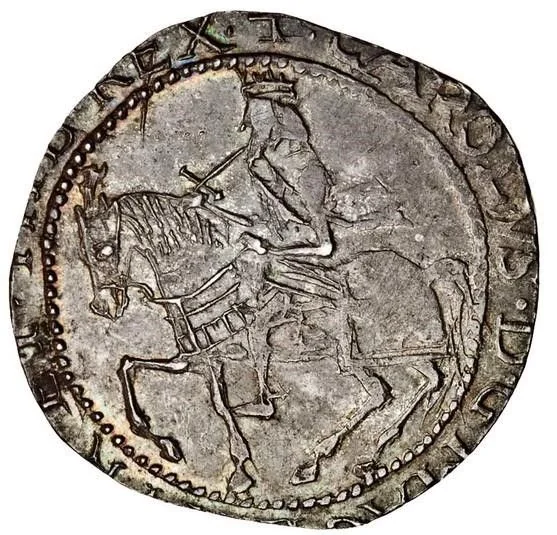
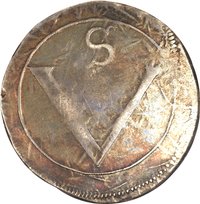
Charles I on horseback, holding sword and reins, within beaded circle.
Inscription:
☩ CAROLVS D G MAG BRI FR ET HIB REX
Script: Latin
Reverse
Description:
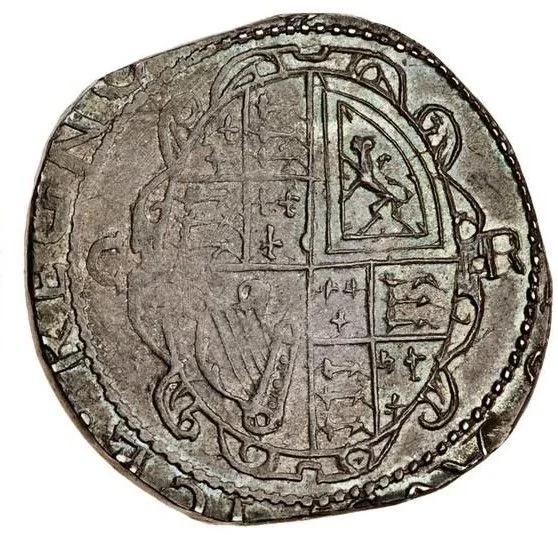
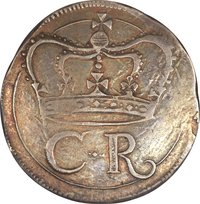
Shielded arms with C R initials in beaded circle.
Inscription:
CHRISTO AVSPICE REGNO
Script: Latin
Edge
Mintings
| Year | Mint Mark | Mintage | Quality | Collection |
|---|---|---|---|---|
| — | — | — |
Historical background
In 1642, Ireland was plunged into the violent turmoil of the Irish Confederate Wars, a multi-sided conflict involving Gaelic Irish Catholics, English and Scottish Protestant settlers, and the forces of the English Parliament and Crown. This widespread rebellion and warfare catastrophically disrupted the normal economy and severed Ireland from the established English monetary system. Trade collapsed, and the regular supply of silver coinage from London dried up, creating a severe shortage of acceptable currency for everyday transactions and, crucially, for paying armies.
To address this crisis, both the insurgent Catholic Confederation, based in Kilkenny, and the English administration in Dublin took the extraordinary step of issuing emergency coinage. The most notable response was the production of "siege money" or coinage of necessity. The Confederation, lacking precious metals, minted coins from melted-down silver plate donated by the Catholic gentry and church. These coins, such as the "Ormonde Crowns," were often crudely stamped and of irregular weight but served as a vital financial instrument for the Confederate war effort. Simultaneously, Dublin Castle issued coins made from silver plate looted from Catholic churches and homes.
This period of emergency coinage was inherently unstable. The value of these issues was more symbolic and military than intrinsic, relying on the authority of the issuing power rather than their bullion content. The proliferation of different coinages reflected the fractured political landscape, with various armies and authorities effectively creating their own monetary zones. The situation would only begin to resolve with the reconquest of Ireland by Cromwell’s New Model Army in the late 1640s, which forcibly reintegrated Ireland into the English monetary sphere, ending this unique and desperate chapter in Irish financial history.
To address this crisis, both the insurgent Catholic Confederation, based in Kilkenny, and the English administration in Dublin took the extraordinary step of issuing emergency coinage. The most notable response was the production of "siege money" or coinage of necessity. The Confederation, lacking precious metals, minted coins from melted-down silver plate donated by the Catholic gentry and church. These coins, such as the "Ormonde Crowns," were often crudely stamped and of irregular weight but served as a vital financial instrument for the Confederate war effort. Simultaneously, Dublin Castle issued coins made from silver plate looted from Catholic churches and homes.
This period of emergency coinage was inherently unstable. The value of these issues was more symbolic and military than intrinsic, relying on the authority of the issuing power rather than their bullion content. The proliferation of different coinages reflected the fractured political landscape, with various armies and authorities effectively creating their own monetary zones. The situation would only begin to resolve with the reconquest of Ireland by Cromwell’s New Model Army in the late 1640s, which forcibly reintegrated Ireland into the English monetary sphere, ending this unique and desperate chapter in Irish financial history.
✨ Legendary