

2 reales – Spain
Add to wishlist
Spain
Context
Material
Diameter: 24 mm
Weight: 6.8 g
Silver Weight:: 6.33 g
Thickness: 1 mm
Shape: Round
Composition: 93.1% Silver
Magnetic: No
Technique: Roller milled
References
KM: #
Numista: #111676
Value
Bullion value: $15.78
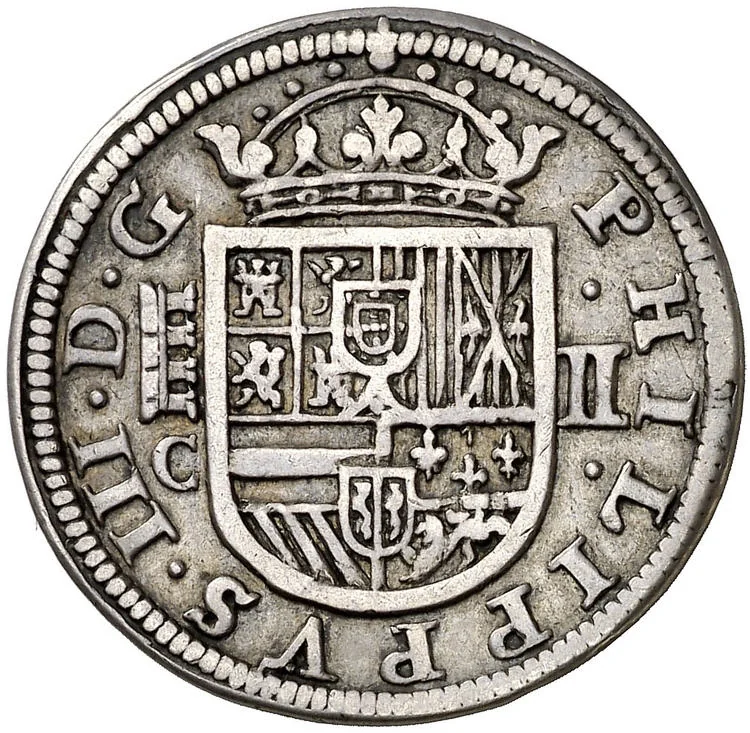
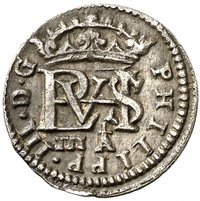
Obverse
Description:
Spanish coat of arms with Portuguese arms.
Inscription:
PHILIPPVS · III · D · G
C
· II ·
C
· II ·
Script: Latin
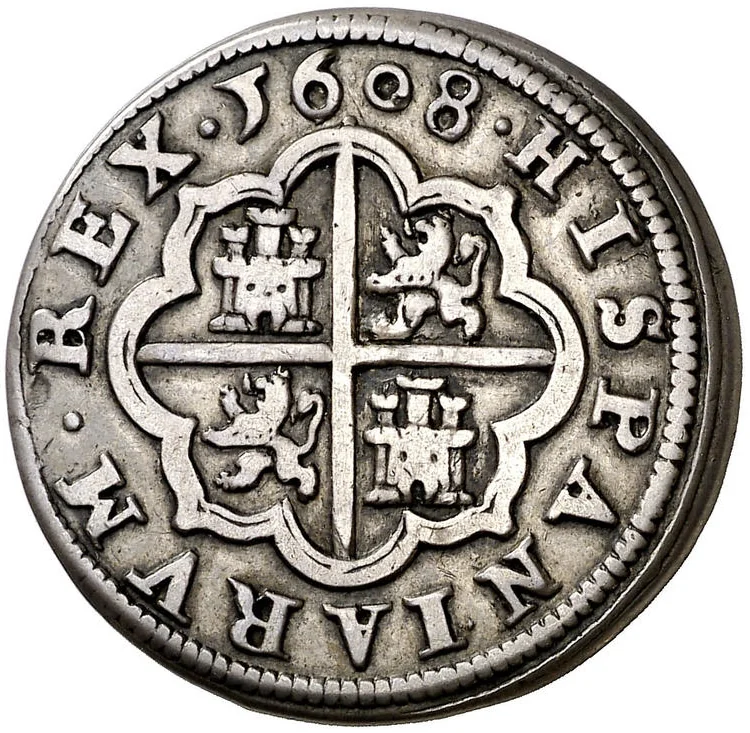
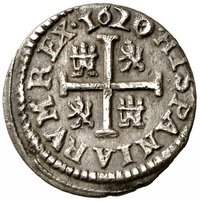
Reverse
Description:
Castile and León's coat of arms in an octolobe.
Inscription:
· 1608 · HISPANIARVM · REX
Script: Latin
Edge
Categories
| Symbols> Coat of Arms |
Mints
| Name | Mark |
|---|---|
| Royal Mint of Segovia | — |
Mintings
| Year | Mint Mark | Mintage | Quality | Collection |
|---|---|---|---|---|
| 1608 | C | — | ||
| 1611 | A | — | ||
| 1614 | AR | — | ||
| 1620 | AR | — | ||
| 1621 | A | — |
Historical background
In 1608, Spain was grappling with the severe economic consequences of the "Price Revolution" and a deeply flawed monetary system. A century of massive silver and gold imports from the Americas had not brought lasting prosperity but instead triggered rampant inflation, devalued the currency, and made Spanish goods uncompetitive. The crown, under Philip III, was burdened by endless debt from its Habsburg military commitments across Europe, leading to repeated bankruptcies (the latest in 1607) which shattered financial confidence. The economy was structurally weak, overly reliant on precious metal shipments that were increasingly diverted to pay foreign creditors, leaving domestic industries like textiles in decline.
The currency situation itself was chaotic, characterized by a proliferation of debased coinage. The famed real de a ocho (piece of eight) remained an international benchmark, but within Spain, a severe shortage of small-denomination vellón (copper) coinage for everyday transactions had led the crown to repeatedly issue pure copper coins with artificially high face values. This practice, effectively a form of deficit financing, flooded the market with intrinsically worthless currency, driving good silver money out of circulation (Gresham's Law) and causing prices to soar. The result was a two-tier system: unstable copper for internal use and prized silver for foreign trade.
Authorities recognized the crisis, and the years around 1608 saw intense debate and sporadic attempts at reform. The government had temporarily halted the minting of vellón in 1608, but this did not solve the existing over-supply. Proposals ranged from drastic devaluations to complete withdrawals of copper coinage, but any solution threatened to cause immediate social unrest and further disrupt commerce. Thus, the monarchy hesitated, allowing the corrosive monetary instability to continue, which would plague Spain throughout the 17th century and contribute significantly to its gradual economic and geopolitical decline.
The currency situation itself was chaotic, characterized by a proliferation of debased coinage. The famed real de a ocho (piece of eight) remained an international benchmark, but within Spain, a severe shortage of small-denomination vellón (copper) coinage for everyday transactions had led the crown to repeatedly issue pure copper coins with artificially high face values. This practice, effectively a form of deficit financing, flooded the market with intrinsically worthless currency, driving good silver money out of circulation (Gresham's Law) and causing prices to soar. The result was a two-tier system: unstable copper for internal use and prized silver for foreign trade.
Authorities recognized the crisis, and the years around 1608 saw intense debate and sporadic attempts at reform. The government had temporarily halted the minting of vellón in 1608, but this did not solve the existing over-supply. Proposals ranged from drastic devaluations to complete withdrawals of copper coinage, but any solution threatened to cause immediate social unrest and further disrupt commerce. Thus, the monarchy hesitated, allowing the corrosive monetary instability to continue, which would plague Spain throughout the 17th century and contribute significantly to its gradual economic and geopolitical decline.
✨ Legendary