

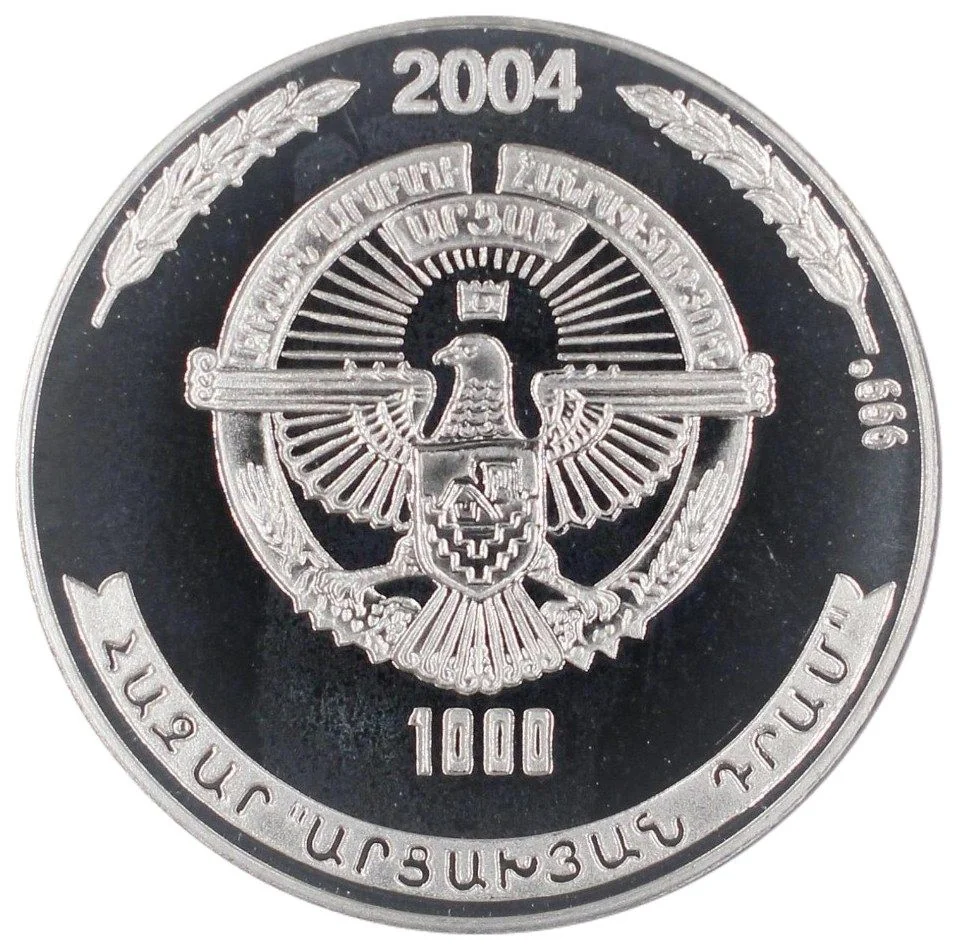
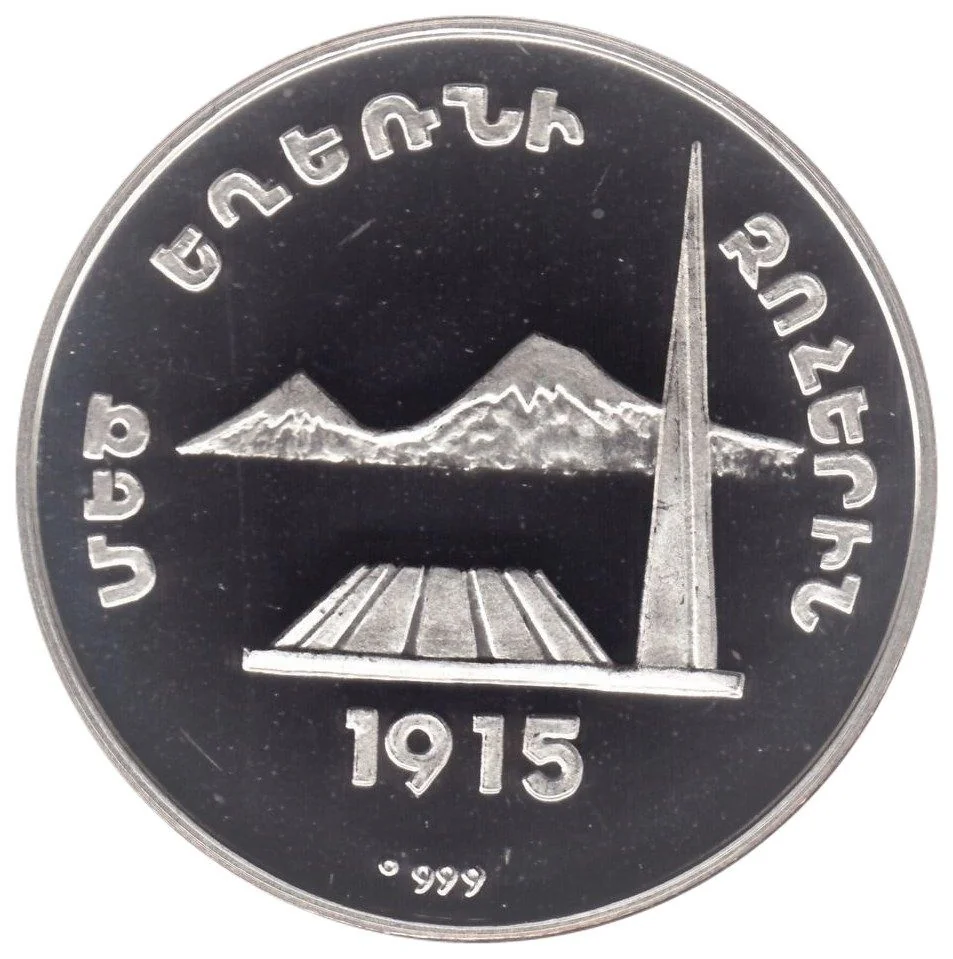
1000 drams – Artsakh
Add to wishlist
Non-circulating coins
Commemoration: Armenian Genocide
Azerbaijan
Context
Year: 2004
Country: Azerbaijan
Issuer: Artsakh
Period:
(1991—2024)
Currency:
(2003—2023)
Demonetization: 1 January 2024
Material
Diameter: 38.9 mm
Weight: 31.12 g
Silver Weight:: 31.09 g
Shape: Round
Composition: 99.9% Silver
Standard: Silver ounce
Magnetic: No
Technique: Milled
References
KM: #
Numista: #101028
Value
Bullion value: $79.54
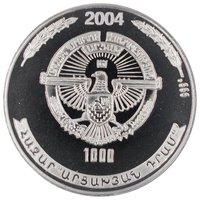
Obverse
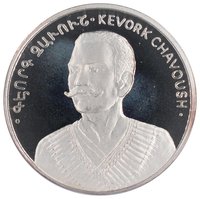
Reverse
Edge
Plain
Mintings
| Year | Mint Mark | Mintage | Quality | Collection |
|---|---|---|---|---|
| 2004 | — | — |
Historical background
Between 2004 and 2017, the currency situation in Artsakh (Nagorno-Karabakh) was defined by a unique and complex dual-currency system. Following the 1994 ceasefire that ended the First Nagorno-Karabakh War, the unrecognized Republic of Artsakh did not issue its own independent currency. Instead, the Armenian dram and, to a lesser extent, the Russian ruble, served as the de facto legal tender for all official transactions, banking, and state budgets. This was a practical reflection of Artsakh's profound economic, political, and infrastructural dependence on Armenia, with the dram providing a crucial link to a somewhat stable monetary system and facilitating essential trade.
Alongside the official use of the dram, the Azerbaijani manat continued to circulate unofficially, particularly in regions with ethnically Azerbaijani populations before the war and in border areas. Its presence was a lingering economic artifact of the Soviet era and the subsequent conflict, but it held no official status and was not used by the Armenian population or the government. The Central Bank of the Republic of Armenia effectively functioned as the monetary authority for Artsakh, with commercial banks in Stepanakert operating as branches of Armenian parent banks, further cementing the dram's dominance.
This monetary arrangement underscored the republic's unresolved status. The reliance on the Armenian dram provided economic stability and was a powerful symbol of Yerevan's support, but it also highlighted Artsakh's lack of monetary sovereignty and the constraints of its international isolation. The system functioned adequately for daily life and basic governance but within a context of fragile ceasefire, a blockaded economy, and dependence on financial aid from Armenia and the Armenian diaspora to cover significant budgetary shortfalls.
Alongside the official use of the dram, the Azerbaijani manat continued to circulate unofficially, particularly in regions with ethnically Azerbaijani populations before the war and in border areas. Its presence was a lingering economic artifact of the Soviet era and the subsequent conflict, but it held no official status and was not used by the Armenian population or the government. The Central Bank of the Republic of Armenia effectively functioned as the monetary authority for Artsakh, with commercial banks in Stepanakert operating as branches of Armenian parent banks, further cementing the dram's dominance.
This monetary arrangement underscored the republic's unresolved status. The reliance on the Armenian dram provided economic stability and was a powerful symbol of Yerevan's support, but it also highlighted Artsakh's lack of monetary sovereignty and the constraints of its international isolation. The system functioned adequately for daily life and basic governance but within a context of fragile ceasefire, a blockaded economy, and dependence on financial aid from Armenia and the Armenian diaspora to cover significant budgetary shortfalls.
✨ Legendary