

1 Mohur – Mughal Empire
India
Context
Year: 1606
Islamic (Hijri) Year: 1014
Country: India 
Issuer: Mughal Empire
Ruler: Akbar
Currency:
(1540—1842)
Demonetized: Yes
Material
References
KM: #Click to copy to clipboard119C.2
Numista: #315537
Value
Bullion value: $1866.47
Obverse
Description:
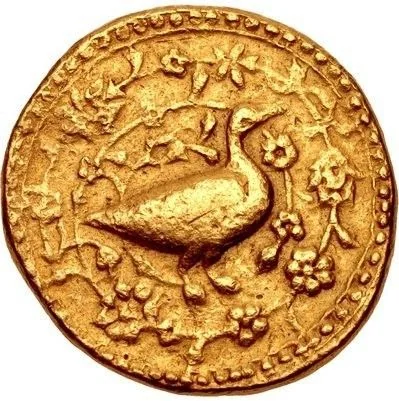
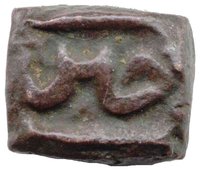
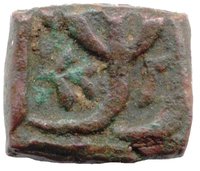
Duck on floral background.
Reverse
Inscription:
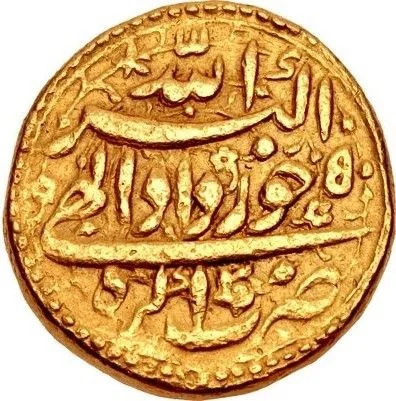
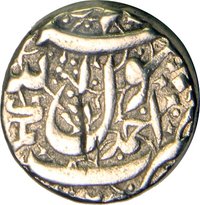
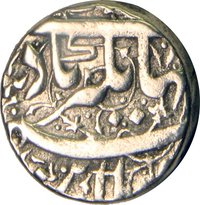
Allahu Akbar khurdad ilahi 50 zarb Agra
Edge
Mints
| Name | Mark |
|---|---|
| Agra | — |
Mintings
| Year | Mint Mark | Mintage | Quality | Collection |
|---|---|---|---|---|
| 1606 | — | — |
Historical background
In 1606, the Mughal Empire's currency system was a robust and standardized bimetallic structure, firmly established by the administrative reforms of Emperor Akbar (r. 1556–1605). The system revolved around two primary coins: the silver rupiya (the precursor to the modern rupee) and the gold mohur. Akbar had implemented strict imperial control over mints (dar-ul-zarb), ensuring remarkable uniformity in weight, purity, and design across the vast empire. The standard silver rupiya weighed approximately 11.5 grams and was of high purity, making it a trusted and widely circulated currency for both regional and international trade. This stability was a key pillar of the empire's economic strength, facilitating revenue collection (jizya, zakat) and large-scale commerce.
The year 1606 itself falls within the reign of Jahangir, who had ascended the throne in 1605. While he largely maintained his father's monetary system, this period saw the beginning of Jahangir's famous artistic innovations in coinage. He introduced ornate pictorial motifs, such as zodiac signs and even his own portrait, alongside the traditional Islamic inscriptions. However, these were largely commemorative or celebratory issues; the everyday currency in circulation remained the standardized rupiya and mohur. The system was not without its challenges, as the empire's expansion and immense wealth attracted foreign silver, particularly from the New World via European traders, which was minted into imperial coins to fuel the economy.
Despite the political turmoil surrounding Jahangir's accession, including the rebellion of his son Khusrau, the currency situation in 1606 remained fundamentally stable. The imperial treasury was full, and the administrative machinery for coinage functioned effectively. This monetary stability allowed for the seamless financing of military campaigns, the construction of monumental architecture, and the flourishing of trade along the Grand Trunk Road and at major ports like Surat. Thus, in 1606, the Mughal currency system stood as a testament to centralized power and economic integration, providing a solid financial foundation for the empire's continued prosperity.
The year 1606 itself falls within the reign of Jahangir, who had ascended the throne in 1605. While he largely maintained his father's monetary system, this period saw the beginning of Jahangir's famous artistic innovations in coinage. He introduced ornate pictorial motifs, such as zodiac signs and even his own portrait, alongside the traditional Islamic inscriptions. However, these were largely commemorative or celebratory issues; the everyday currency in circulation remained the standardized rupiya and mohur. The system was not without its challenges, as the empire's expansion and immense wealth attracted foreign silver, particularly from the New World via European traders, which was minted into imperial coins to fuel the economy.
Despite the political turmoil surrounding Jahangir's accession, including the rebellion of his son Khusrau, the currency situation in 1606 remained fundamentally stable. The imperial treasury was full, and the administrative machinery for coinage functioned effectively. This monetary stability allowed for the seamless financing of military campaigns, the construction of monumental architecture, and the flourishing of trade along the Grand Trunk Road and at major ports like Surat. Thus, in 1606, the Mughal currency system stood as a testament to centralized power and economic integration, providing a solid financial foundation for the empire's continued prosperity.
✨ Legendary