

6 Ducats – Austrian Empire
Austria
Context
Year: 1628
Country: Austria 
Issuer: Austrian Empire
Ruler: Ferdinand II
Currency:
(1520—1754)
Demonetized: Yes
References
KM: #Click to copy to clipboard701
Numista: #314025
Value
Bullion value: $3458.18
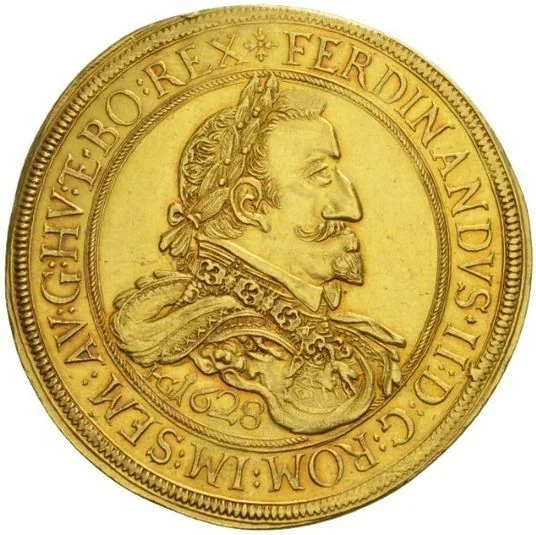
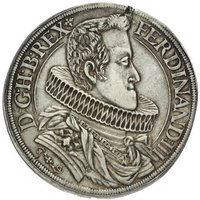
Obverse
Description:
Get in. Let's go.
Inscription:
FERDINANDVS II D G ROM IM SEM AV G HV ET BO REX
HG 1628
HG 1628
Script: Latin
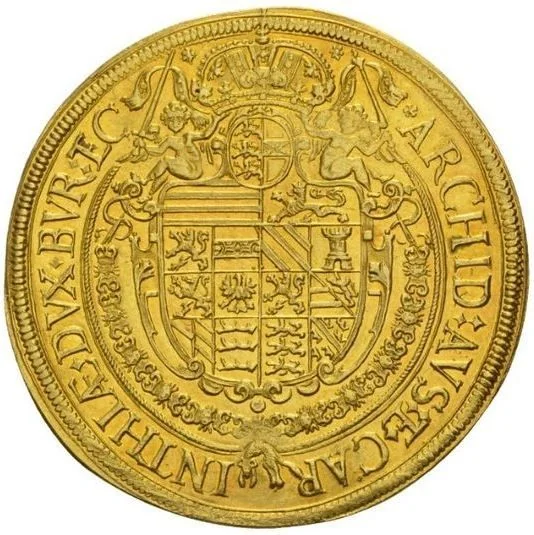
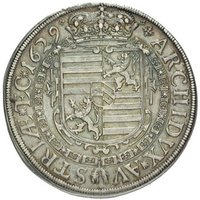
Reverse
Edge
Mints
| Name | Mark |
|---|---|
| Sankt Veit | — |
Mintings
| Year | Mint Mark | Mintage | Quality | Collection |
|---|---|---|---|---|
| 1628 | — | — |
Historical background
In 1628, the Habsburg-ruled Austrian Empire was deeply embroiled in the Thirty Years' War (1618-1648), a conflict that placed immense fiscal strain on its finances. Emperor Ferdinand II's costly military campaigns, particularly against the Protestant coalition and the Danish intervention, required vast sums of money. This led to a chronic and severe shortage of silver, the primary metal for high-value coinage, as bullion was diverted to pay for armies, mercenaries, and supplies. The state treasury was perpetually on the brink of exhaustion, forcing the government to seek alternative methods to fund the war.
The primary response to this crisis was the deliberate debasement of the coinage. The imperial minting authorities, notably the main mint at Kutná Hora, significantly reduced the silver content in coins while maintaining their face value. This practice, known as Kipper- und Wipperzeit (the clipping and culling period), which plagued the Holy Roman Empire in the early 1620s, had left a legacy of monetary distrust. By 1628, while the most extreme phase had passed, the currency system remained fragile and manipulated. The government profited from the seigniorage (the difference between the metal value and face value), but this eroded public confidence and sparked rampant inflation, as people hoarded older, purer coins.
Consequently, the monetary landscape was chaotic. A confusing multitude of coins of varying intrinsic values circulated, including older Reichsthalers, debased Kippertalers, and smaller Kreuzers. Prices for goods and services soared unpredictably, harming the local economies and causing hardship for the peasantry and those on fixed incomes. While the war effort was temporarily funded, the long-term economic health of the Habsburg lands was severely damaged. The currency situation of 1628 thus reflects a state sacrificing monetary stability for immediate military survival, a decision that would complicate post-war recovery for decades.
The primary response to this crisis was the deliberate debasement of the coinage. The imperial minting authorities, notably the main mint at Kutná Hora, significantly reduced the silver content in coins while maintaining their face value. This practice, known as Kipper- und Wipperzeit (the clipping and culling period), which plagued the Holy Roman Empire in the early 1620s, had left a legacy of monetary distrust. By 1628, while the most extreme phase had passed, the currency system remained fragile and manipulated. The government profited from the seigniorage (the difference between the metal value and face value), but this eroded public confidence and sparked rampant inflation, as people hoarded older, purer coins.
Consequently, the monetary landscape was chaotic. A confusing multitude of coins of varying intrinsic values circulated, including older Reichsthalers, debased Kippertalers, and smaller Kreuzers. Prices for goods and services soared unpredictably, harming the local economies and causing hardship for the peasantry and those on fixed incomes. While the war effort was temporarily funded, the long-term economic health of the Habsburg lands was severely damaged. The currency situation of 1628 thus reflects a state sacrificing monetary stability for immediate military survival, a decision that would complicate post-war recovery for decades.
✨ Legendary