

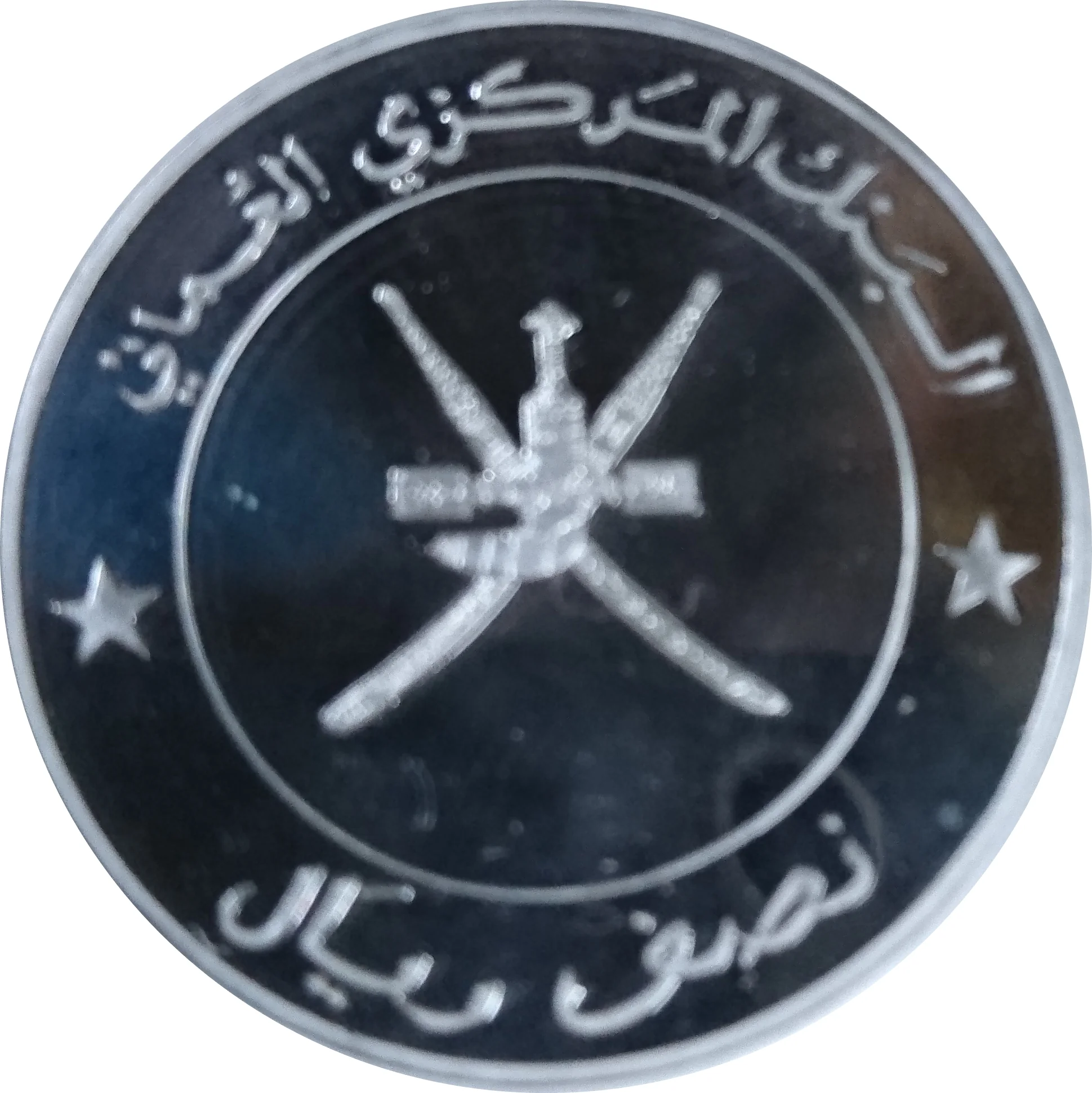
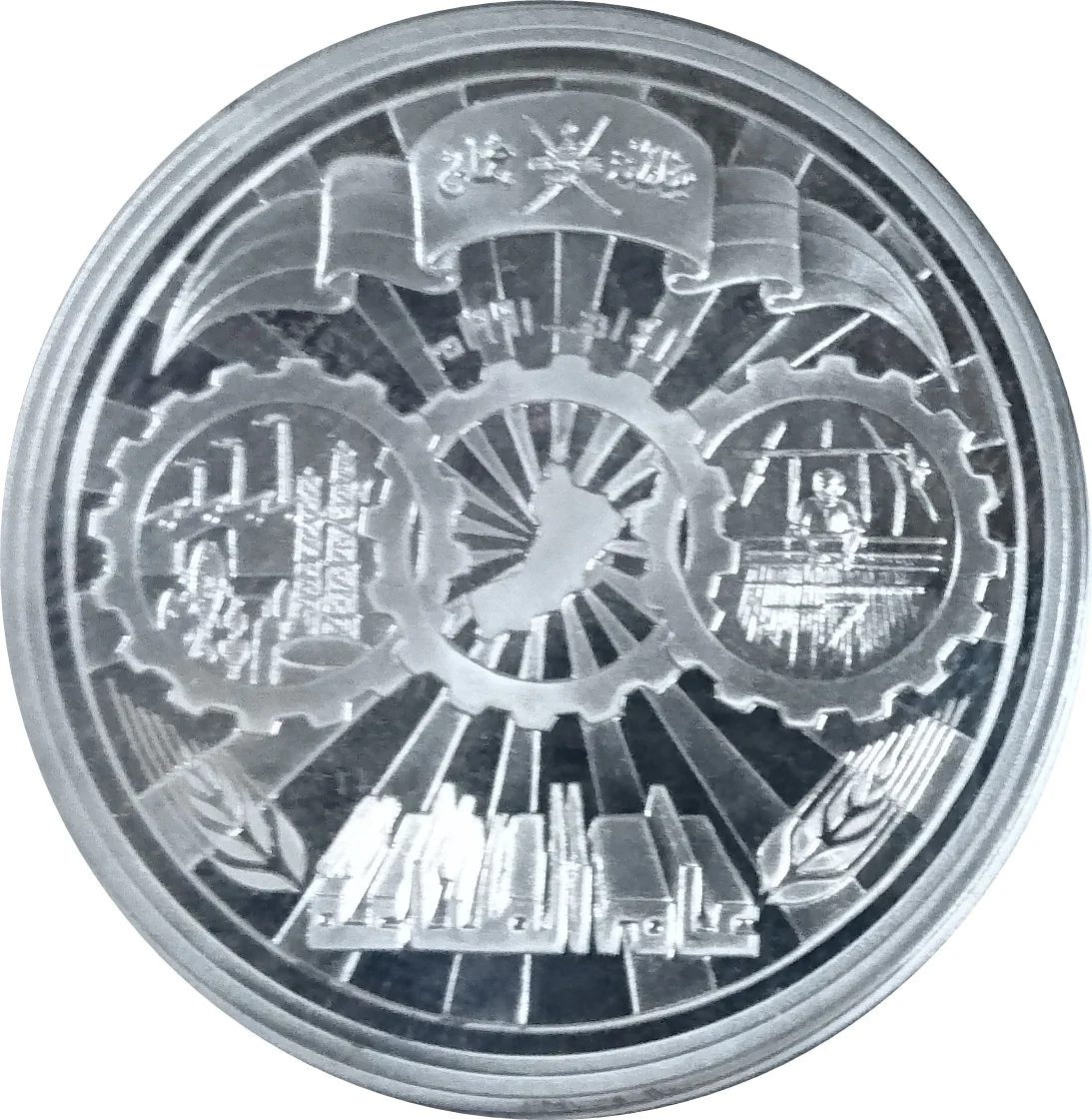
½ rial – Oman
Add to wishlist
Non-circulating coins
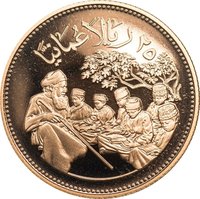
Commemoration: Industry Year
Oman
Context
Year: 1991
Islamic (Hijri) Year:: 1411
Issuer: Oman
Ruler: Qaboos bin Said
Currency:
(since 1972)
Total mintage: 810
Material
References
KM: #
Numista: #103933
Value
Exchange value: ½ OMR
Bullion value: $66.84
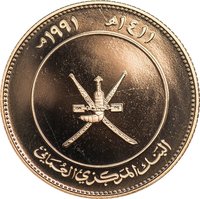
Obverse
Reverse
Edge
Mints
| Name | Mark |
|---|---|
| Royal Mint | — |
Mintings
| Year | Mint Mark | Mintage | Quality | Collection |
|---|---|---|---|---|
| 1991 | — | 810 | Proof |
Historical background
In 1991, Oman's currency situation was defined by stability and a firm peg to the US Dollar, a policy established in 1973. The Omani Rial (OMR), divided into 1,000 baisa, was and remains one of the world's highest-valued currency units. This peg, managed by the Central Bank of Oman, provided critical predictability for an economy heavily reliant on oil exports, which constituted the vast majority of government revenue. The fixed exchange rate shielded the domestic economy from the volatility of international oil markets and facilitated stable import costs and foreign investment.
The backdrop for this stability was the recent Gulf War (1990-1991), in which Oman played a supportive role to the international coalition. While the conflict caused regional economic disruption, Oman's hydrocarbon revenues were bolstered by a spike in oil prices. Furthermore, the nation avoided the severe fiscal deficits and debt accumulation that plagued some neighbors in the 1980s due to more conservative financial management. Consequently, in 1991 there was no pressure to devalue the Rial; instead, the currency's peg was a symbol of the Sultanate's prudent economic stewardship during a period of regional turmoil.
Looking forward, the stable currency regime of 1991 provided a foundation for Oman's subsequent development strategies. The government utilized its oil income, converted at a reliable exchange rate, to fund infrastructure projects and diversify the economy under its early five-year development plans. This period reinforced the Omani Rial's role not just as a medium of exchange, but as a cornerstone of the country's broader economic policy and its integration into the global financial system.
The backdrop for this stability was the recent Gulf War (1990-1991), in which Oman played a supportive role to the international coalition. While the conflict caused regional economic disruption, Oman's hydrocarbon revenues were bolstered by a spike in oil prices. Furthermore, the nation avoided the severe fiscal deficits and debt accumulation that plagued some neighbors in the 1980s due to more conservative financial management. Consequently, in 1991 there was no pressure to devalue the Rial; instead, the currency's peg was a symbol of the Sultanate's prudent economic stewardship during a period of regional turmoil.
Looking forward, the stable currency regime of 1991 provided a foundation for Oman's subsequent development strategies. The government utilized its oil income, converted at a reliable exchange rate, to fund infrastructure projects and diversify the economy under its early five-year development plans. This period reinforced the Omani Rial's role not just as a medium of exchange, but as a cornerstone of the country's broader economic policy and its integration into the global financial system.
✨ Legendary