

1 Scudo – Papal States
Vatican City
Context
Year: 1716
Country: Vatican City 
Issuer: Papal States
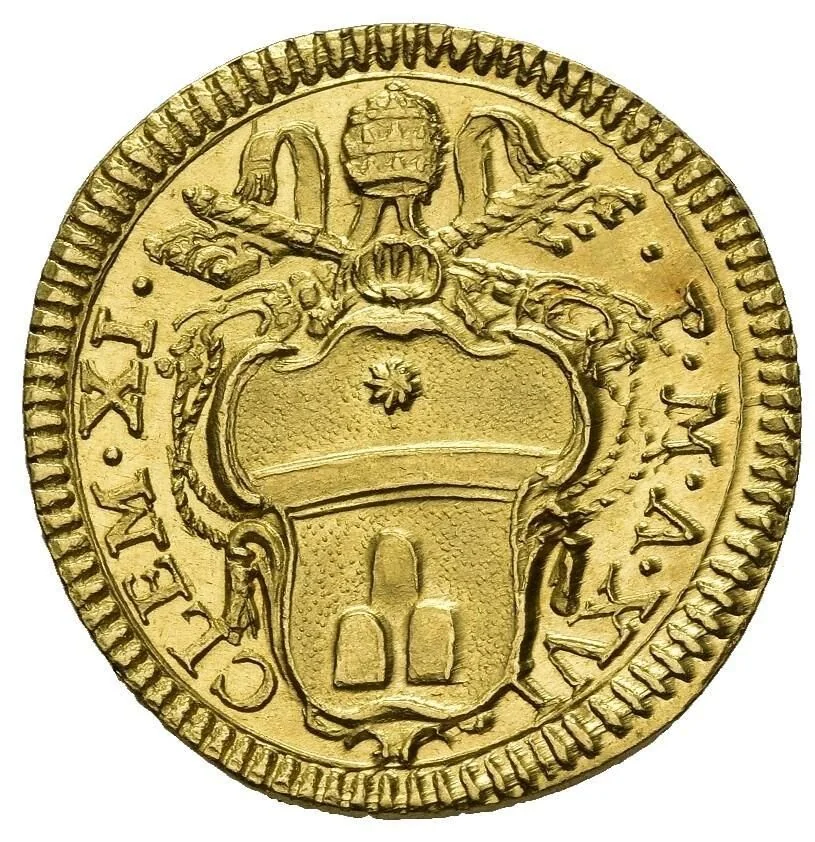
Ruler: Clement XI
Currency:
(1534—1835)
Demonetized: Yes
References
KM: #Click to copy to clipboard765
Numista: #311526
Value
Bullion value: $575.62
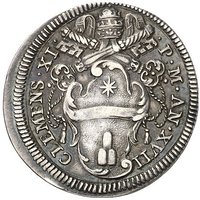
Obverse
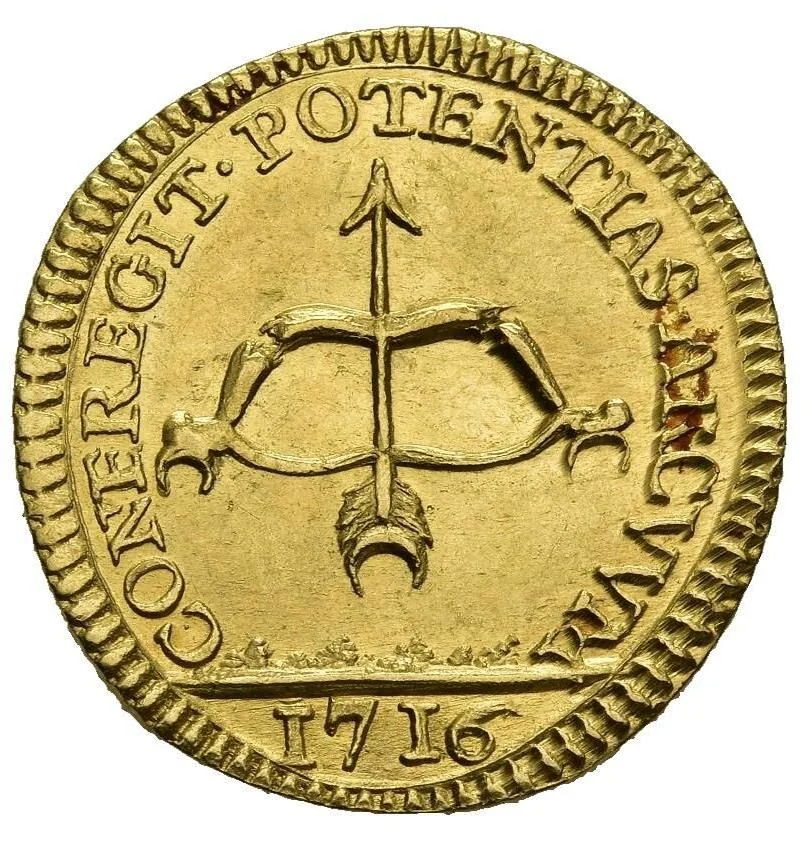
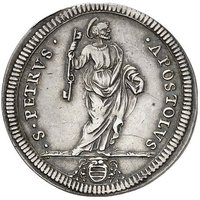
Reverse
Description:
Upward-pointing bow and arrow.
Inscription:
CONFREGIT. POTENTIAS. ARCVVM
1716
1716
Script: Latin
Edge
Mints
| Name | Mark |
|---|---|
| Rome | — |
Mintings
| Year | Mint Mark | Mintage | Quality | Collection |
|---|---|---|---|---|
| 1716 | — | — |
Historical background
In 1716, the Papal States under Pope Clement XI faced a complex and deteriorating currency situation, a legacy of prolonged financial strain. The state’s fiscal woes were driven by massive debts from military campaigns, lavish papal patronage, and inefficient tax collection. To meet these obligations, the Apostolic Chamber had resorted to repeated debasements of the silver coinage, notably the grosso and the giulio. This practice reduced the precious metal content in coins, leading to a proliferation of underweight and clipped currency in circulation, which severely undermined public trust in the monetary system.
The core of the problem was a severe shortage of high-quality silver specie, causing a disconnect between the official face value of coins and their intrinsic metal worth. This instability created a chaotic environment where older, full-weight coins were hoarded or exported (following Gresham’s Law), while foreign currencies, particularly Spanish silver pieces, flowed in to fill the void for larger transactions. The papal mint struggled to compete, and the resulting confusion hampered both daily commerce and state finances, as revenues collected in debased coinage held less real value.
Recognizing the crisis, Pope Clement XI initiated a significant monetary reform in 1716. This reform aimed to restore confidence by introducing new, full-weight silver coins, such as the testone and the scudo, aligned with prevailing regional standards. The intent was to stabilize the exchange rates, drive out debased money, and reassert papal sovereignty over the currency. While a necessary step, the reform's long-term success was limited, as the fundamental fiscal pressures of the Papal States continued to pose challenges to monetary stability throughout the 18th century.
The core of the problem was a severe shortage of high-quality silver specie, causing a disconnect between the official face value of coins and their intrinsic metal worth. This instability created a chaotic environment where older, full-weight coins were hoarded or exported (following Gresham’s Law), while foreign currencies, particularly Spanish silver pieces, flowed in to fill the void for larger transactions. The papal mint struggled to compete, and the resulting confusion hampered both daily commerce and state finances, as revenues collected in debased coinage held less real value.
Recognizing the crisis, Pope Clement XI initiated a significant monetary reform in 1716. This reform aimed to restore confidence by introducing new, full-weight silver coins, such as the testone and the scudo, aligned with prevailing regional standards. The intent was to stabilize the exchange rates, drive out debased money, and reassert papal sovereignty over the currency. While a necessary step, the reform's long-term success was limited, as the fundamental fiscal pressures of the Papal States continued to pose challenges to monetary stability throughout the 18th century.
✨ Legendary