

1 Gold Ducaton – Spanish Netherlands
Netherlands
Context
Year: 1694
Country: Netherlands 
Issuer: Spanish Netherlands
Ruler: Charles II
Currency:
(1506—1713)
Subdivision: 1 Gold Ducaton = 8 Sovereigns
Demonetized: Yes
Material
References
KM: #Click to copy to clipboard92
Numista: #310718
Value
Bullion value: $6959.73
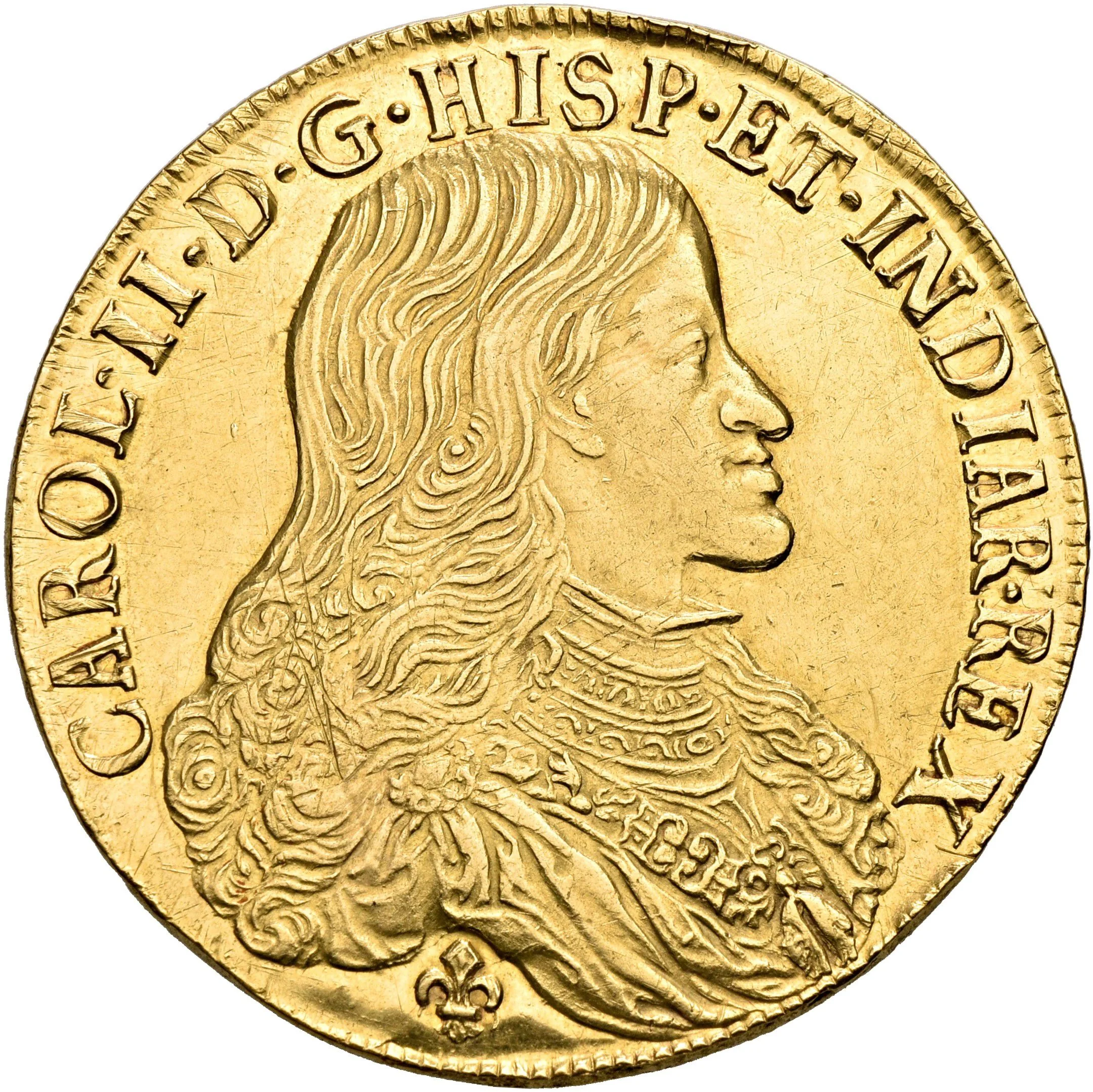
Obverse
Description:
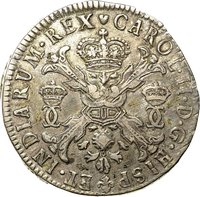
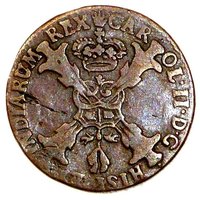
Bust of King Charles II of Spain facing right, in wig, armor, mantle, and the Order of the Golden Fleece, with a fleur-de-lis below.
Inscription:
CAROL · II · D · G · HISP · ET · INDIAR · REX
Script: Latin
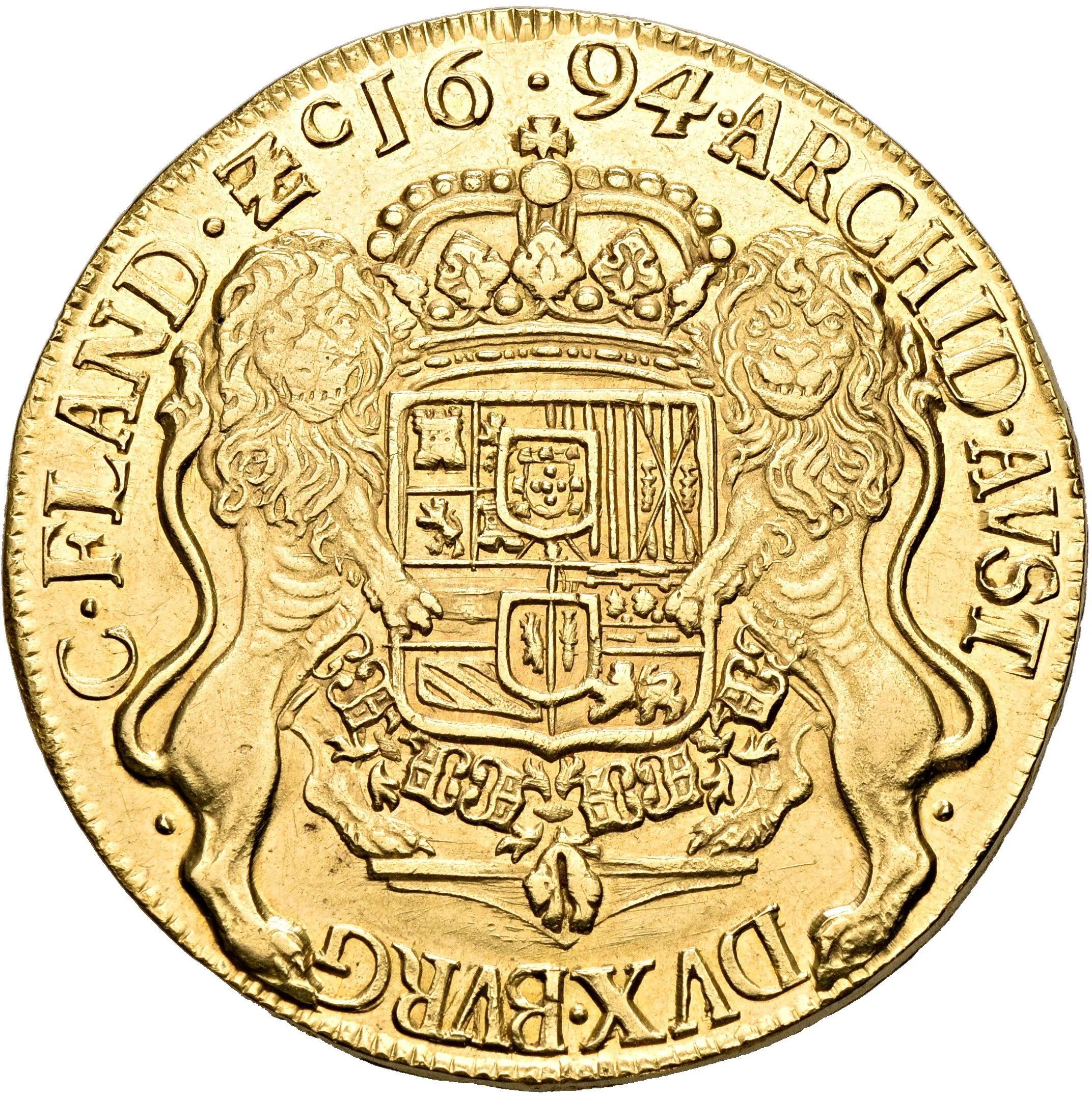
Reverse
Description:
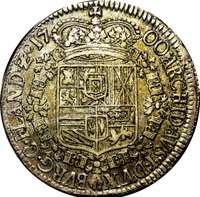
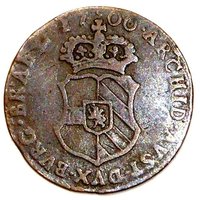
Crowned arms of Charles II of Spain, lion-flanked, with the Golden Fleece below.
Inscription:
ARCHID · AVST · DVX · BVRG · C · FLAND · Z c 16 · 94 ·
Script: Latin
Edge
Mints
| Name | Mark |
|---|---|
| Bruges | — |
Mintings
| Year | Mint Mark | Mintage | Quality | Collection |
|---|---|---|---|---|
| 1694 | — | — |
Historical background
In 1694, the Spanish Netherlands found itself in a precarious monetary crisis, a direct consequence of the wider European conflict of the Nine Years' War (1688-1697). The region, a battleground between Louis XIV's France and the Grand Alliance led by William III of England, suffered from severe economic strain. Military expenditures were colossal, and the Spanish crown, already financially weakened, struggled to maintain its armies. This led to a chronic shortage of specie (gold and silver coin), as precious metals were hoarded, exported to pay for foreign troops and supplies, or simply drained by the demands of continuous warfare.
The local response was a proliferation of low-quality, adulterated coinage. Authorities, both legitimate and municipal, as well as counterfeiters, flooded the market with debased patards and schellingen. These coins contained less precious metal than their face value, leading to Gresham's Law in action: "bad money drives out good." People hoarded the older, full-weight coins, conducting daily business with the inferior new ones. This created a chaotic multi-tier currency system where the value of a coin depended not on its denomination but on its minting date and metallic content, causing confusion, inflation, and a collapse in public trust.
Attempting to restore order, the government in Brussels issued a major monetary ordinance in December 1694. This edict aimed to standardize the circulating medium by officially devaluing the new, debased coins and setting fixed exchange rates between the various types. The goal was to stabilize prices and facilitate commerce by creating a single, recognized standard. However, the measure was only partially successful; it acknowledged the reality of the devaluation and provided temporary clarity, but it could not solve the underlying problems of wartime fiscal pressure and the physical shortage of bullion, which would continue to plague the economy until the war's end.
The local response was a proliferation of low-quality, adulterated coinage. Authorities, both legitimate and municipal, as well as counterfeiters, flooded the market with debased patards and schellingen. These coins contained less precious metal than their face value, leading to Gresham's Law in action: "bad money drives out good." People hoarded the older, full-weight coins, conducting daily business with the inferior new ones. This created a chaotic multi-tier currency system where the value of a coin depended not on its denomination but on its minting date and metallic content, causing confusion, inflation, and a collapse in public trust.
Attempting to restore order, the government in Brussels issued a major monetary ordinance in December 1694. This edict aimed to standardize the circulating medium by officially devaluing the new, debased coins and setting fixed exchange rates between the various types. The goal was to stabilize prices and facilitate commerce by creating a single, recognized standard. However, the measure was only partially successful; it acknowledged the reality of the devaluation and provided temporary clarity, but it could not solve the underlying problems of wartime fiscal pressure and the physical shortage of bullion, which would continue to plague the economy until the war's end.
✨ Legendary