

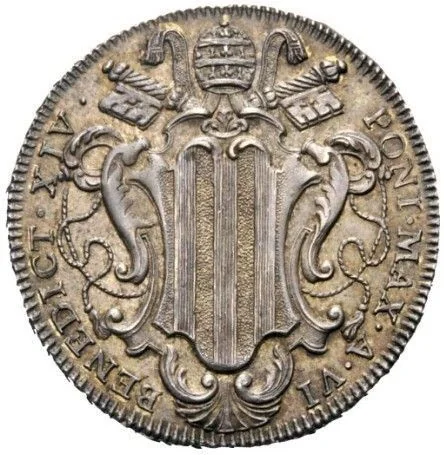
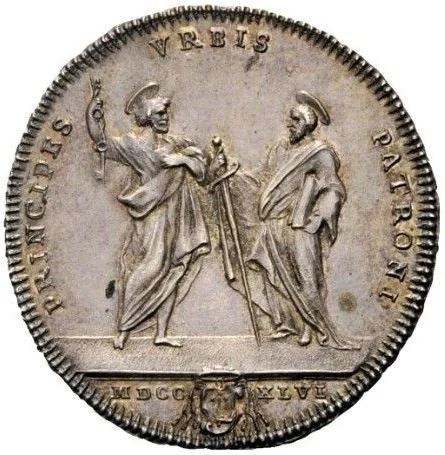
1 Teston – Papal States
Vatican City
Context
Year: 1746
Country: Vatican City 
Issuer: Papal States
Ruler: Benedict XIV
Currency:
(1534—1835)
Demonetized: Yes
References
KM: #Click to copy to clipboard952
Numista: #310458
Value
Bullion value: $22.06
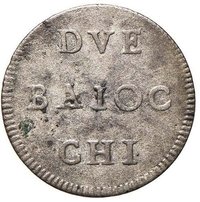
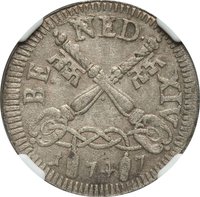
Obverse
Reverse
Edge
Mints
| Name | Mark |
|---|---|
| Rome | — |
Mintings
| Year | Mint Mark | Mintage | Quality | Collection |
|---|---|---|---|---|
| 1746 | — | — |
Historical background
In 1746, the Papal States found themselves navigating a complex and strained monetary situation, a legacy of persistent fiscal challenges. The central administration in Rome struggled to impose a unified currency system across its diverse territories, which included cities like Bologna and Ferrara with their own minting traditions and economic interests. Consequently, a confusing multiplicity of coins circulated, including local scudi, giuli, and baiocchi, alongside foreign specie from neighbouring states like Spain and Naples, leading to erratic exchange rates and commercial friction.
The root of the monetary instability was chronic state debt, exacerbated by the costs of administration, patronage, and limited taxable capacity. Pope Benedict XIV (1740-1758), a reform-minded pontiff, recognized the need for economic modernization. In the mid-1740s, his administration was actively investigating monetary reform, laying the groundwork for a crucial decree that would come in 1748. The immediate goal was to standardize the coinage and stabilize the value of the Papal scudo, which suffered from fluctuations that harmed both trade and public trust.
Therefore, the year 1746 represents a pivotal moment of diagnosis and impending action within a longer history of monetary disorder. The Papal government was gathering information and building consensus for a concerted effort to assert central control over the mint, suppress counterfeit and debased coinage, and define fixed values for the myriad coins in circulation. This preparatory work would soon culminate in the monetary reformation of 1748, an attempt to bring order and papal authority to the chaotic finances of the state.
The root of the monetary instability was chronic state debt, exacerbated by the costs of administration, patronage, and limited taxable capacity. Pope Benedict XIV (1740-1758), a reform-minded pontiff, recognized the need for economic modernization. In the mid-1740s, his administration was actively investigating monetary reform, laying the groundwork for a crucial decree that would come in 1748. The immediate goal was to standardize the coinage and stabilize the value of the Papal scudo, which suffered from fluctuations that harmed both trade and public trust.
Therefore, the year 1746 represents a pivotal moment of diagnosis and impending action within a longer history of monetary disorder. The Papal government was gathering information and building consensus for a concerted effort to assert central control over the mint, suppress counterfeit and debased coinage, and define fixed values for the myriad coins in circulation. This preparatory work would soon culminate in the monetary reformation of 1748, an attempt to bring order and papal authority to the chaotic finances of the state.
✨ Legendary