

1 ducat – Denmark
Add to wishlist
Circulating commemorative coins
Commemoration: Accession of Christian VI to the throne of Denmark, October 12th 1730
Denmark
Context
Material
References
KM: #
Numista: #111266
Value
Bullion value: $524.19
Obverse
Description:
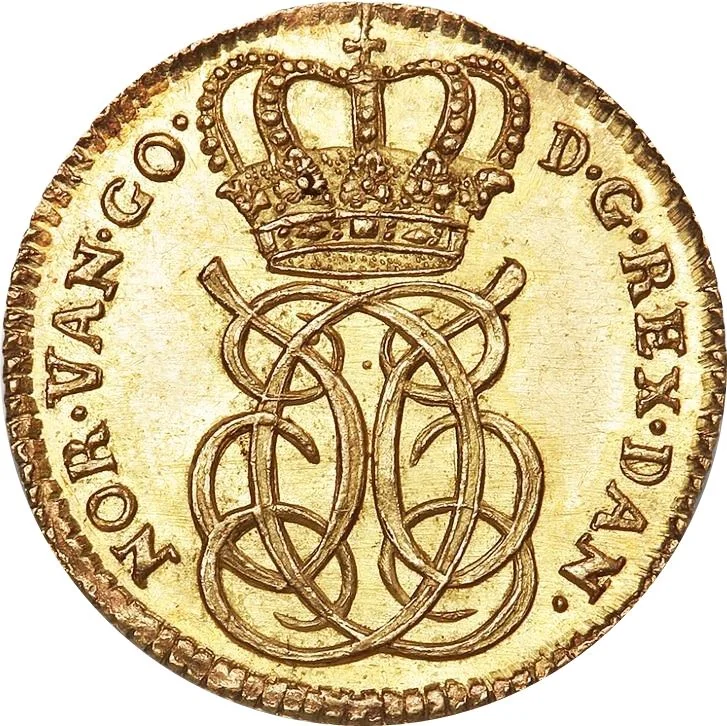
King's crowned monogram divides legend. Beaded rim.
Inscription:
C6 6C
D • G • REX • DAN • NORV • V • G •
D • G • REX • DAN • NORV • V • G •
Script: Latin
Reverse
Description:
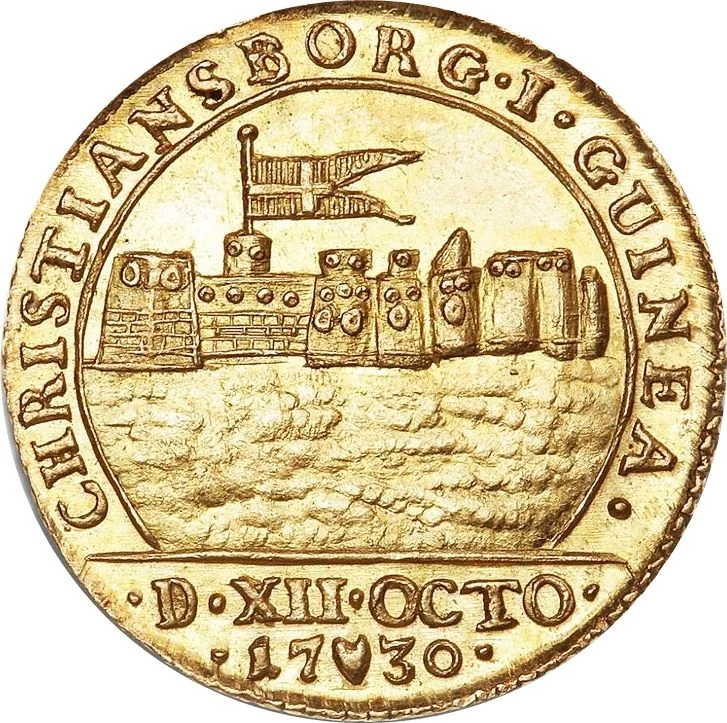
Christianborg Fortress with Danish flag. Below, the date of Frederik IV's death and Christian VI's accession, separated by a heart.
Inscription:
CHRISTIANSBORG • I • GUINEA •
• D • XII • OCTO •
• 17 ♥ 30 •
• D • XII • OCTO •
• 17 ♥ 30 •
Script: Latin
Edge
Categories
| Building> Castle or fortification |
| Symbol> Flag |
Mints
| Name | Mark |
|---|---|
| Copenhagen | ♥ |
Mintings
| Year | Mint Mark | Mintage | Quality | Collection |
|---|---|---|---|---|
| 1730 | ♥ | — |
Historical background
In 1730, Denmark operated under a silver-based monetary system, yet the reality was one of significant complexity and disorder. The primary unit was the rigsdaler, subdivided into marks and skilling, but the circulation was a chaotic mix of domestic and foreign coins. Alongside Danish coins, German, Dutch, and other European currencies circulated freely, their values fluctuating based on metal content and official proclamation. This created a constant challenge for trade and daily transactions, as the actual value of a coin often differed from its face value.
The root of this instability lay in decades of deliberate currency debasement by the crown, a practice used to finance state expenses, particularly the costly wars of the early 18th century. By reducing the silver content in coins while maintaining their nominal value, the state created short-term revenue but eroded public trust and sparked inflation. This period followed the severe financial crisis of the 1720s, which had led to a state bankruptcy in 1725, leaving the monetary system fragile and confidence in the currency low.
Consequently, the year 1730 falls within a protracted era of monetary uncertainty, preceding the major reforms that would later in the century attempt to stabilize the system. Economic activity was hampered by the lack of a uniform and trustworthy currency, with merchants and the public forced to navigate a confusing landscape of ever-changing exchange rates. The situation underscored the pressing need for a standardized, state-controlled coinage that would only begin to be addressed under the absolute monarchy in the coming decades.
The root of this instability lay in decades of deliberate currency debasement by the crown, a practice used to finance state expenses, particularly the costly wars of the early 18th century. By reducing the silver content in coins while maintaining their nominal value, the state created short-term revenue but eroded public trust and sparked inflation. This period followed the severe financial crisis of the 1720s, which had led to a state bankruptcy in 1725, leaving the monetary system fragile and confidence in the currency low.
Consequently, the year 1730 falls within a protracted era of monetary uncertainty, preceding the major reforms that would later in the century attempt to stabilize the system. Economic activity was hampered by the lack of a uniform and trustworthy currency, with merchants and the public forced to navigate a confusing landscape of ever-changing exchange rates. The situation underscored the pressing need for a standardized, state-controlled coinage that would only begin to be addressed under the absolute monarchy in the coming decades.
✨ Legendary