

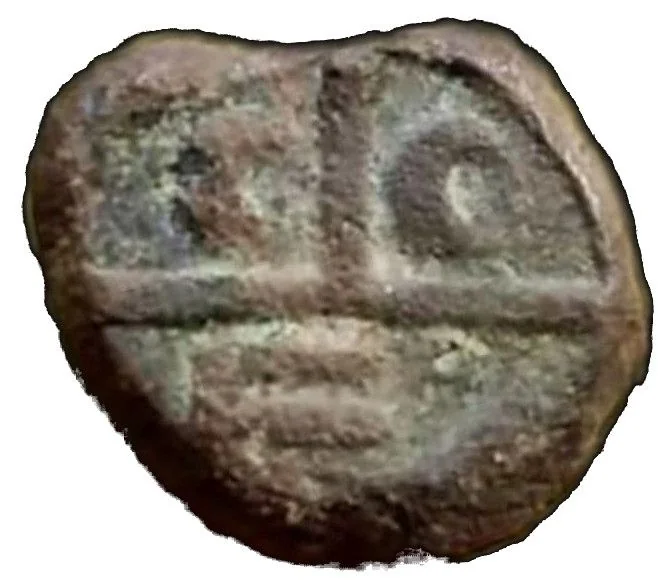
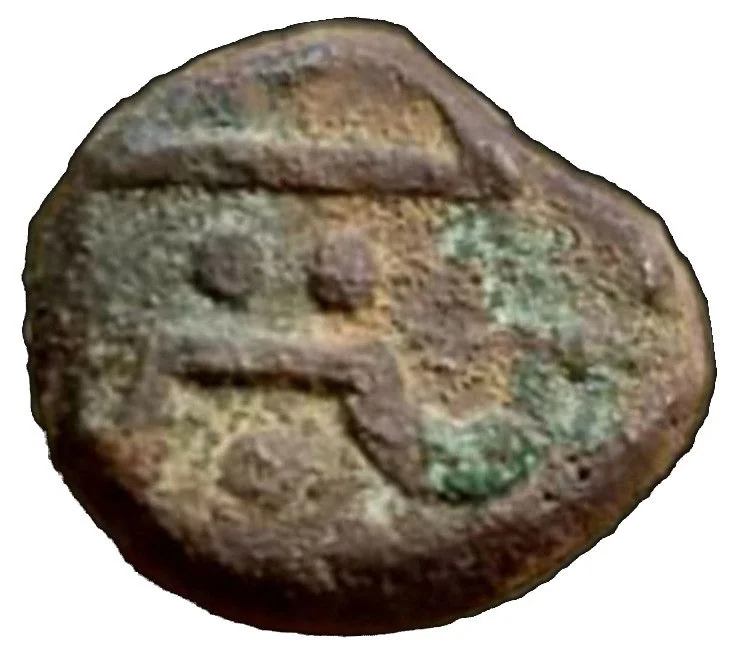
1 cash – Sumatra
Add to wishlist
Context
Material
Diameter: 12.5 mm
Weight: 3.4 g
Thickness: 2 mm
Shape: Irregular round
Composition: Copper
Magnetic: No
Alignment: Coin alignment
flip
References
KM: #
Numista: #303617
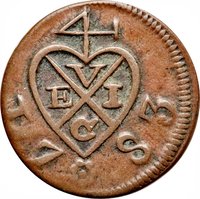
Obverse
Description:
Company brand
Inscription:
C C
E
E
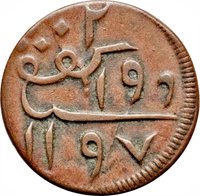
Reverse
Description:
Ancient Persian carving
Inscription:
Angriz Kampani
Edge
Plain
Mints
| Name | Mark |
|---|---|
| Chennai / Madras | — |
Mintings
| Year | Mint Mark | Mintage | Quality | Collection |
|---|---|---|---|---|
| — | — | — |
Historical background
In 1693, Sumatra was not a unified political entity but a vast island of competing sultanates, coastal trading ports, and inland societies, all operating under the complex monetary influences of the Indian Ocean trade network. The dominant economic power was the Dutch East India Company (VOC), which controlled key ports like Padang and maintained a fortified presence at Malacca, influencing the western and northern coasts. However, their authority over currency was indirect and contested. The region's economy functioned on a multi-currency system where the most prestigious and reliable coins were foreign silver pieces, primarily Spanish Reales (often called "pieces of eight") and Dutch rijksdaalders. These coins served as the high-value backbone for international trade in pepper, gold, and other Sumatran commodities.
Alongside this imported silver, a vibrant local currency ecosystem existed. Various Sumatran kingdoms, particularly Aceh in the north, minted their own gold and tin coins (mas and pitis), but their value and acceptance were highly localized. More commonly, everyday transactions were conducted using fragmented silver "clipped money" – cut pieces of foreign coins – or commodity currencies like gold dust (measured in buncal units) and pepper. The VOC constantly struggled to impose order on this system, attempting to fix exchange rates between these disparate forms of money to secure profits and stabilize trade, but with limited success beyond their immediate garrisons.
Thus, the currency situation was one of fragmented sovereignty and monetary pluralism. The VOC’s European coins represented the aspirational global standard, while a patchwork of local coinages and commodity monies reflected the island's political divisions and economic realities. This created a dynamic and often chaotic environment where merchants and locals had to be skilled arbitrageurs, navigating the fluctuating values between Acehnese gold, Spanish silver, Dutch bills of exchange, and tangible goods, all within a marketplace shaped by both regional power struggles and the demands of global commerce.
Alongside this imported silver, a vibrant local currency ecosystem existed. Various Sumatran kingdoms, particularly Aceh in the north, minted their own gold and tin coins (mas and pitis), but their value and acceptance were highly localized. More commonly, everyday transactions were conducted using fragmented silver "clipped money" – cut pieces of foreign coins – or commodity currencies like gold dust (measured in buncal units) and pepper. The VOC constantly struggled to impose order on this system, attempting to fix exchange rates between these disparate forms of money to secure profits and stabilize trade, but with limited success beyond their immediate garrisons.
Thus, the currency situation was one of fragmented sovereignty and monetary pluralism. The VOC’s European coins represented the aspirational global standard, while a patchwork of local coinages and commodity monies reflected the island's political divisions and economic realities. This created a dynamic and often chaotic environment where merchants and locals had to be skilled arbitrageurs, navigating the fluctuating values between Acehnese gold, Spanish silver, Dutch bills of exchange, and tangible goods, all within a marketplace shaped by both regional power struggles and the demands of global commerce.
✨ Legendary