

1 Piastra – Papal States
Circulating commemorative coins
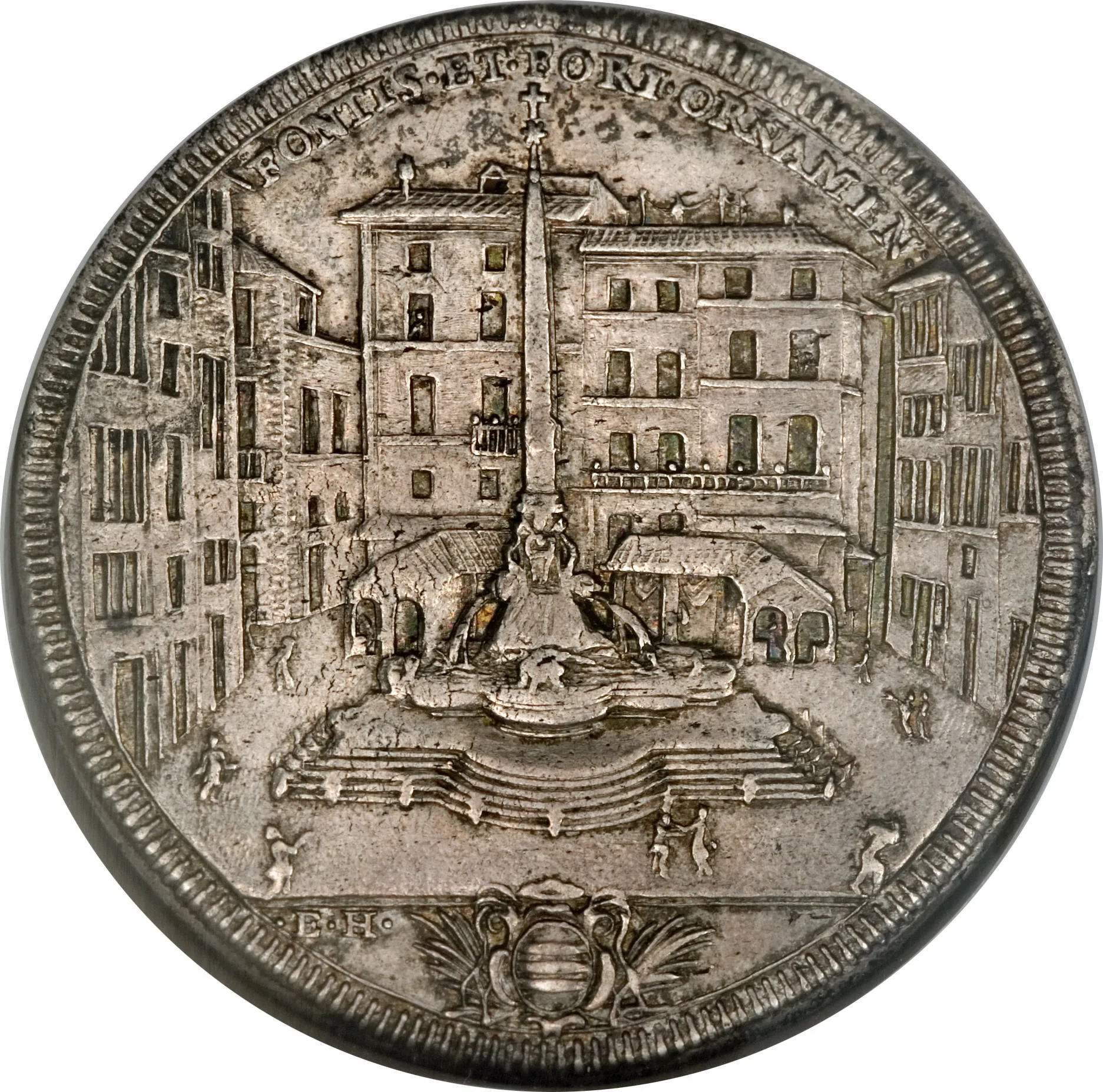
Commemoration: Restoration in 1711 of the fountain in the Pantheon square
Vatican City
Context
Year: 1713
Country: Vatican City 
Issuer: Papal States
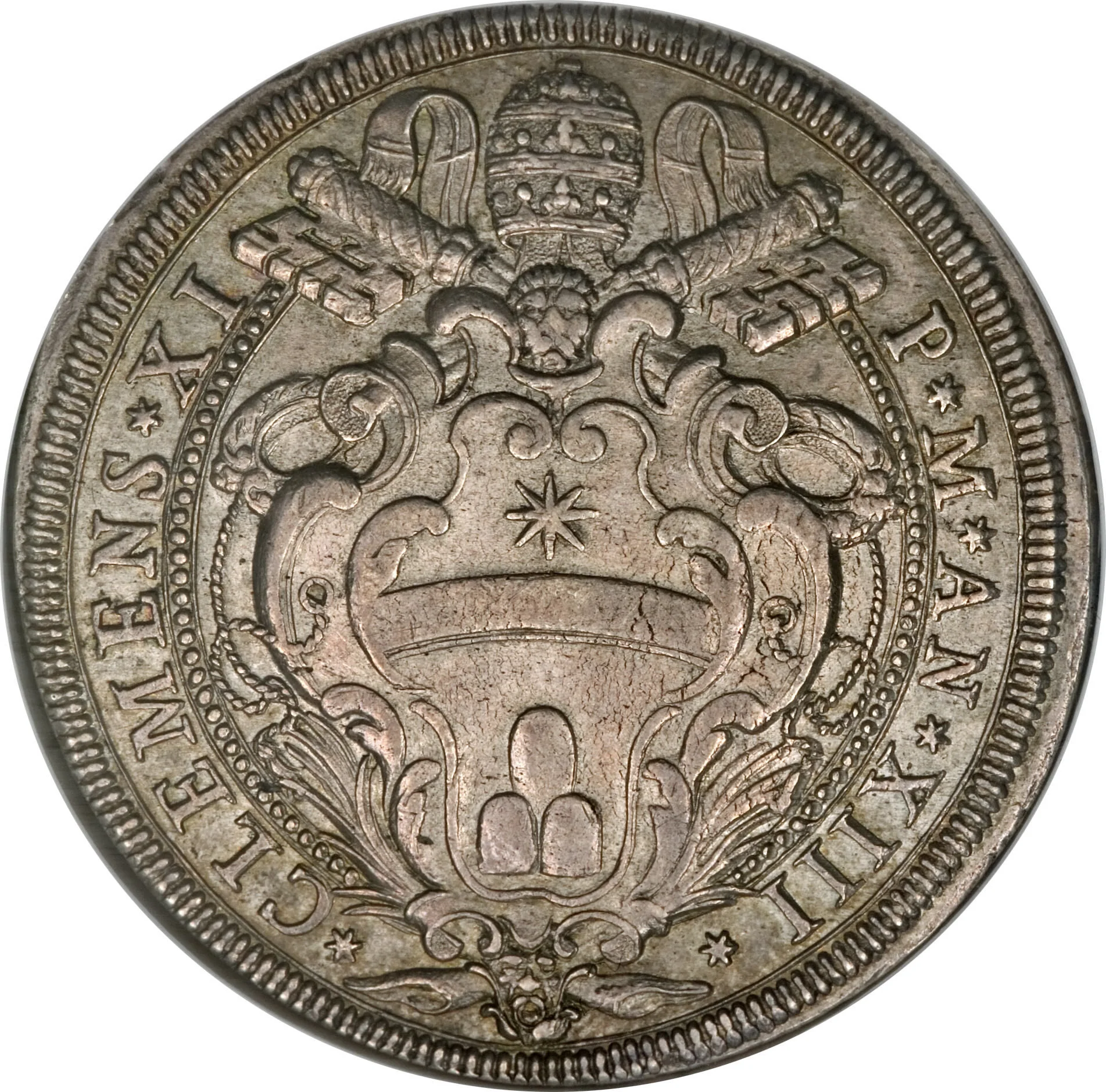
Ruler: Clement XI
Currency:
(1534—1835)
Demonetized: Yes
Material
References
KM: #Click to copy to clipboard752
Numista: #29400
Value
Bullion value: $82.75
Obverse
Reverse
Description:
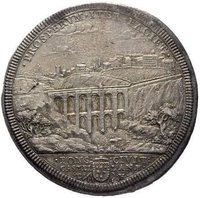
Fountain of the Pantheon in its piazza.
Inscription:
FONTIS ET FORI ORNAMEN
E H
E H
Script: Latin
Edge
Mints
| Name | Mark |
|---|---|
| Rome | — |
Mintings
| Year | Mint Mark | Mintage | Quality | Collection |
|---|---|---|---|---|
| 1713 | — | — |
Historical background
In 1713, the Papal States found themselves in a complex and challenging monetary situation, typical of the fragmented Italian peninsula in the early 18th century. The state lacked a unified, authoritative currency, leading to a chaotic circulation of diverse coins. The primary unit of account was the Papal Scudo, but the actual coins in circulation included not only those minted in Rome (such as the scudo d'argent and the giulio) but also a vast array of foreign currencies. Spanish pieces of eight, French louis d'or, and various Italian state coins from Venice, Florence, and Genoa all circulated freely, their values fluctuating based on metallic content and market trust.
This monetary fragmentation was exacerbated by two persistent issues: chronic debasement and severe budgetary pressure. Popes often resorted to reducing the silver content in their coinage to generate seigniorage revenue for the treasury, which was strained by administrative costs, artistic patronage, and the political demands of the period. This debasement eroded public confidence in papal coinage, leading to Gresham’s Law in practice: "bad" debased papal coins drove "good" full-weight foreign coins out of circulation or prompted merchants to price goods at a premium for them. Consequently, everyday transactions were fraught with uncertainty and required expert money-changers.
The year 1713 itself fell within the pontificate of Pope Clement XI, a period marked by the War of the Spanish Succession and its aftermath. While the Treaty of Utrecht reshaped Europe that year, the Papal States' financial isolation and lack of economic modernization left its monetary system unreformed. The situation created a vicious cycle of fiscal shortfalls, currency manipulation, and inflationary pressures, hindering commerce and state stability. This instability would persist until the more concerted, but still only partially successful, reforms undertaken by Pope Benedict XIII later in the 1720s.
This monetary fragmentation was exacerbated by two persistent issues: chronic debasement and severe budgetary pressure. Popes often resorted to reducing the silver content in their coinage to generate seigniorage revenue for the treasury, which was strained by administrative costs, artistic patronage, and the political demands of the period. This debasement eroded public confidence in papal coinage, leading to Gresham’s Law in practice: "bad" debased papal coins drove "good" full-weight foreign coins out of circulation or prompted merchants to price goods at a premium for them. Consequently, everyday transactions were fraught with uncertainty and required expert money-changers.
The year 1713 itself fell within the pontificate of Pope Clement XI, a period marked by the War of the Spanish Succession and its aftermath. While the Treaty of Utrecht reshaped Europe that year, the Papal States' financial isolation and lack of economic modernization left its monetary system unreformed. The situation created a vicious cycle of fiscal shortfalls, currency manipulation, and inflationary pressures, hindering commerce and state stability. This instability would persist until the more concerted, but still only partially successful, reforms undertaken by Pope Benedict XIII later in the 1720s.
✨ Legendary