

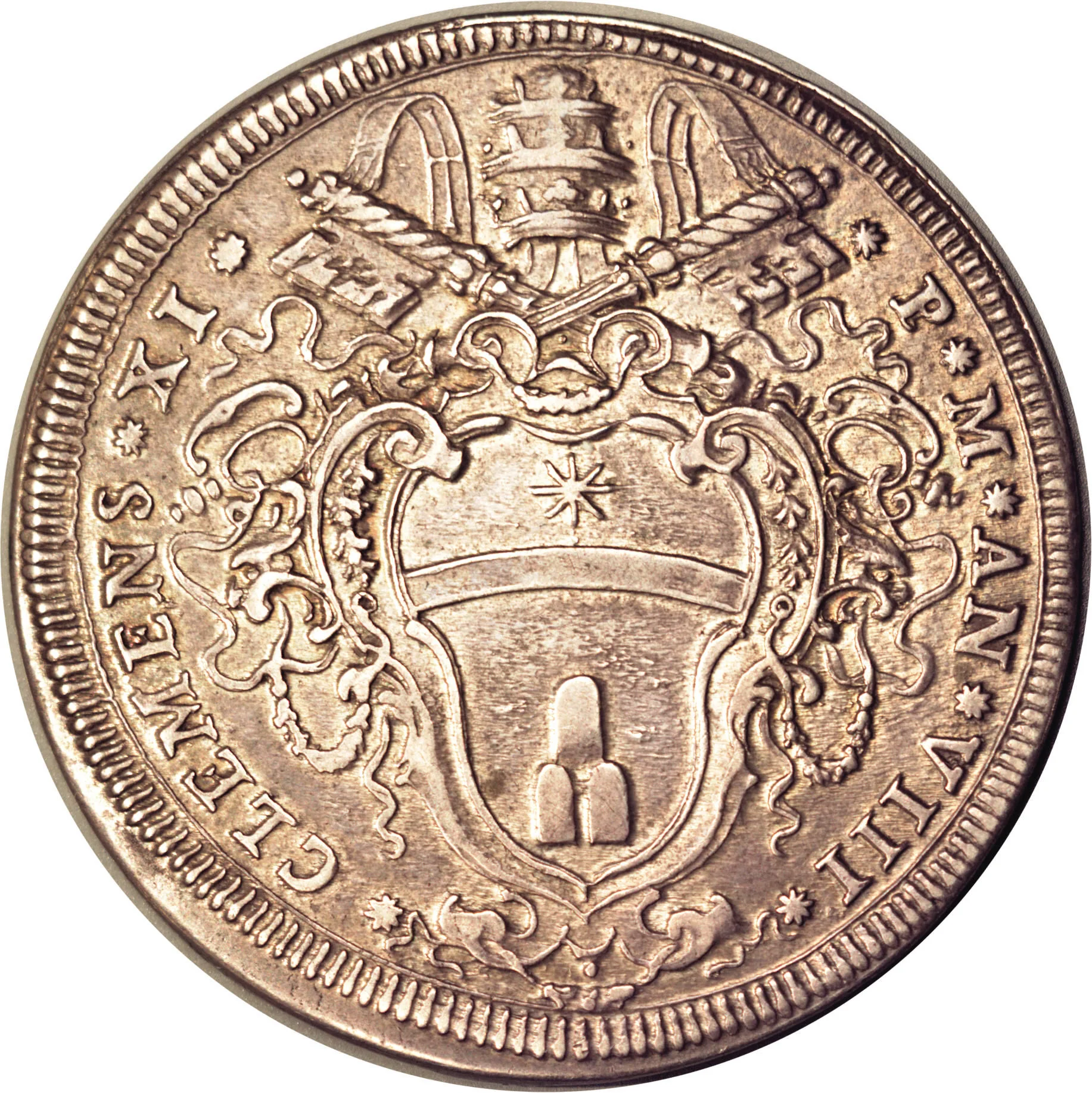
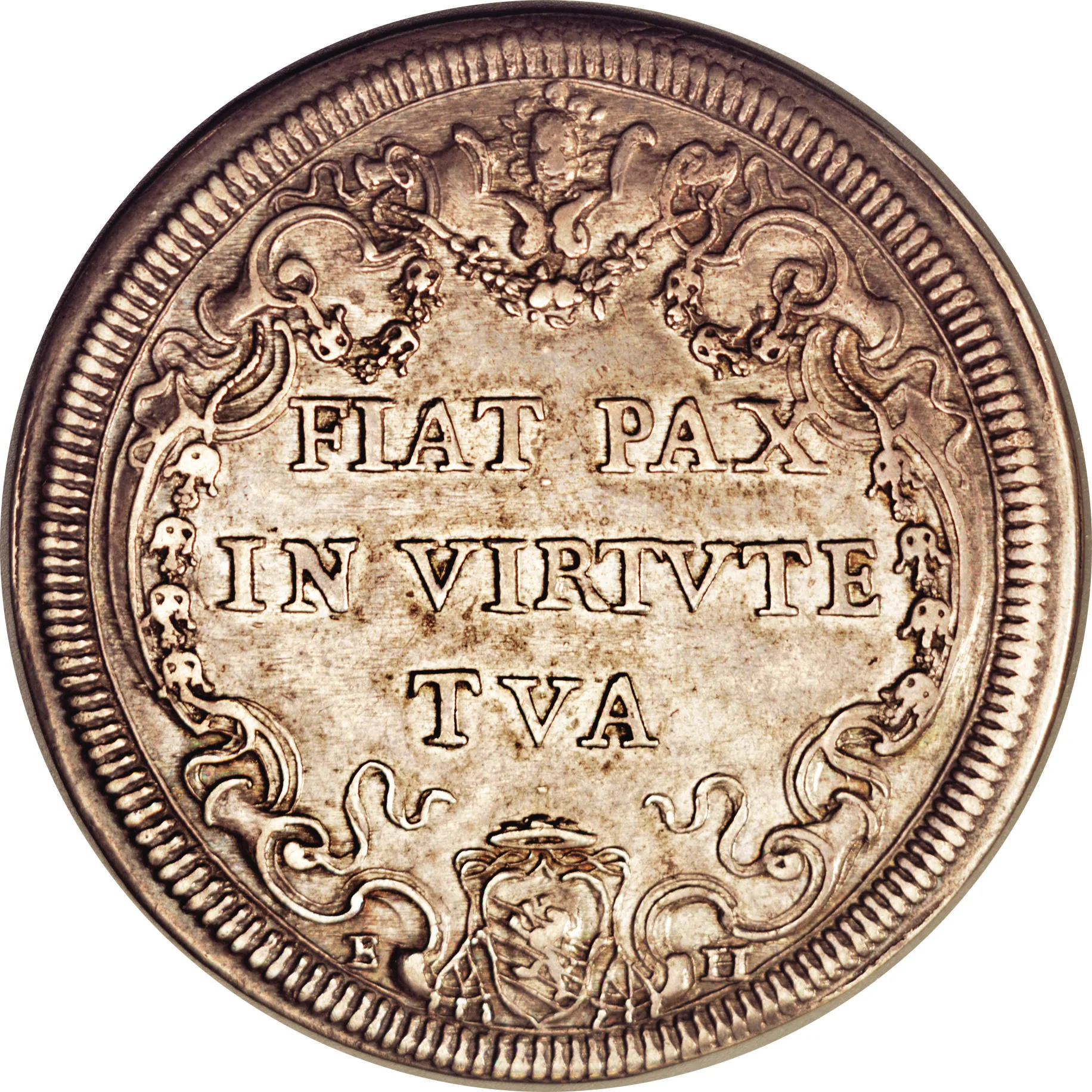
½ Piastra – Papal States
Vatican City
Context
Years: 1708–1709
Country: Vatican City 
Issuer: Papal States
Ruler: Clement XI
Currency:
(1534—1835)
Demonetized: Yes
Material
References
KM: #Click to copy to clipboard709
Numista: #29399
Value
Bullion value: $35.14
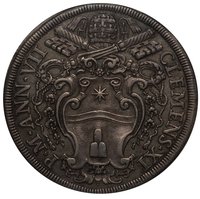
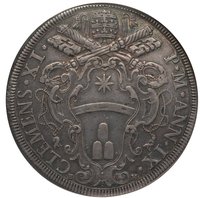
Obverse
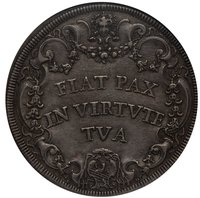
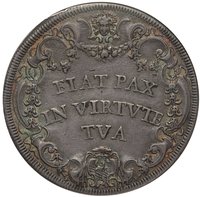
Reverse
Edge
Plain
Mintings
| Year | Mint Mark | Mintage | Quality | Collection |
|---|---|---|---|---|
| 1708 | — | — | ||
| 1709 | — | — |
Historical background
In 1708, the Papal States found themselves in a precarious monetary situation, deeply entangled in the wider European crisis triggered by the War of the Spanish Succession. The conflict had severe economic repercussions across the Italian peninsula, disrupting trade and straining the finances of Pope Clement XI. Facing mounting debts from military expenditures and the cost of maintaining neutrality, the papal government resorted to a common yet damaging practice: the systematic debasement of its silver coinage. By reducing the precious metal content in coins like the grosso and the giulio, the treasury could mint more coins from the same amount of silver, creating short-term revenue but eroding the currency's intrinsic value and public trust.
This debasement led to rampant inflation, a confusing multiplicity of circulating coins (both good and bad), and the flight of full-weight silver to other states, following Gresham's Law. The situation was exacerbated by the circulation of foreign coins, particularly Spanish pieces of eight and French écus, which further complicated commerce. Local banks and money-changers struggled to establish reliable exchange rates, harming merchants and the general populace who saw their purchasing power decline. The Papal States' monetary system, which lacked a central minting authority and clear standards, descended into a state of disorder that crippled economic activity.
Pope Clement XI recognized the crisis and attempted a significant reform in 1709. This involved the introduction of new, higher-standard silver coins, notably the testone, in an effort to restore confidence and stabilize the currency. However, the reform's success was limited. The underlying fiscal pressures of the war and the entrenched habit of debasement proved difficult to overcome fully. Thus, while 1708-1709 represents a critical flashpoint of monetary distress, it also marks a moment of attempted papal intervention to reclaim control over a fractured and inflationary economic landscape.
This debasement led to rampant inflation, a confusing multiplicity of circulating coins (both good and bad), and the flight of full-weight silver to other states, following Gresham's Law. The situation was exacerbated by the circulation of foreign coins, particularly Spanish pieces of eight and French écus, which further complicated commerce. Local banks and money-changers struggled to establish reliable exchange rates, harming merchants and the general populace who saw their purchasing power decline. The Papal States' monetary system, which lacked a central minting authority and clear standards, descended into a state of disorder that crippled economic activity.
Pope Clement XI recognized the crisis and attempted a significant reform in 1709. This involved the introduction of new, higher-standard silver coins, notably the testone, in an effort to restore confidence and stabilize the currency. However, the reform's success was limited. The underlying fiscal pressures of the war and the entrenched habit of debasement proved difficult to overcome fully. Thus, while 1708-1709 represents a critical flashpoint of monetary distress, it also marks a moment of attempted papal intervention to reclaim control over a fractured and inflationary economic landscape.
✨ Legendary