

1 Piastra – Papal States
Circulating commemorative coins
Commemoration: Vacant Seat 1667
Vatican City
Context

Material
Diameter: 43 mm
Weight: 31.58 g
Silver weight: 28.96 g
Shape: Round
Composition: 91.7% Silver
Standard: Silver ounce
Magnetic: No
Alignment: Medal alignment
flip
References
KM: #Click to copy to clipboard391
Numista: #29330
Value
Bullion value: $84.00
Obverse
Description:
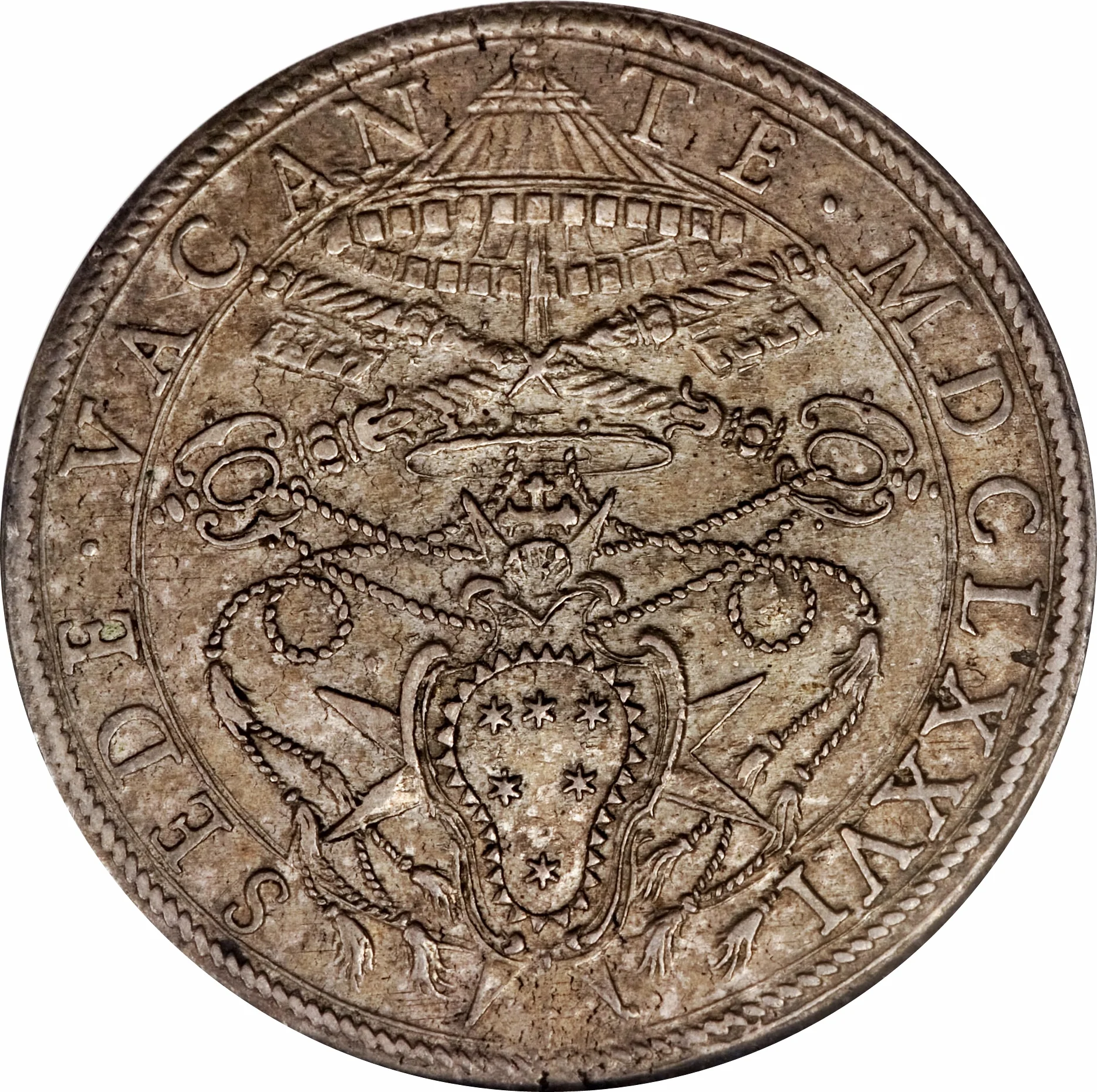
Arms of Cardinal Paluzzo Altieri upon a Maltese Cross, topped by crossed keys and the umbraculum.
Inscription:
SEDE· VACANTE · MDCLXXVI
Script: Latin
Reverse
Description:
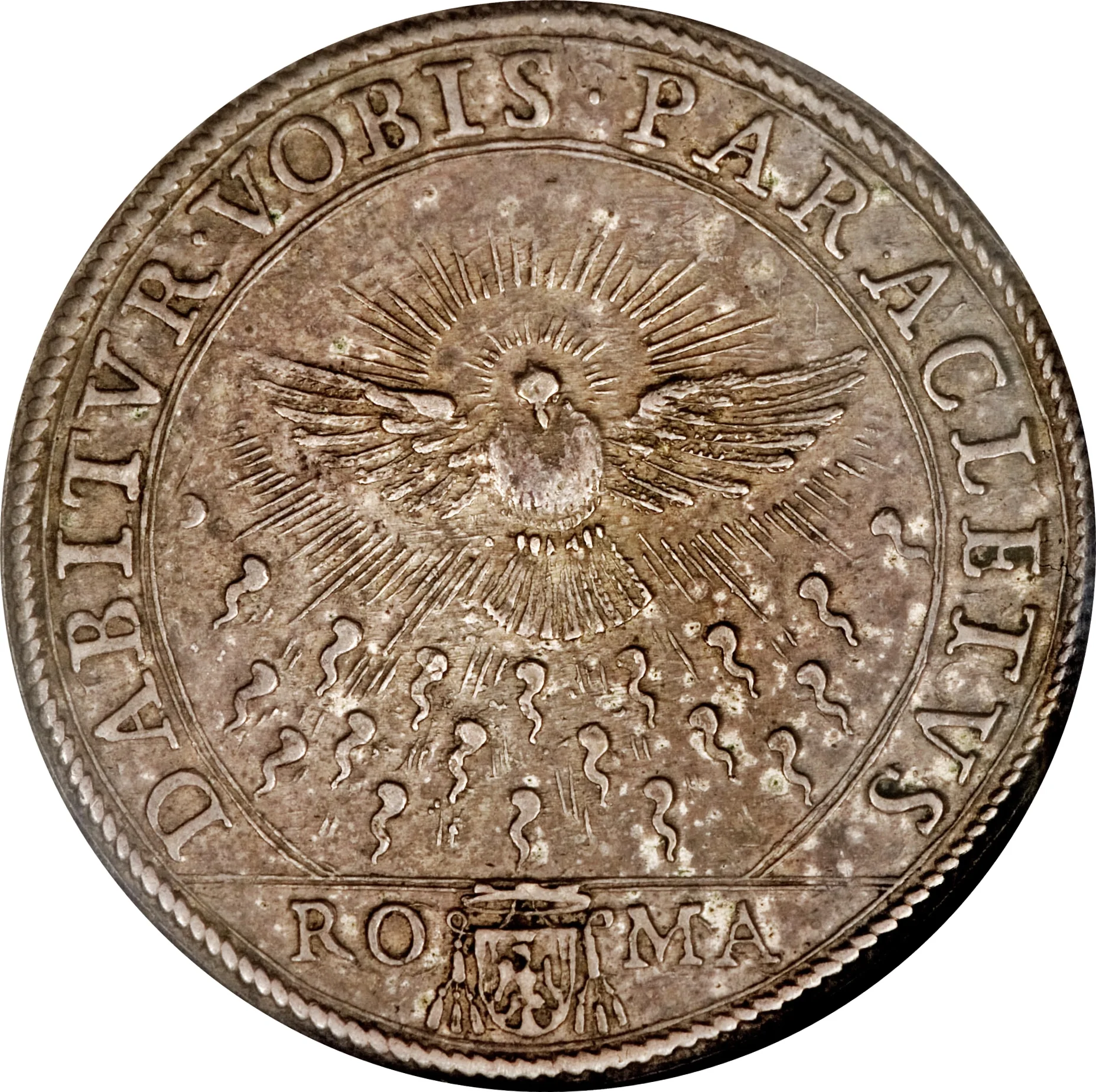
Dove encircled by fiery rays of light.
Inscription:
DABITVR٠VOBIS٠PARACLETVS
ROMA
ROMA
Script: Latin
Edge
Categories
| Animal> Bird |
| Symbols> Coat of Arms |
Mints
| Name | Mark |
|---|---|
| Rome | — |
Mintings
| Year | Mint Mark | Mintage | Quality | Collection |
|---|---|---|---|---|
| 1676 | — | — |
Historical background
In 1676, the Papal States’ currency system was a complex and fragmented mosaic, reflecting both its historical legacy and the economic pressures of the 17th century. The state lacked a unified, strong central coinage. While the primary unit of account was the scudo (divided into 100 baiochi or 10 giuli), the actual circulating medium was a bewildering array of physical coins. These included not only papal issues of varying quality from mints in Rome and Bologna, but also a flood of foreign silver coins from Spain, Naples, and other Italian states, which circulated freely and often at fluctuating values. This proliferation undermined monetary sovereignty and complicated commerce.
The period was marked by chronic debasement and inflationary pressure. Successive popes, facing immense fiscal demands from monumental building projects, administrative costs, and military expenditures, frequently resorted to reducing the silver content in coins like the giulio and grosso. This practice, while providing short-term revenue, eroded public trust in the currency, drove good money out of circulation (Gresham’s Law), and created price instability. Furthermore, the Papal Treasury often engaged in manipulative practices, such as suddenly altering the official valuation of specific coins, causing confusion and hardship for merchants and the populace.
Consequently, monetary policy in 1676 was less about stability and more about fiscal expediency. The government’s focus was on managing its own liquidity rather than ensuring a reliable medium of exchange for the economy. This unstable environment hindered economic development, encouraged hoarding of older, purer coins, and placed the Papal States at a disadvantage within broader European financial networks. The situation would see little substantive reform until the more centralized efforts of the 18th century.
The period was marked by chronic debasement and inflationary pressure. Successive popes, facing immense fiscal demands from monumental building projects, administrative costs, and military expenditures, frequently resorted to reducing the silver content in coins like the giulio and grosso. This practice, while providing short-term revenue, eroded public trust in the currency, drove good money out of circulation (Gresham’s Law), and created price instability. Furthermore, the Papal Treasury often engaged in manipulative practices, such as suddenly altering the official valuation of specific coins, causing confusion and hardship for merchants and the populace.
Consequently, monetary policy in 1676 was less about stability and more about fiscal expediency. The government’s focus was on managing its own liquidity rather than ensuring a reliable medium of exchange for the economy. This unstable environment hindered economic development, encouraged hoarding of older, purer coins, and placed the Papal States at a disadvantage within broader European financial networks. The situation would see little substantive reform until the more centralized efforts of the 18th century.
✨ Legendary