

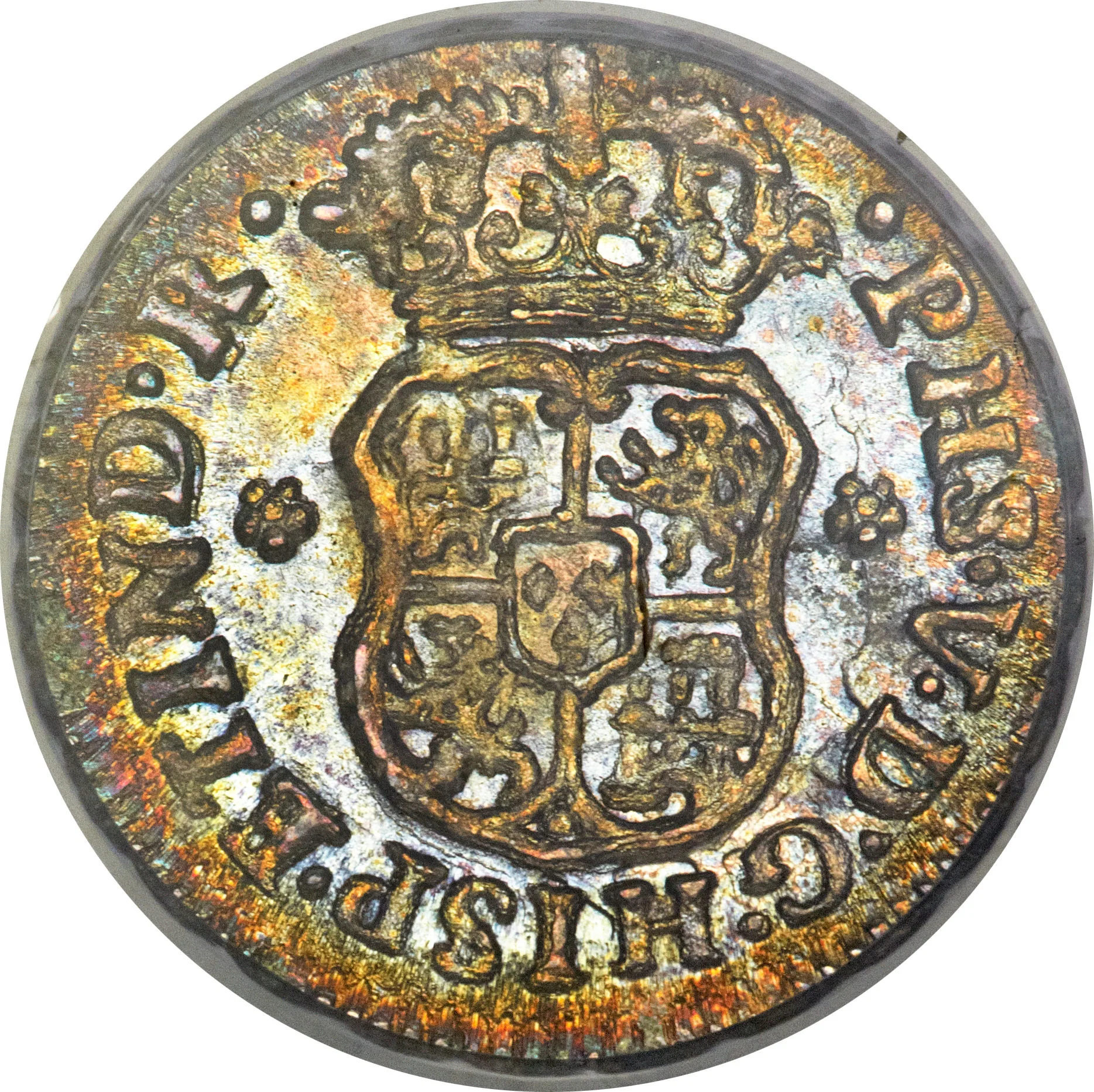
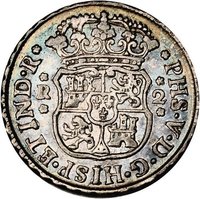
Obverse
Description:
Spanish coat of arms encircled by legend.
Inscription:
•PHS•V•D•G•HISP•ETIND•R•
Script: Latin
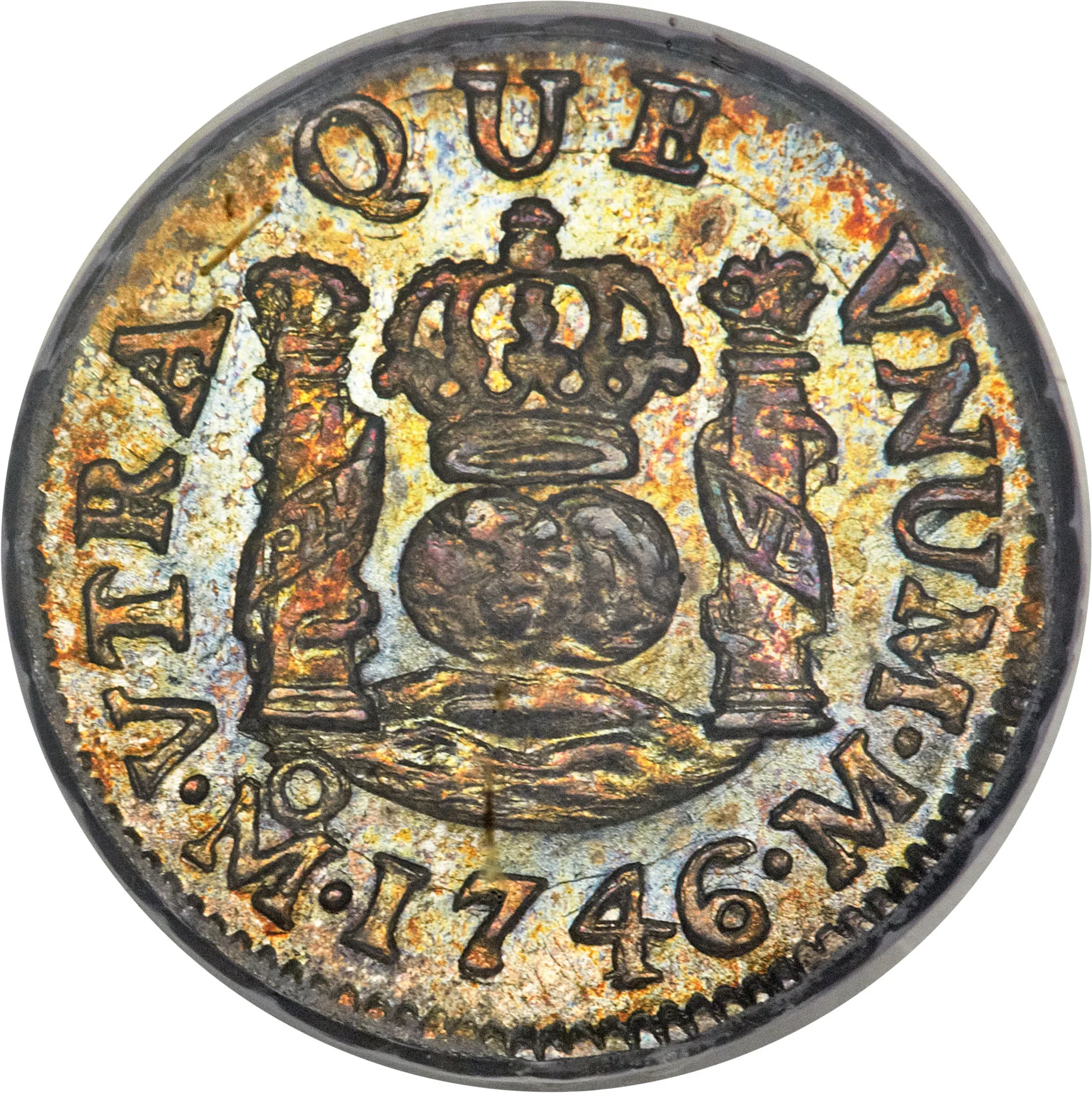
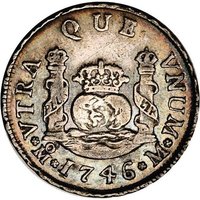
Reverse
Description:
Two hemispheres between pillars, legend around, mint and date below.
Inscription:
VTRA QUE VNVM
•Mo•1746•M
•Mo•1746•M
Script: Latin
Edge
Mints
| Name | Mark |
|---|---|
| Mexican Mint | M |
Historical background
In 1742, the currency system of New Spain (modern-day Mexico and much of the southwestern United States) was a complex and often problematic bimetallic system based on silver and gold, with severe shortages of small-denomination coinage plaguing the daily economy. The backbone of the empire's wealth was the silver peso, or "piece of eight," minted at the famed Mexico City Mint. These high-quality coins were the engine of global trade, flowing from Acapulco to Manila and from Veracruz to Seville, financing the Spanish Crown's European wars. Alongside silver, gold escudos were minted, but the real scarcity was in moneda menuda (small change)—low-denomination copper coins called tlacos or clacos. Their chronic absence crippled local markets and forced citizens and businesses to rely on inconvenient and unreliable substitutes like cacao beans, credit tokens, or even cut pieces of larger coins.
The scarcity of official small coinage led to a widespread and tolerated system of private token currency. Shopkeepers, merchants, and even convents issued their own lead, copper, or leather tokens to facilitate everyday transactions, creating a fragmented and localized monetary environment. This practice, while necessary, was ripe for abuse through counterfeiting and arbitrary valuation. The Crown viewed this proliferation of private currency with suspicion, as it undermined royal authority over the vital regalia (royal prerogative) of coinage. Periodic decrees, like the 1728 ordinance, attempted to ban these tokens and introduce official copper coinage, but such efforts repeatedly failed due to the immense practical demand and the logistical challenges of producing and distributing enough small change across the vast viceroyalty.
Furthermore, the monetary policy was dictated by the needs of the metropolitan center in Madrid, often to the detriment of the colonial economy. Silver shipments to Spain were prioritized, frequently draining liquidity from New Spain itself. The year 1742 falls within the broader Bourbon Reforms period, a time of increasing administrative intervention aimed at maximizing revenue extraction. While a major currency reform was still a few years away (the first successful widespread minting of royal copper macuquinas would begin in the late 1750s), the pressures of 1742 exemplified the growing tensions between a centralized imperial fiscal policy and the practical necessities of a thriving, yet stifled, colonial economy. The currency situation thus reflected the broader colonial reality: immense mineral wealth coexisted with a dysfunctional local monetary system that hindered daily commerce.
The scarcity of official small coinage led to a widespread and tolerated system of private token currency. Shopkeepers, merchants, and even convents issued their own lead, copper, or leather tokens to facilitate everyday transactions, creating a fragmented and localized monetary environment. This practice, while necessary, was ripe for abuse through counterfeiting and arbitrary valuation. The Crown viewed this proliferation of private currency with suspicion, as it undermined royal authority over the vital regalia (royal prerogative) of coinage. Periodic decrees, like the 1728 ordinance, attempted to ban these tokens and introduce official copper coinage, but such efforts repeatedly failed due to the immense practical demand and the logistical challenges of producing and distributing enough small change across the vast viceroyalty.
Furthermore, the monetary policy was dictated by the needs of the metropolitan center in Madrid, often to the detriment of the colonial economy. Silver shipments to Spain were prioritized, frequently draining liquidity from New Spain itself. The year 1742 falls within the broader Bourbon Reforms period, a time of increasing administrative intervention aimed at maximizing revenue extraction. While a major currency reform was still a few years away (the first successful widespread minting of royal copper macuquinas would begin in the late 1750s), the pressures of 1742 exemplified the growing tensions between a centralized imperial fiscal policy and the practical necessities of a thriving, yet stifled, colonial economy. The currency situation thus reflected the broader colonial reality: immense mineral wealth coexisted with a dysfunctional local monetary system that hindered daily commerce.
⭐ Rare