

1 Ducaton – Austrian Netherlands
Belgium
Context
Years: 1752–1754
Country: Belgium 
Issuer: Austrian Netherlands
Ruler: Maria Theresa
Currency:
(1744—1798)
Demonetized: Yes
Total mintage: 62,949
Material
References
KM: #Click to copy to clipboard8
Numista: #28199
Value
Bullion value: $94.38
Obverse
Description:
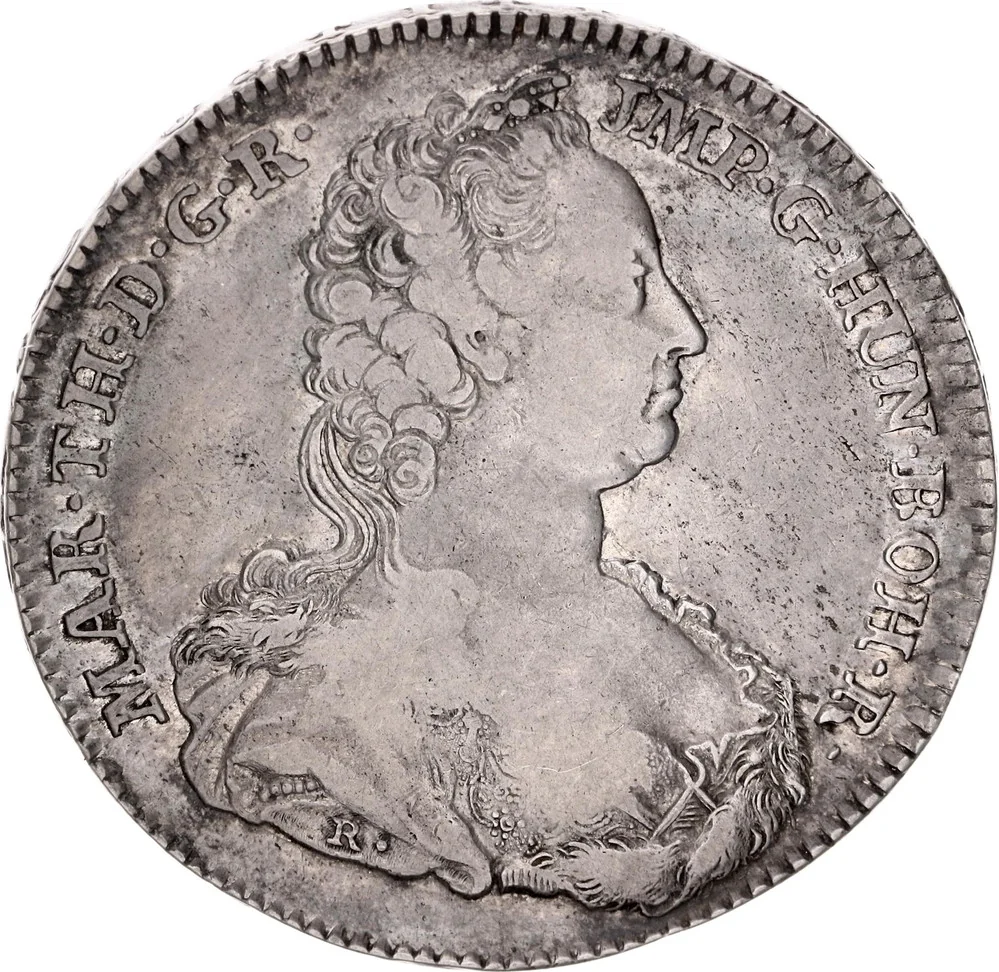
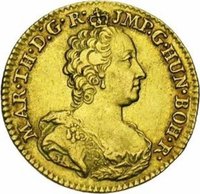
Bust facing right, no earring.
Inscription:
MAR·TH·D·G·R· JMP.G·HUN·BOH·R·
Script: Latin
Engraver: Jacques Roëttiers
Reverse
Description:
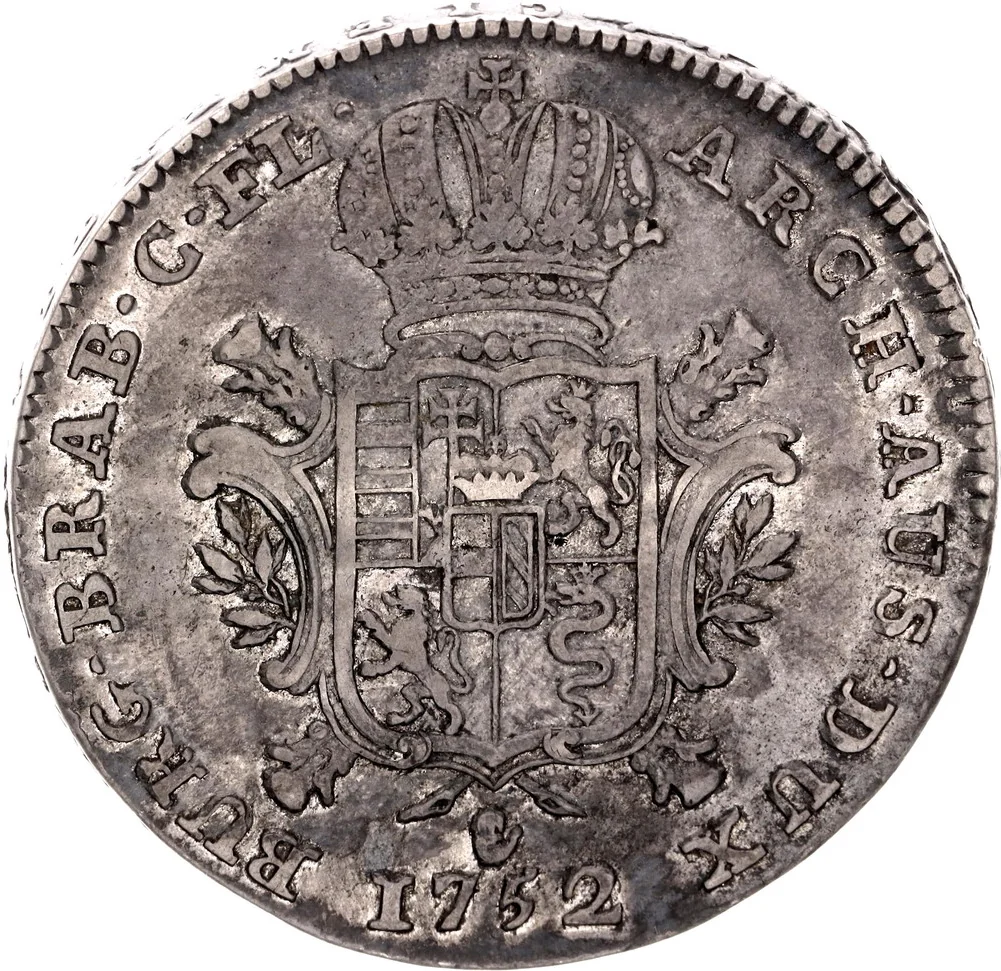
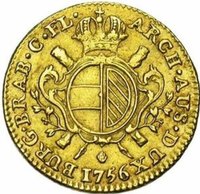
Quartered arms with a central Austria-Burgundy shield, in a baroque frame with St. Andrew's cross, mintmark and date below.
Inscription:
ARCH · AUS · DUX BURG · BRAB · C · FL ·
Script: Latin
Engraver: Jacques Roëttiers
Edge
Text in relief.
Legend:
JUSTITIA ET CLEMENTIA
Mintings
| Year | Mint Mark | Mintage | Quality | Collection |
|---|---|---|---|---|
| 1752 | — | — | ||
| 1753 | — | 21,400 | ||
| 1754 | — | 41,549 |
Historical background
In 1752, the Austrian Netherlands, a collection of provinces roughly comprising modern-day Belgium and Luxembourg under Habsburg rule, grappled with a complex and debilitating monetary crisis. The root cause was a severe shortage of high-value, large-denomination coinage for state finance and wholesale trade, coexisting with a chaotic overabundance of debased and lightweight small coins in daily circulation. This imbalance stemmed from decades of manipulation, where neighboring states like France and the Dutch Republic exported inferior coins into the region, while good Austrian silver thalers were either hoarded or melted down for their bullion value, fleeing the territory.
The Habsburg monetary authorities in Brussels and Vienna recognized that the existing system, still loosely based on the old Spanish patacoon or patagon, was dysfunctional. Their primary challenge was to restore confidence and stability by introducing a new, standardized silver coin that would remain in circulation. The year 1752 is particularly notable as it marked the culmination of this planning, leading to the imminent Monetary Ordinance of September 16, 1753. The central reform was the creation of the Konventionstaler standard, pegging the new Austrian Netherlands florin (or gulden) to the universal Convention standard used across the southern German and Austrian lands.
Therefore, the situation in 1752 was one of tense anticipation and preparation for a major reform. While the daily market remained flooded with unreliable small change, causing frustration for the populace, the government was finalizing the details of a top-down monetary overhaul. The goal was to unify the coinage with the wider Habsburg economic sphere, drive out foreign and adulterated coins, and establish a credible currency that would facilitate both internal commerce and the region's vital international trade, setting the stage for the decree that would follow in 1753.
The Habsburg monetary authorities in Brussels and Vienna recognized that the existing system, still loosely based on the old Spanish patacoon or patagon, was dysfunctional. Their primary challenge was to restore confidence and stability by introducing a new, standardized silver coin that would remain in circulation. The year 1752 is particularly notable as it marked the culmination of this planning, leading to the imminent Monetary Ordinance of September 16, 1753. The central reform was the creation of the Konventionstaler standard, pegging the new Austrian Netherlands florin (or gulden) to the universal Convention standard used across the southern German and Austrian lands.
Therefore, the situation in 1752 was one of tense anticipation and preparation for a major reform. While the daily market remained flooded with unreliable small change, causing frustration for the populace, the government was finalizing the details of a top-down monetary overhaul. The goal was to unify the coinage with the wider Habsburg economic sphere, drive out foreign and adulterated coins, and establish a credible currency that would facilitate both internal commerce and the region's vital international trade, setting the stage for the decree that would follow in 1753.
💎 Extremely Rare