

1 thaler – Anhalt-Dessau
Add to wishlist
Germany
Context
References
KM: #
Numista: #277448
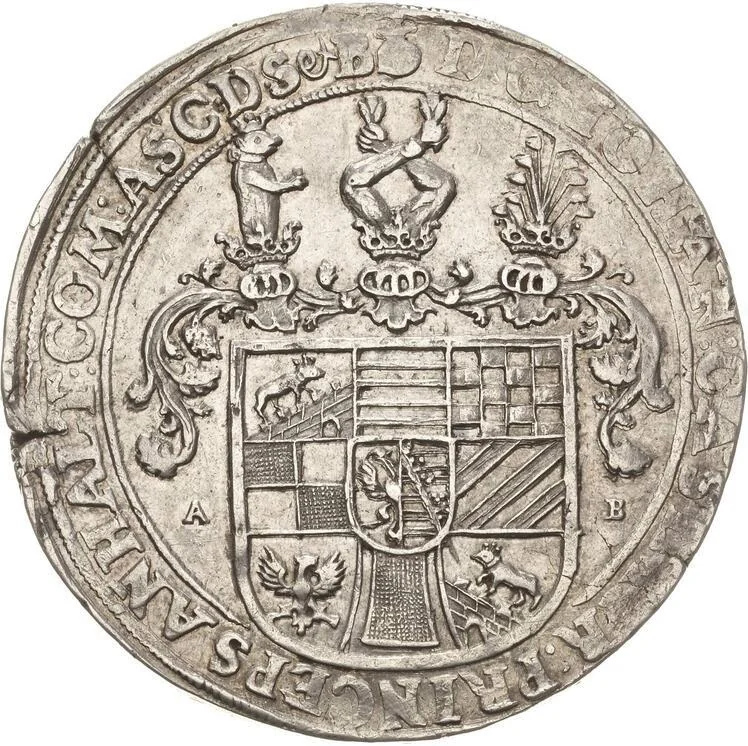
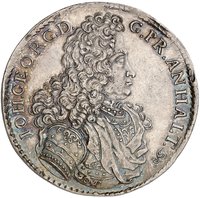
Obverse
Description:
Nine-armed helmeted creature.
Inscription:
D. G. IOHAN: CASIMER: PRINCEPS ANHALT: COM: ASCDS B
Script: Latin
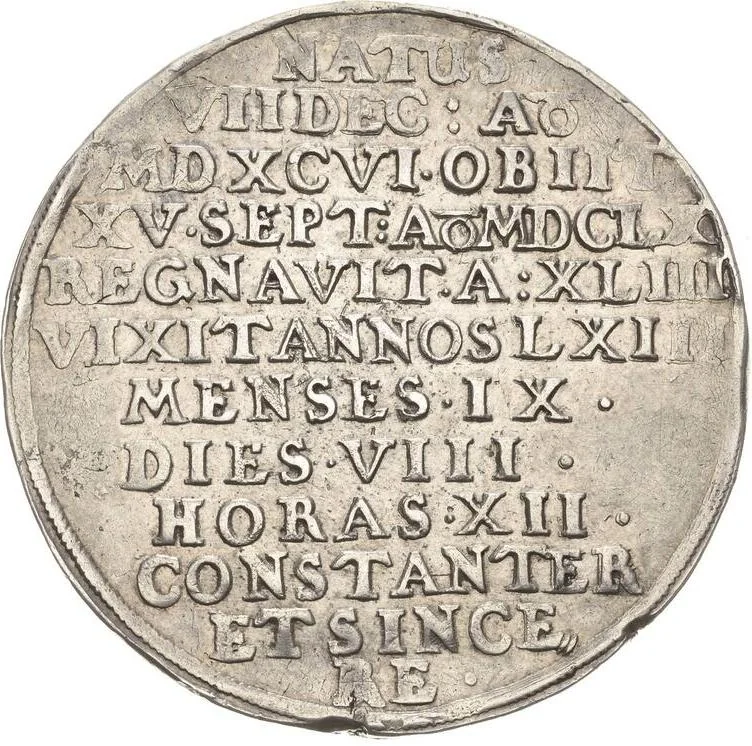
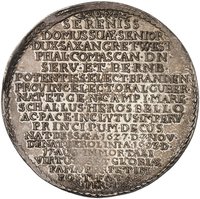
Reverse
Description:
12-line text
Inscription:
NATUS
VII DEC : Ao
MDXCVI.OBIIT
XV. SEPT.AoMDCLX
REGNAVIT.A : XLIII
VIXITANNOS LXIII
MENSES . IX .
DIES . VIII .
HORAS . XII .
CONSTANTER
ET SINCE.
RE.
VII DEC : Ao
MDXCVI.OBIIT
XV. SEPT.AoMDCLX
REGNAVIT.A : XLIII
VIXITANNOS LXIII
MENSES . IX .
DIES . VIII .
HORAS . XII .
CONSTANTER
ET SINCE.
RE.
Script: Latin
Edge
Mints
| Name | Mark |
|---|---|
| Berlin | — |
Mintings
| Year | Mint Mark | Mintage | Quality | Collection |
|---|---|---|---|---|
| 1660 | — | — |
Historical background
In 1660, the currency situation in the Principality of Anhalt-Dessau was characterized by the widespread economic fragmentation and monetary disorder common across the Holy Roman Empire following the Thirty Years' War. The principality did not have the sovereign right to mint its own high-value coins (like thalers); that authority was held by the broader Anhalt family as a collective, leading to a complex and often inconsistent coinage policy. Consequently, the circulating medium within Dessau was a chaotic mixture of domestic low-denomination coins, such as gute groschen and dreier, alongside a vast array of foreign currencies from neighboring states, each with fluctuating silver content and exchange rates.
This monetary confusion was exacerbated by the practice of Kipper- und Wipperzeit debasement that had plagued the region earlier in the century, eroding public trust in coinage. Local trade was hampered by the constant need to assess and haggle over the intrinsic value of coins, while the principality's finances were strained by its dependence on regional monetary agreements. Prince John George II, who assumed rule in 1660, therefore inherited a system that was not only administratively burdensome but also a significant obstacle to economic stability and recovery in his territories.
The situation compelled Anhalt-Dessau to seek solutions through participation in imperial currency conventions, like the 1667 Zinnaische Münzvertrag, which aimed to standardize the Reichsthaler across northern Germany. Prior to such agreements, however, the year 1660 represents a point of post-war monetary fragility, where the principality’s economy operated with a compromised and unreliable currency, awaiting the concerted imperial action necessary to impose a measure of order on the chaotic financial landscape of the Empire.
This monetary confusion was exacerbated by the practice of Kipper- und Wipperzeit debasement that had plagued the region earlier in the century, eroding public trust in coinage. Local trade was hampered by the constant need to assess and haggle over the intrinsic value of coins, while the principality's finances were strained by its dependence on regional monetary agreements. Prince John George II, who assumed rule in 1660, therefore inherited a system that was not only administratively burdensome but also a significant obstacle to economic stability and recovery in his territories.
The situation compelled Anhalt-Dessau to seek solutions through participation in imperial currency conventions, like the 1667 Zinnaische Münzvertrag, which aimed to standardize the Reichsthaler across northern Germany. Prior to such agreements, however, the year 1660 represents a point of post-war monetary fragility, where the principality’s economy operated with a compromised and unreliable currency, awaiting the concerted imperial action necessary to impose a measure of order on the chaotic financial landscape of the Empire.
✨ Legendary