

cruzado novo – Portugal
Add to wishlist
Portugal
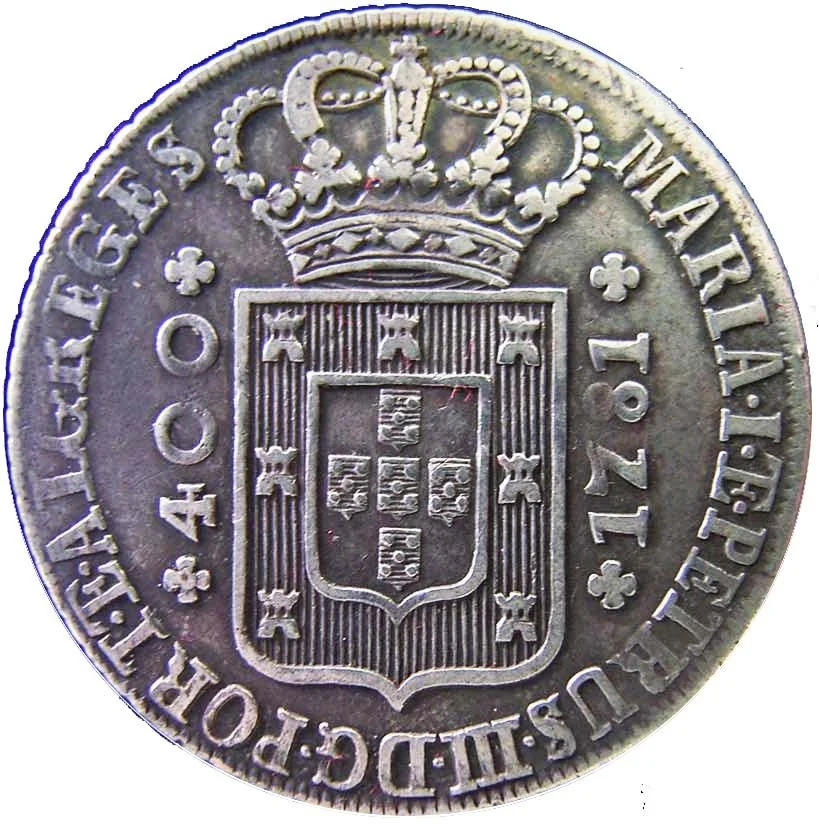
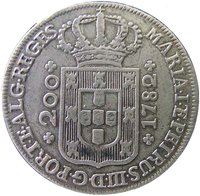
Obverse
Description:
Arms with a crown.
Inscription:
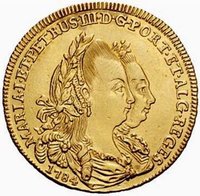
MARIA.I.ET.PETRUS.III.DG:PORT.ET.ALG REGES
*400*
*1781*
*400*
*1781*
Script: Latin
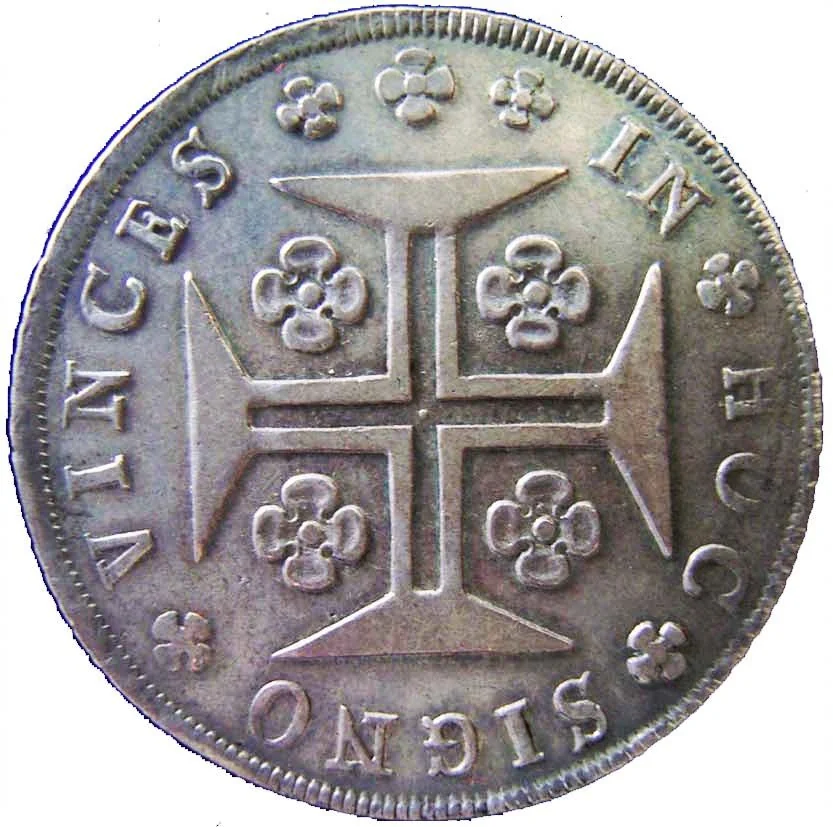
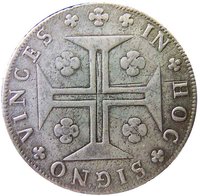
Reverse
Edge
Rope shaped
Mints
| Name | Mark |
|---|---|
| Imprensa Nacional - Casa da Moeda | — |
Mintings
| Year | Mint Mark | Mintage | Quality | Collection |
|---|---|---|---|---|
| 1778 | — | 1,725 | ||
| 1779 | — | 126,879 | ||
| 1780 | — | 346,757 | ||
| 1781 | — | 576,018 | ||
| 1782 | — | 1,097,252 | ||
| 1784 | — | 145,639 |
Historical background
In 1778, Portugal's currency situation was a complex tapestry of domestic scarcity and colonial abundance, reflecting the broader economic challenges of the late 18th century. The national monetary system was dominated by the real (plural: réis), a currency of account that had been significantly debased over centuries. In practice, a confusing array of physical coins circulated, including older Portuguese coins, Spanish pesos and reales, and a substantial influx of gold coins—primarily Brazilian gold moedas—from the colony that was the empire's financial lifeblood. Despite this influx of gold, Portugal suffered from a chronic shortage of low-denomination copper and silver coins for everyday transactions, leading to widespread use of makeshift tokens and credit notes, particularly in rural areas.
This monetary landscape was directly shaped by the policies of the Marquis of Pombal, the powerful Prime Minister who had dominated Portuguese politics until 1777. His mercantilist regime had tightly controlled the flow of Brazilian gold to stabilize the currency and finance state-led industrialization efforts. However, 1778 fell within the brief and less decisive reign of Queen Maria I, who had ascended in 1777 and begun to dismantle Pombal's system. This created a period of economic uncertainty, as the state grappled with balancing the budget without Pombal's strict controls, while the gold supply from Brazil, though still significant, had already passed its peak output.
Consequently, Portugal faced a paradoxical situation: it was a kingdom nominally enriched by New World gold, yet it struggled with internal monetary disorder, a lack of standardized coinage, and inflationary pressures. The state's finances were heavily reliant on Brazilian mineral wealth, making the economy vulnerable to fluctuations in colonial production. The currency instability of 1778 thus mirrored a transitional moment in the empire, caught between the rigid control of the Pombaline era and the mounting economic difficulties that would culminate in deeper crises in the decades ahead.
This monetary landscape was directly shaped by the policies of the Marquis of Pombal, the powerful Prime Minister who had dominated Portuguese politics until 1777. His mercantilist regime had tightly controlled the flow of Brazilian gold to stabilize the currency and finance state-led industrialization efforts. However, 1778 fell within the brief and less decisive reign of Queen Maria I, who had ascended in 1777 and begun to dismantle Pombal's system. This created a period of economic uncertainty, as the state grappled with balancing the budget without Pombal's strict controls, while the gold supply from Brazil, though still significant, had already passed its peak output.
Consequently, Portugal faced a paradoxical situation: it was a kingdom nominally enriched by New World gold, yet it struggled with internal monetary disorder, a lack of standardized coinage, and inflationary pressures. The state's finances were heavily reliant on Brazilian mineral wealth, making the economy vulnerable to fluctuations in colonial production. The currency instability of 1778 thus mirrored a transitional moment in the empire, caught between the rigid control of the Pombaline era and the mounting economic difficulties that would culminate in deeper crises in the decades ahead.
💎 Very Rare