

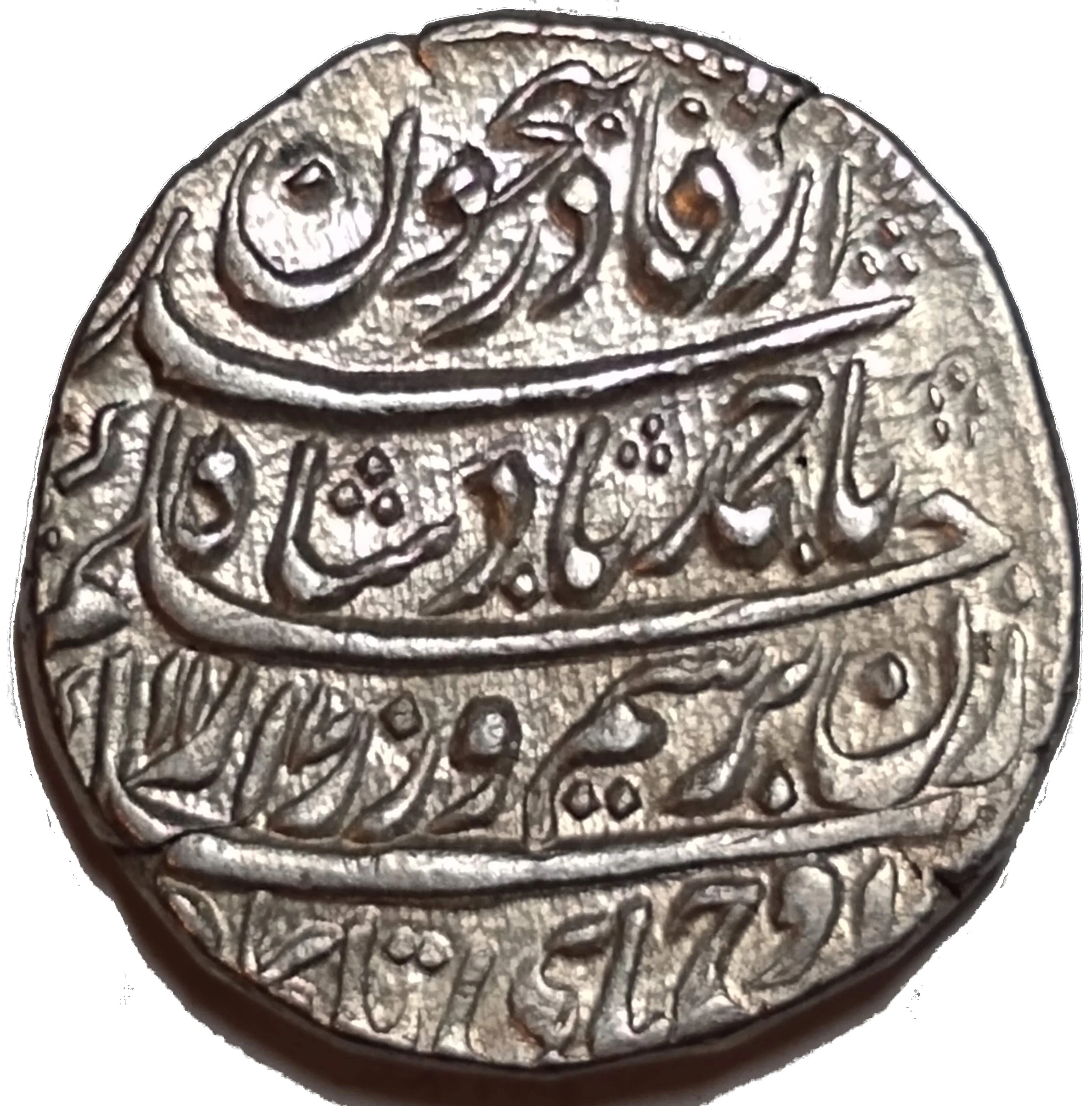
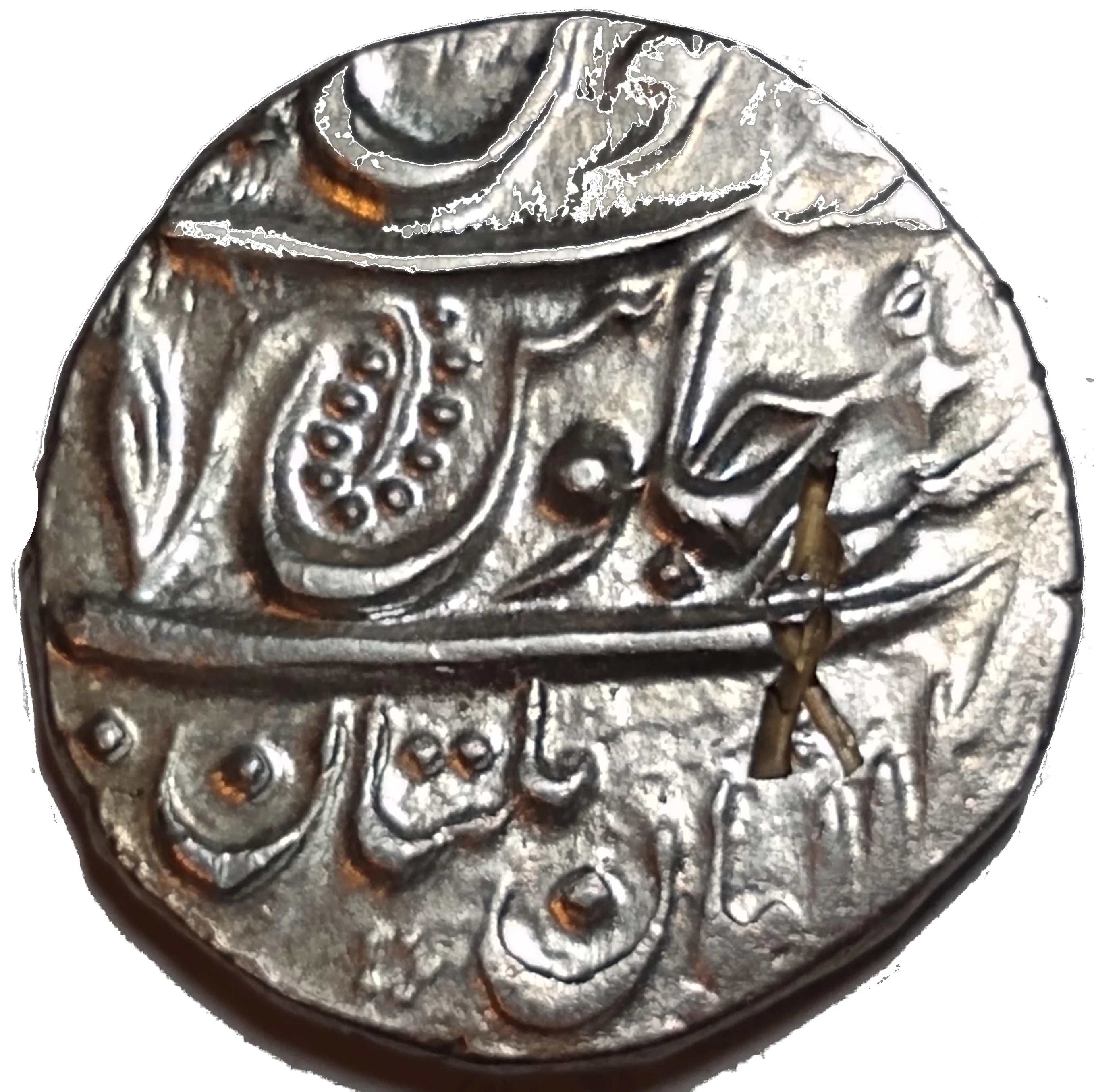
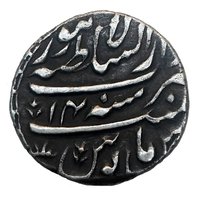
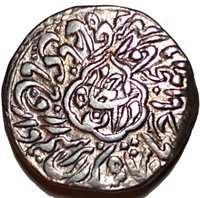
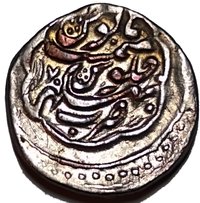
1 Rupee – Afghanistan
Afghanistan
Context
Material
Diameter: 22.8 mm
Weight: 11.6 g
Silver weight: 11.60 g
Thickness: 3.1 mm
Shape: Irregular round
Composition: Silver
Magnetic: No
References
KM: #Click to copy to clipboard643
Numista: #271106
Value
Bullion value: $33.53
Mintings
| Year | Mint Mark | Mintage | Quality | Collection |
|---|---|---|---|---|
| 1752 | — | — | ||
| 1753 | — | — | ||
| 1754 | — | — | ||
| 1755 | — | — | ||
| 1757 | — | — |
Historical background
In 1752, Afghanistan was not a unified nation but a contested region at the crossroads of empires, and its "currency situation" reflected this fractured political reality. The dominant power was the Durrani Empire, founded just four years earlier in 1747 by Ahmad Shah Durrani. He established a centralized monarchy and sought to create a unified economic system. To this end, he introduced new imperial coinage, most notably the silver Durrani rupee (often called the "Kabuli rupee"), which was minted at the capital in Kandahar and other major cities like Kabul and Herat. This currency was intended to facilitate trade, pay soldiers, and project the legitimacy of the new state across its vast territories, which stretched from eastern Persia to northern India.
However, the monetary landscape was far from homogeneous. Alongside the new imperial coins, a variety of older regional and foreign currencies remained in circulation. These included remnants of the Safavid Persian coinage (like the mohur and abbasi) in the west, and Mughal Indian rupees and gold mohurs in the east and south, a legacy of the region's recent past under Mughal influence. Furthermore, local khans and chieftains in areas with looser central control sometimes issued their own crude, low-weight coins. The system was therefore a complex bimetallic (gold and silver) and multi-standard patchwork, where the value and acceptance of a coin depended heavily on its weight, mint, and metallic purity rather than a simple face value.
This currency mosaic presented significant challenges for trade and administration. Money changers (sarrafs) were essential figures in bazaars and caravanserais, assessing and exchanging this plethora of coins. The stability of Ahmad Shah's new rupee was also tied directly to the empire's military success, as the vast treasury he had seized during his Indian campaigns provided the precious metal for minting. In essence, the currency situation in 1752 was one of transition—an ambitious but incomplete attempt by the nascent Durrani state to impose monetary order on a historically fragmented and strategically vital economic zone.
However, the monetary landscape was far from homogeneous. Alongside the new imperial coins, a variety of older regional and foreign currencies remained in circulation. These included remnants of the Safavid Persian coinage (like the mohur and abbasi) in the west, and Mughal Indian rupees and gold mohurs in the east and south, a legacy of the region's recent past under Mughal influence. Furthermore, local khans and chieftains in areas with looser central control sometimes issued their own crude, low-weight coins. The system was therefore a complex bimetallic (gold and silver) and multi-standard patchwork, where the value and acceptance of a coin depended heavily on its weight, mint, and metallic purity rather than a simple face value.
This currency mosaic presented significant challenges for trade and administration. Money changers (sarrafs) were essential figures in bazaars and caravanserais, assessing and exchanging this plethora of coins. The stability of Ahmad Shah's new rupee was also tied directly to the empire's military success, as the vast treasury he had seized during his Indian campaigns provided the precious metal for minting. In essence, the currency situation in 1752 was one of transition—an ambitious but incomplete attempt by the nascent Durrani state to impose monetary order on a historically fragmented and strategically vital economic zone.
✨ Legendary