

1 gold louis – France
Add to wishlist
France
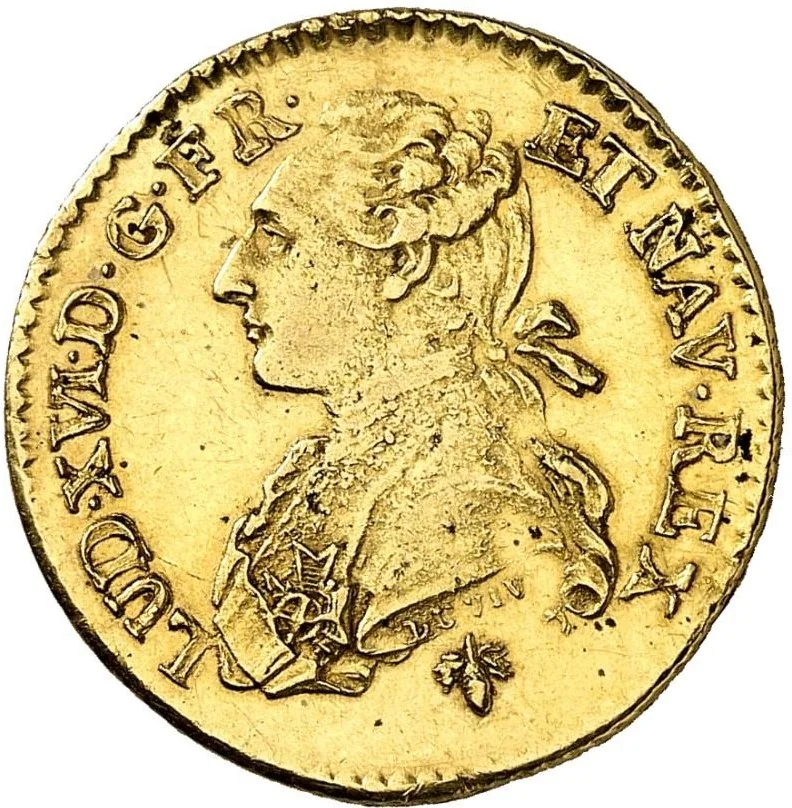
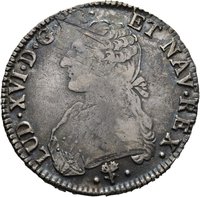
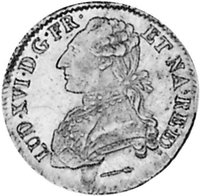
Obverse
Description:
Left turn
Inscription:
LUD XVI D G FR ET NAV REX
DUVIV
DUVIV
Script: Latin
Engraver: Pierre-Benjamin Duvivier
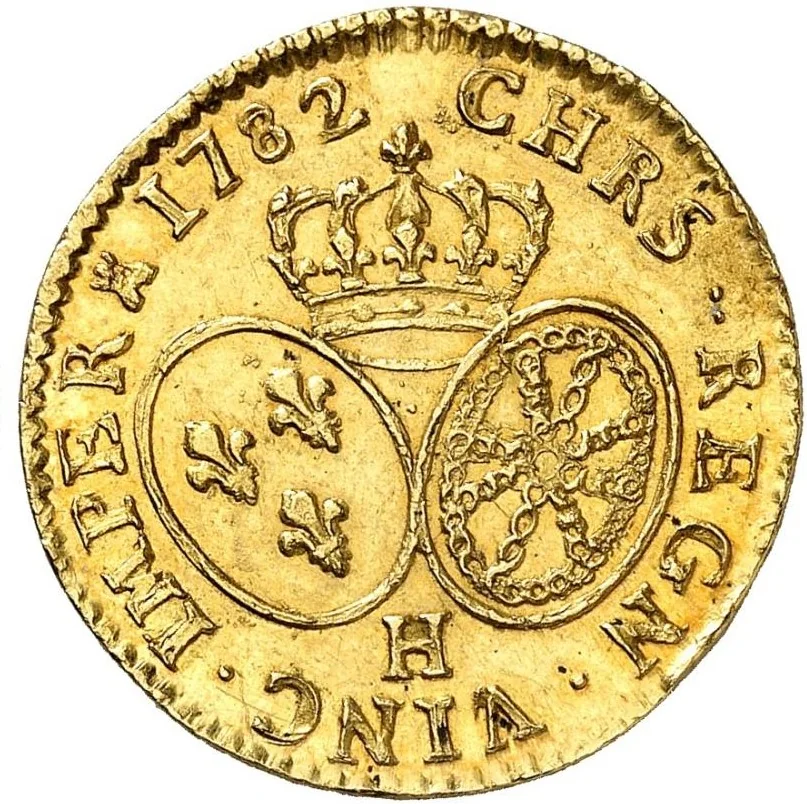
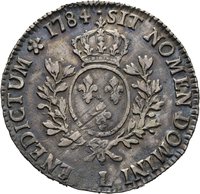
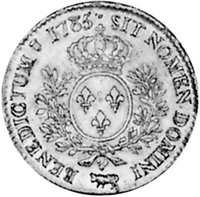
Reverse
Description:
Royal arms of France and Navarre
Inscription:
CHR REGN VINC IMPER 1782
H
H
Script: Latin
Engraver: Pierre-Benjamin Duvivier
Edge
Corded.
Categories
| Symbol> Crown |
| Person> Monarch |
| Symbols> Coat of Arms |
| Symbol> Fleur-de-lis |
Mints
| Name | Mark |
|---|---|
| Aix-en-Provence | & |
| Monnaie de Paris | A |
| Rouen | B |
| Strasbourg | BB |
| Lyon | D |
| La Rochelle | H |
| Limoges | I |
| Bordeaux | K |
| Bayonne | L |
| Toulouse | M |
| Montpellier | N |
| Perpignan | Q |
| Orléans | R |
| Lille | W |
Mintings
| Year | Mint Mark | Mintage | Quality | Collection |
|---|---|---|---|---|
| 1774 | A | 490,000 | ||
| 1775 | & | 37,000 | ||
| 1775 | A | 221,000 | ||
| 1775 | H | 5,315 | ||
| 1775 | I | 2,397 | ||
| 1775 | K | 934 | ||
| 1775 | L | 24,000 | ||
| 1775 | M | 8,491 | ||
| 1775 | N | 19,000 | ||
| 1775 | Q | 1,220 | ||
| 1775 | W | 91,000 | ||
| 1775 | BB | 604 | ||
| 1775 | D | 13,000 | ||
| 1776 | & | 19,000 | ||
| 1776 | A | 133,000 | ||
| 1776 | H | 2,443 | ||
| 1776 | L | 11,000 | ||
| 1776 | N | 13,000 | ||
| 1776 | R | 431 | ||
| 1777 | A | 104,000 | ||
| 1777 | H | 3,156 | ||
| 1777 | & | 13,000 | ||
| 1777 | L | 813 | ||
| 1778 | & | 8,255 | ||
| 1778 | A | 48,000 | ||
| 1778 | H | 2,680 | ||
| 1778 | N | 2,664 | ||
| 1779 | T | — | ||
| 1779 | & | 3,352 | ||
| 1779 | A | 6,899 | ||
| 1779 | H | 4,880 | ||
| 1779 | N | 2,208 | ||
| 1780 | K | — | ||
| 1780 | & | 1,266 | ||
| 1780 | A | 2,895 | ||
| 1780 | BB | 391 | ||
| 1780 | H | 2,779 | ||
| 1780 | N | 340 | ||
| 1780 | R | — | ||
| 1781 | & | 517 | ||
| 1781 | A | 6,333 | ||
| 1781 | BB | 394 | ||
| 1781 | H | 2,325 | ||
| 1781 | N | 1,116 | ||
| 1782 | & | 1,272 | ||
| 1782 | A | 255,000 | ||
| 1782 | H | 3,863 | ||
| 1782 | N | 1,897 | ||
| 1782 | R | 226 | ||
| 1783 | & | 2,802 | ||
| 1783 | A | 90,000 | ||
| 1783 | H | 3,061 | ||
| 1783 | M | 1,173 | ||
| 1783 | N | 1,746 | ||
| 1784 | N | 354 | ||
| 1784 | A | 16,000 | ||
| 1784 | H | 1,166 | ||
| 1784 | & | 274 | ||
| 1784 | M | 1,525 | ||
| 1785 | B | 13,000 | ||
| 1785 | BB | 541 | ||
| 1785 | H | 747 | ||
| 1785 | N | 414 |
Historical background
In 1774, France operated under a complex and strained monetary system, a legacy of the profligate spending of Louis XV and decades of costly wars, most notably the Seven Years' War (1756-1763). The national treasury was deeply in debt, and the government's credit was weak. The currency itself was nominally based on the livre tournois, but the system was notoriously unstable due to the frequent manipulation of coin values by royal edict. The government would often officially alter the metal content or face value of coins to generate short-term revenue, creating confusion, undermining public trust, and fueling inflation.
The financial structure was further burdened by the Ancien Régime's inequitable tax system, which exempted the nobility and clergy from most direct taxes, placing the fiscal load disproportionately on the peasantry and the Third Estate. Attempts at reform had been thwarted by the privileged parlements (high courts), which defended their own exemptions. When the 20-year-old Louis XVI ascended the throne in May 1774, he inherited this dire fiscal crisis. His immediate appointment of the reform-minded Anne-Robert-Jacques Turgot as Controller-General of Finances signaled an intent to address the systemic issues, focusing on austerity and economic liberalization rather than further currency manipulation.
Thus, the currency situation in 1774 was not merely a matter of coins and livres, but a symptom of a deeper constitutional and social crisis. The monarchy's inability to manage its finances without structural reform of the state and its privileges meant that monetary instability was chronic. The stage was set for the pivotal financial struggles of the 1780s, which would ultimately prove a primary catalyst for the French Revolution.
The financial structure was further burdened by the Ancien Régime's inequitable tax system, which exempted the nobility and clergy from most direct taxes, placing the fiscal load disproportionately on the peasantry and the Third Estate. Attempts at reform had been thwarted by the privileged parlements (high courts), which defended their own exemptions. When the 20-year-old Louis XVI ascended the throne in May 1774, he inherited this dire fiscal crisis. His immediate appointment of the reform-minded Anne-Robert-Jacques Turgot as Controller-General of Finances signaled an intent to address the systemic issues, focusing on austerity and economic liberalization rather than further currency manipulation.
Thus, the currency situation in 1774 was not merely a matter of coins and livres, but a symptom of a deeper constitutional and social crisis. The monarchy's inability to manage its finances without structural reform of the state and its privileges meant that monetary instability was chronic. The stage was set for the pivotal financial struggles of the 1780s, which would ultimately prove a primary catalyst for the French Revolution.
✨ Legendary