

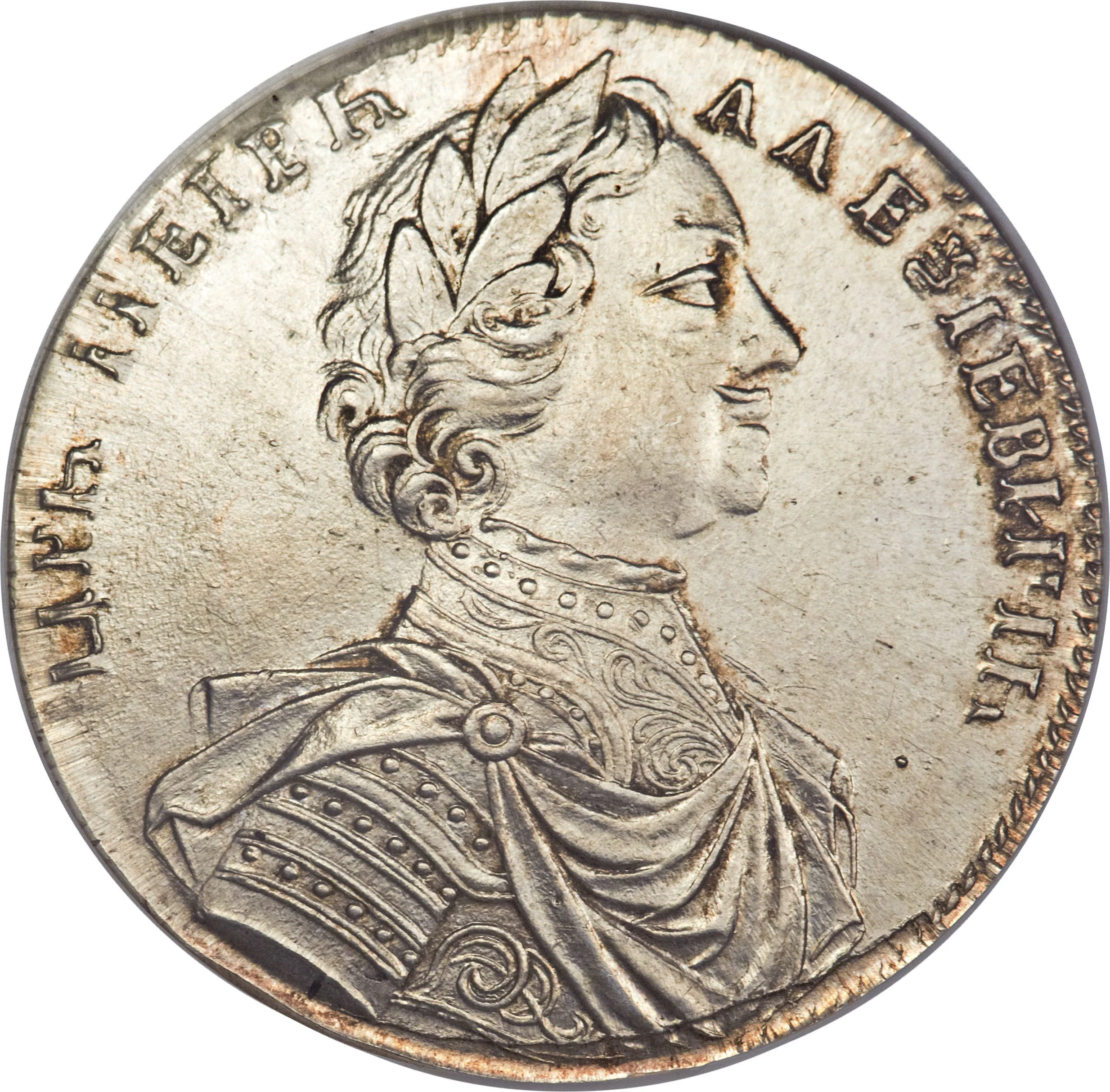

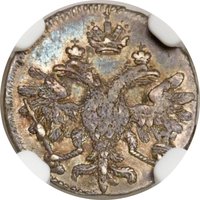
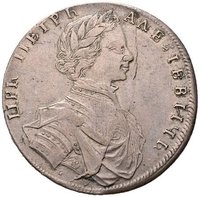
Obverse
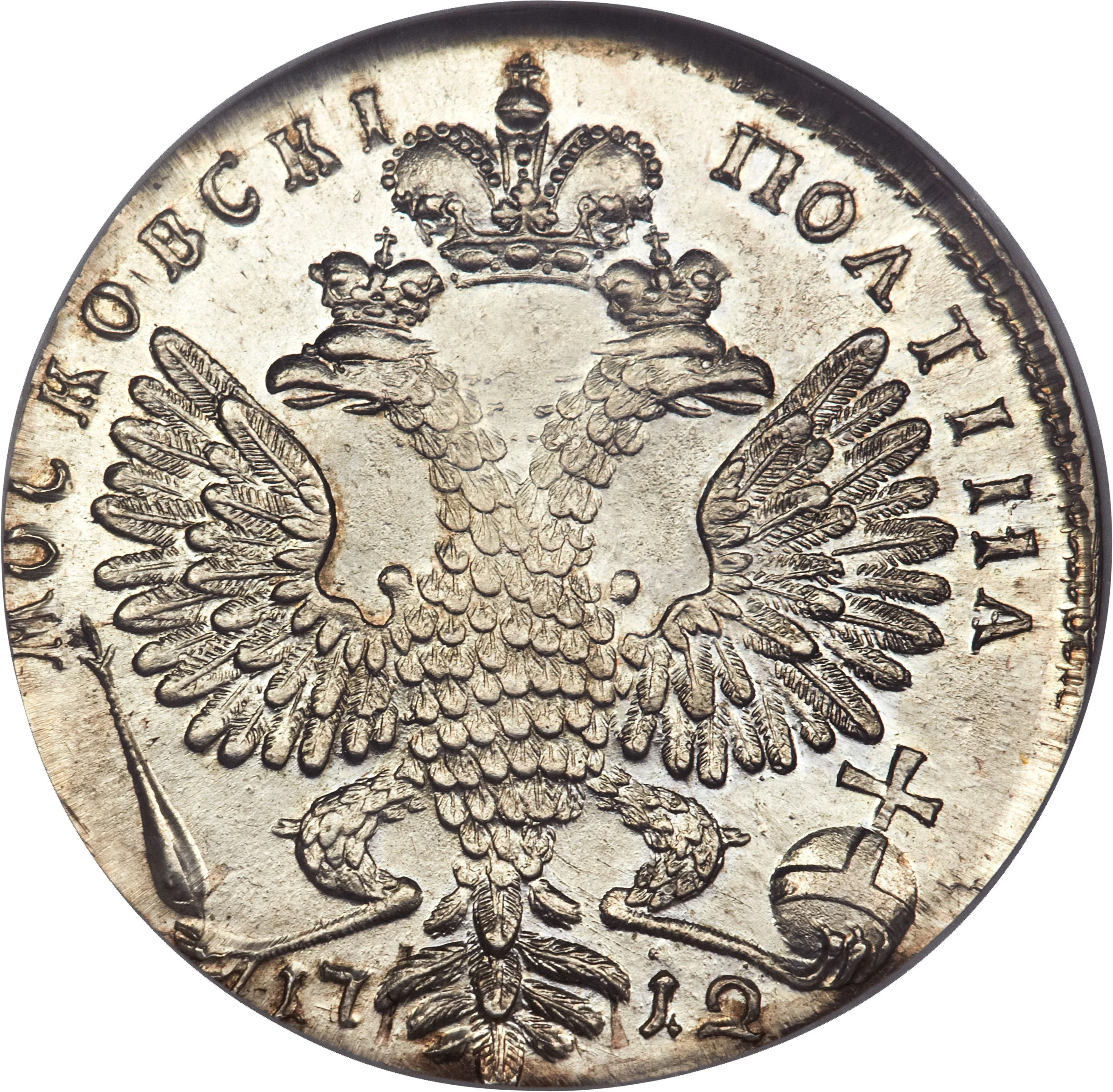
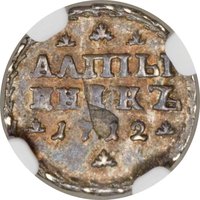
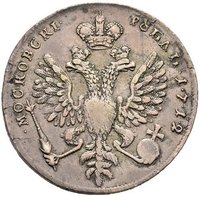
Reverse
Description:
Crowned two-headed eagle; denomination and date.
Inscription:
МОСКОВСКI ПОЛТIНА
17 12
17 12
Script: Cyrillic
Edge
Plain
Mintings
| Year | Mint Mark | Mintage | Quality | Collection |
|---|---|---|---|---|
| 1712 | — | — | ||
| 1712 | — | — | BU |
Historical background
In 1712, the Russian Empire's currency system was in a state of profound transition, heavily shaped by the fiscal demands of the Great Northern War (1700-1721). Tsar Peter the Great's ambitious military and modernization projects created an enormous strain on the state treasury. To finance his new army, navy, and the construction of St. Petersburg, the government resorted to debasement—reducing the silver content in coins while maintaining their face value. The primary silver coin, the kopeck and its multiples, saw its weight and fineness steadily decline, leading to inflation and a loss of public trust in the coinage.
The system itself was archaic and cumbersome. The basic unit was the silver kopeck, with 100 kopecks making one ruble, but the ruble existed only as a unit of account; no large silver ruble coin was minted at this time. Instead, the main circulating coins were small, irregularly shaped dengas (half-kopeck) and kopecks, often minted from flattened wire, making them crude and easy to clip. Alongside these, large copper coins, the polushka (¼ kopeck) and denga, were issued in massive quantities from 1700 onward as a form of war finance, effectively creating a forced, inflationary tax on the population.
This period was one of experimentation and strain, setting the stage for Peter's later monetary reforms. The chaotic mix of debased silver and bulky copper coinage caused market instability and hardship. Recognizing the problems, Peter had already begun planning a comprehensive overhaul, which would culminate after the war in the 1718-1724 reforms. These later reforms introduced a decimal-based system, regulated coin weights, and finally minted the silver ruble as a physical coin, laying the foundation for a more modern monetary economy in Russia.
The system itself was archaic and cumbersome. The basic unit was the silver kopeck, with 100 kopecks making one ruble, but the ruble existed only as a unit of account; no large silver ruble coin was minted at this time. Instead, the main circulating coins were small, irregularly shaped dengas (half-kopeck) and kopecks, often minted from flattened wire, making them crude and easy to clip. Alongside these, large copper coins, the polushka (¼ kopeck) and denga, were issued in massive quantities from 1700 onward as a form of war finance, effectively creating a forced, inflationary tax on the population.
This period was one of experimentation and strain, setting the stage for Peter's later monetary reforms. The chaotic mix of debased silver and bulky copper coinage caused market instability and hardship. Recognizing the problems, Peter had already begun planning a comprehensive overhaul, which would culminate after the war in the 1718-1724 reforms. These later reforms introduced a decimal-based system, regulated coin weights, and finally minted the silver ruble as a physical coin, laying the foundation for a more modern monetary economy in Russia.
✨ Legendary