

1 Mangir – Ottoman Empire
Turkey
Context
Year: 1716
Islamic (Hijri) Year: 1128
Country: Turkey 
Issuer: Ottoman Empire
Ruler: Ahmed III
Currency:
(1688—1844)
Demonetized: Yes
Material
References
KM: #Click to copy to clipboard133.1
Numista: #268867
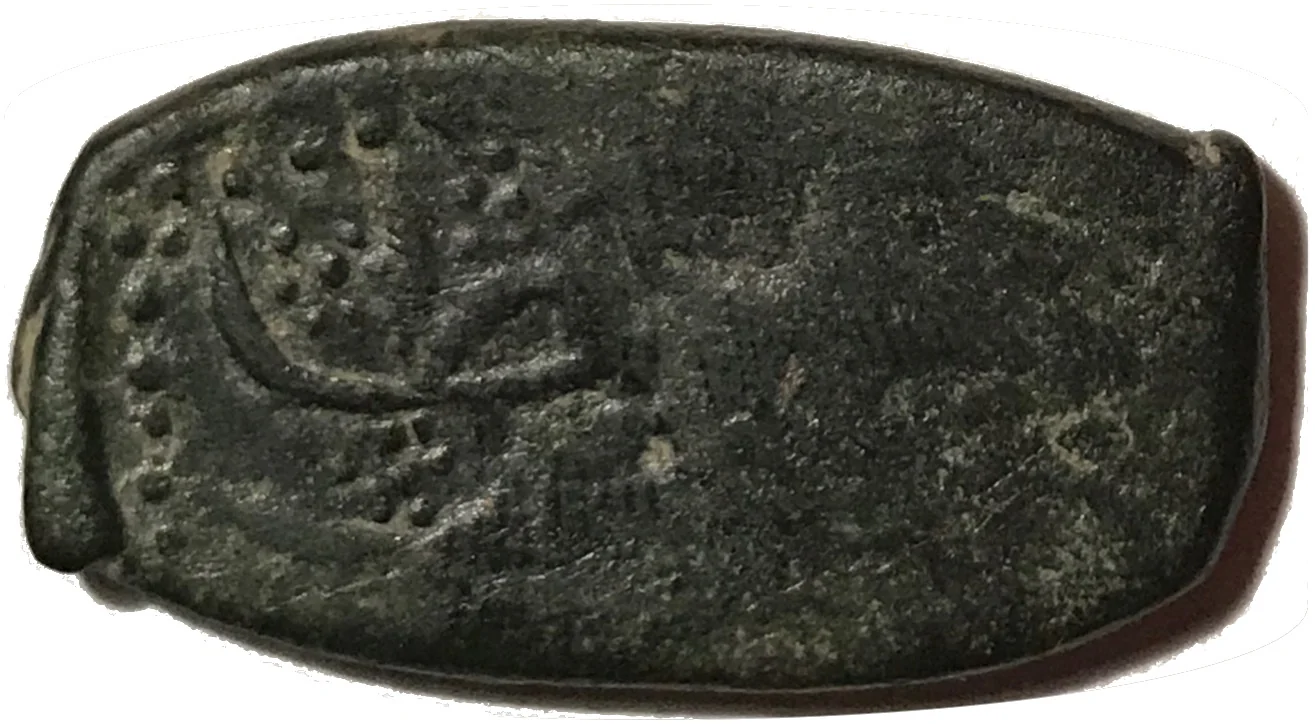
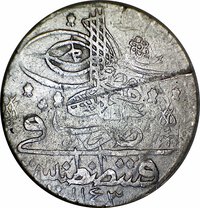
Obverse
Inscription:
سلطان
احمد
بن محمد خان
١١٢٨
احمد
بن محمد خان
١١٢٨
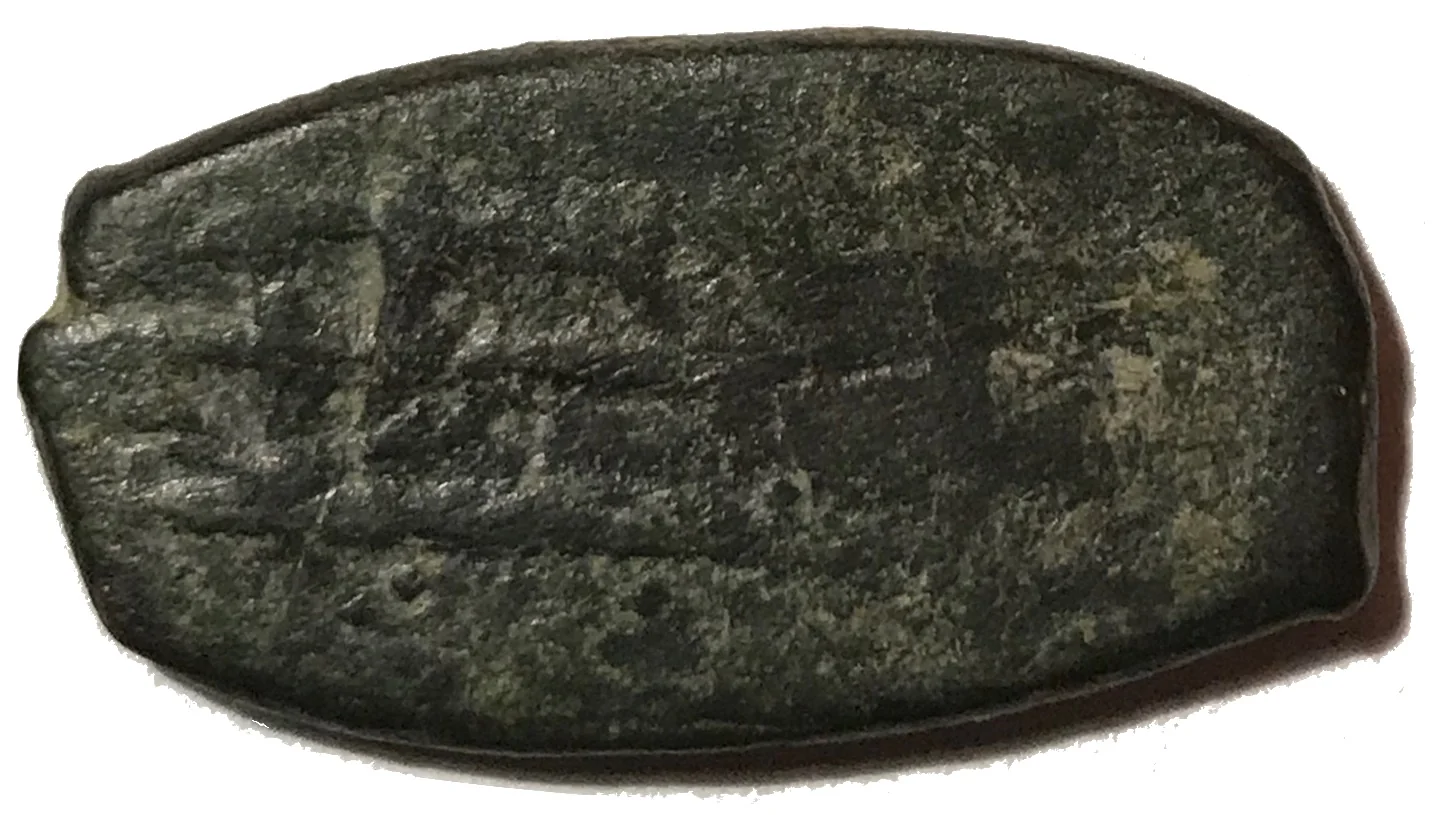
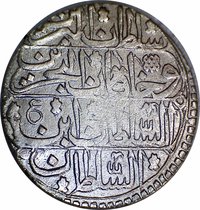
Reverse
Inscription:
عز
نصره
ضرب
بدليس
نصره
ضرب
بدليس
Edge
Plain
Mints
| Name | Mark |
|---|---|
| Bidlis | — |
Mintings
| Year | Mint Mark | Mintage | Quality | Collection |
|---|---|---|---|---|
| 1716 | — | — |
Historical background
In 1716, the Ottoman Empire's currency system was under significant strain, a legacy of the prolonged and costly wars of the late 17th century, particularly the disastrous conflict with the Holy League (1683-1699). The empire had been forced to devalue its primary silver coin, the akçe, to such an extent that it had become virtually defunct for large-scale transactions. In its place, the Ottoman state had come to rely heavily on the kuruş (or piastre), a larger silver coin modeled on European thalers, and the gold sultani. However, chronic budget deficits, driven by military spending and a rigid fiscal system, led to repeated debasements. The state would recall coins, re-mint them with reduced precious metal content, and seize the difference as profit, a practice known as tağşiş. This eroded public trust and caused severe price inflation and market instability.
The monetary landscape was further complicated by the widespread circulation of a vast array of foreign coins within the empire's borders. European silver thalers (especially the Dutch leeuwendaalder and Austrian Conventionsthaler), Venetian ducats, and Persian currencies circulated freely alongside official Ottoman issues, often preferred for their reliable silver content. This effectively meant the Ottoman economy was partially "dollarized," with foreign specie setting a de facto standard that highlighted the weakness of the debased domestic coinage. The government's attempts to control exchange rates between these myriad coins often failed, creating a chaotic environment for both domestic trade and international commerce.
The year 1716 itself falls during the Ottoman-Venetian-Austrian War (1714-1718), a conflict that placed renewed fiscal pressure on the imperial treasury. While major monetary reforms would not be attempted until the 1720s under the Grand Vizier Nevşehirli Damat İbrahim Pasha, the conditions of 1716 exemplify a period of profound monetary crisis. The state's reliance on debasement as a short-term fiscal fix undermined the very foundation of economic stability, creating a system plagued by uncertainty, where the intrinsic value of a coin could differ drastically from its face value, and where foreign money was often more trusted than that issued by the Sultan himself.
The monetary landscape was further complicated by the widespread circulation of a vast array of foreign coins within the empire's borders. European silver thalers (especially the Dutch leeuwendaalder and Austrian Conventionsthaler), Venetian ducats, and Persian currencies circulated freely alongside official Ottoman issues, often preferred for their reliable silver content. This effectively meant the Ottoman economy was partially "dollarized," with foreign specie setting a de facto standard that highlighted the weakness of the debased domestic coinage. The government's attempts to control exchange rates between these myriad coins often failed, creating a chaotic environment for both domestic trade and international commerce.
The year 1716 itself falls during the Ottoman-Venetian-Austrian War (1714-1718), a conflict that placed renewed fiscal pressure on the imperial treasury. While major monetary reforms would not be attempted until the 1720s under the Grand Vizier Nevşehirli Damat İbrahim Pasha, the conditions of 1716 exemplify a period of profound monetary crisis. The state's reliance on debasement as a short-term fiscal fix undermined the very foundation of economic stability, creating a system plagued by uncertainty, where the intrinsic value of a coin could differ drastically from its face value, and where foreign money was often more trusted than that issued by the Sultan himself.
✨ Legendary