

1 Thaler (University of Helmstedt) – Brunswick-Lüneburg-Celle
Circulating commemorative coins
Commemoration: 100th Anniversary of the University of Helmstedt
Germany
Context
Year: 1676
Country: Germany 
Issuer: Brunswick-Lüneburg-Celle
Ruler: George William
Currency:
Demonetized: Yes
Material
References
KM: #Click to copy to clipboard302
Numista: #267972
Value
Bullion value: $83.23
Obverse
Description:
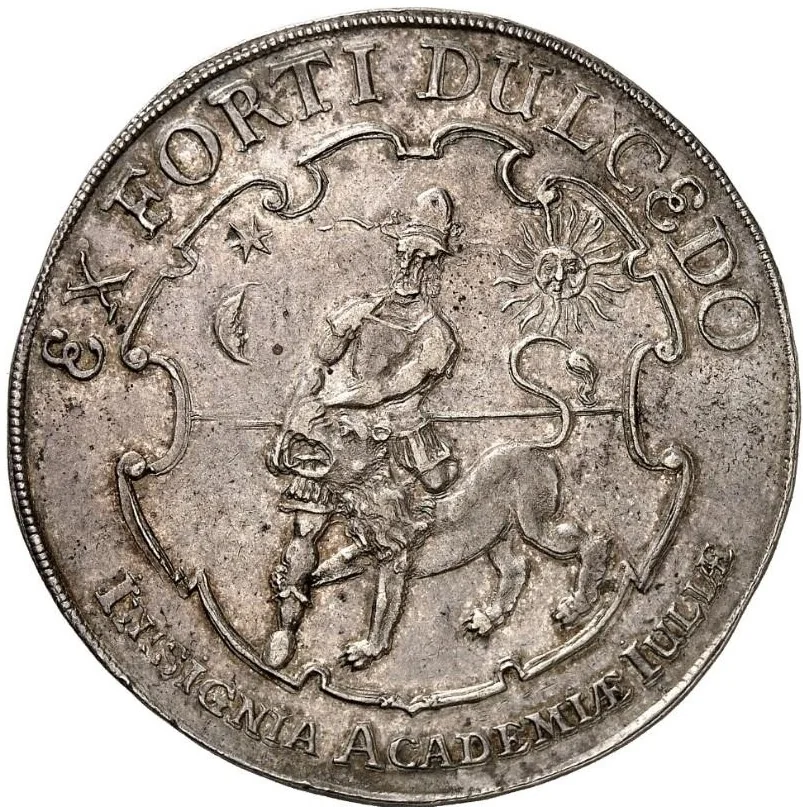
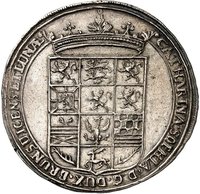
Samson fights lion in frame.
Inscription:
EX FORI DULCEDO
INSIGNIA ACADEMIAE IULIAE
INSIGNIA ACADEMIAE IULIAE
Script: Latin
Reverse
Description:
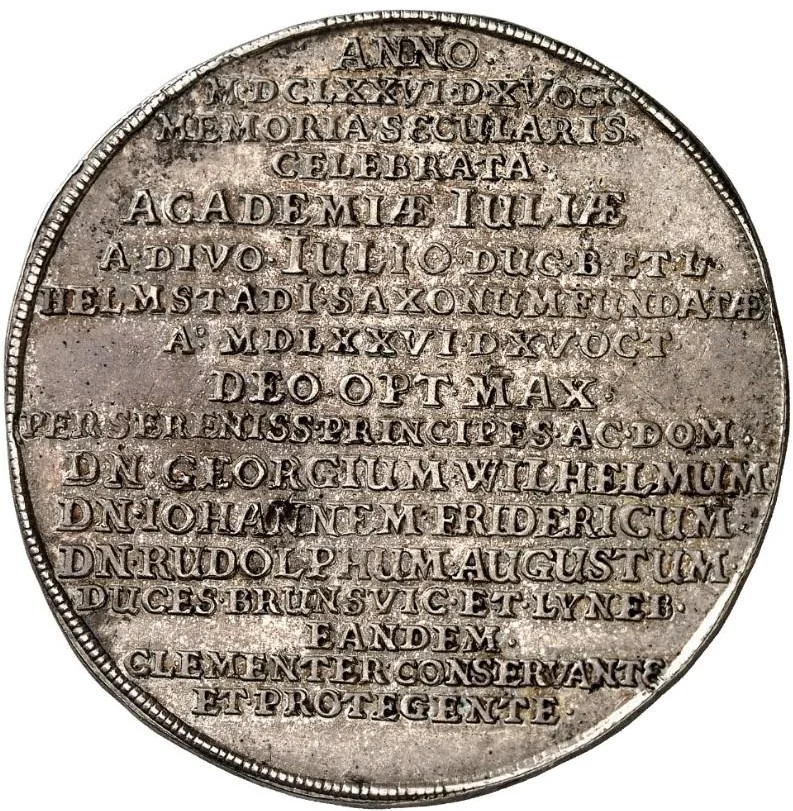
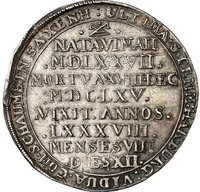
17-line dated inscription
Inscription:
ANNO
MDCLXXVI DXV OCT
MEMORIA SECULARIS
CELEBRATA
ACADEMIAE IULIAE
A DIVO IULIO DUG B ET L
HELMSTAD I SAXONUM FUNDATAE
A MDLXXVI DXV OCT
DEO OPT MAX
PER SERENISS PRINCIPE S AC DOM
D N GEORGIUM WILHELMUM
D N IOHANNEM FRIDERICUM
D N RUDOLPHUM AUGUSTUM
DUCES BRUNSVIC ET LVNEB
EANDEM
CLEMENTER CONSERVANTE
ET PROTEGENTE
MDCLXXVI DXV OCT
MEMORIA SECULARIS
CELEBRATA
ACADEMIAE IULIAE
A DIVO IULIO DUG B ET L
HELMSTAD I SAXONUM FUNDATAE
A MDLXXVI DXV OCT
DEO OPT MAX
PER SERENISS PRINCIPE S AC DOM
D N GEORGIUM WILHELMUM
D N IOHANNEM FRIDERICUM
D N RUDOLPHUM AUGUSTUM
DUCES BRUNSVIC ET LVNEB
EANDEM
CLEMENTER CONSERVANTE
ET PROTEGENTE
Script: Latin
Edge
Categories
| Sport> Boxing or wrestling |
Mintings
| Year | Mint Mark | Mintage | Quality | Collection |
|---|---|---|---|---|
| 1676 | — | — |
Historical background
In 1676, the Duchy of Brunswick-Lüneburg, specifically the Principality of Celle under Duke George William, was entangled in the complex and debilitating monetary chaos that plagued the Holy Roman Empire in the 17th century. The primary issue was the proliferation of debased coinage, particularly the Kipper- und Wipperzeit inflation crisis of the early 1620s, whose aftereffects still lingered. While the worst speculation had passed, a fragmented imperial monetary system allowed numerous states and cities to issue their own coins, leading to a chronic circulation of underweight and inferior specie. For a commercially active state like Celle, located on important trade routes, this created constant uncertainty in daily transactions and hindered reliable taxation and state finance.
Duke George William attempted to bring order through regional agreements, most notably the Zinnaische Münzvertrag of 1667 and the subsequent Leipziger Münzfuß of 1670. These treaties, negotiated with other major Saxon and Brunswick territories, aimed to standardize the Reichsthaler and Groschen by setting definitive silver content and exchange rates. In practice, however, adherence was uneven. By 1676, the system was under strain as participants, including Celle, faced fiscal pressures from maintaining armies and lavish courts, creating temptation to subtly deviate from the standards for short-term gain.
Consequently, the currency situation in Brunswick-Lüneburg-Celle in 1676 was one of fragile and enforced standardization. The duchy operated within the Leipziger Münzfuß framework, which provided a nominal baseline for commerce with key neighbors like Brandenburg and Saxony. Yet the stability was precarious, dependent on the duke's continued commitment to the treaty amidst the constant influx of foreign coins and the underlying economic incentives for debasement. The monetary landscape was thus a battleground between the growing mercantilist desire for a stable currency to foster trade and the age-old fiscal expedient of coin manipulation to fill state coffers.
Duke George William attempted to bring order through regional agreements, most notably the Zinnaische Münzvertrag of 1667 and the subsequent Leipziger Münzfuß of 1670. These treaties, negotiated with other major Saxon and Brunswick territories, aimed to standardize the Reichsthaler and Groschen by setting definitive silver content and exchange rates. In practice, however, adherence was uneven. By 1676, the system was under strain as participants, including Celle, faced fiscal pressures from maintaining armies and lavish courts, creating temptation to subtly deviate from the standards for short-term gain.
Consequently, the currency situation in Brunswick-Lüneburg-Celle in 1676 was one of fragile and enforced standardization. The duchy operated within the Leipziger Münzfuß framework, which provided a nominal baseline for commerce with key neighbors like Brandenburg and Saxony. Yet the stability was precarious, dependent on the duke's continued commitment to the treaty amidst the constant influx of foreign coins and the underlying economic incentives for debasement. The monetary landscape was thus a battleground between the growing mercantilist desire for a stable currency to foster trade and the age-old fiscal expedient of coin manipulation to fill state coffers.
✨ Legendary