

1 Ducat – Aachen
Germany
Context
Year: 1634
Country: Germany 
Issuer: Aachen
Period:
(1166—1798)
Ruler: Ferdinand II
Currency:
(1504—1798)
Demonetized: Yes
Material


References
KM: #Click to copy to clipboard18
Numista: #267478
Value
Bullion value: $573.62
Obverse
Description:
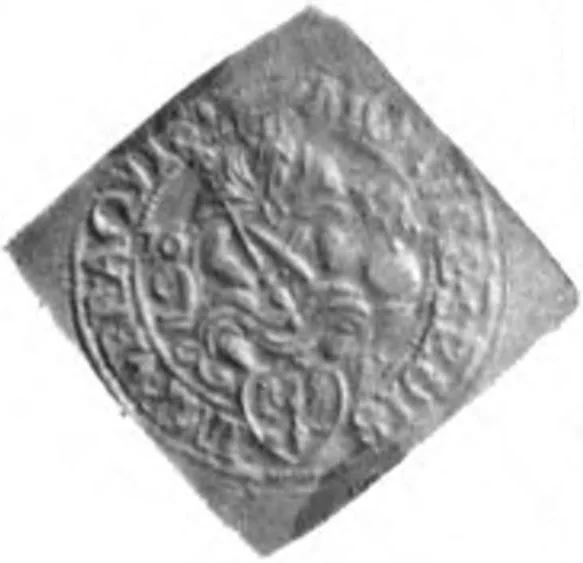
Enthroned Charlemagne flanking date, city arms beneath.
Inscription:
MO AV RE SEDIS IMP VRB AQVIS
1634
1634
Reverse
Description:
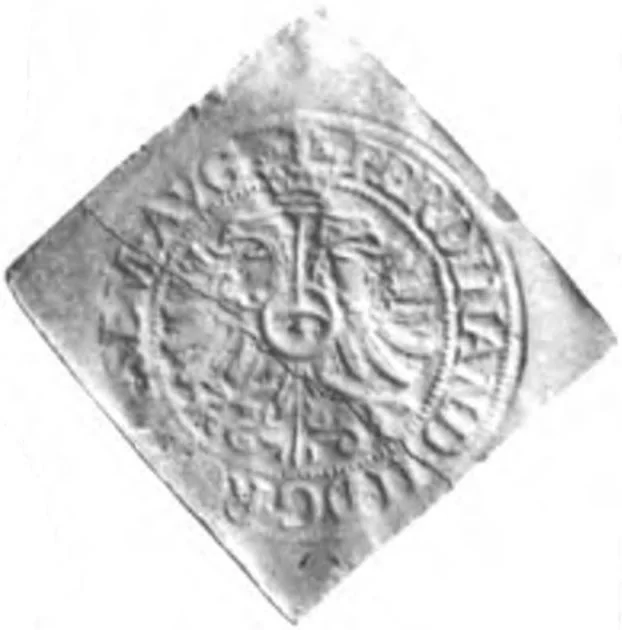
Imperial eagle with crown, orb on breast, titles of Ferdinand II.
Inscription:
FERDINAND II D G RO IMP SEM AVG
Edge
Mintings
| Year | Mint Mark | Mintage | Quality | Collection |
|---|---|---|---|---|
| 1634 | — | — |
Historical background
In 1634, the Free Imperial City of Aachen, like much of the Holy Roman Empire, was mired in the profound economic and monetary chaos of the Thirty Years' War. The city’s official currency, the Aachen Reichsthaler, was theoretically tied to the imperial monetary standards set by the Reichsmünzordnung. However, the practical reality was a fragmented and unstable circulation of countless foreign and debased coins. Soldiers from all warring factions—Imperial, Spanish, Swedish, and French—flooded the region, paying for supplies and garrison costs with their own often inferior currencies, from Spanish Reales to Swedish Riksdaler, further polluting the local money supply.
This period saw severe Kipper- und Wipperzeit (clipping and culling) inflation, a crisis that had peaked in the early 1620s but whose effects lingered. While the worst speculative debasement was over, confidence in coinage remained low. Merchants and money-changers in Aachen’s market had to constantly evaluate the actual silver content of coins, as the face value rarely matched the intrinsic metal value. The city council struggled to maintain monetary order, issuing ordinances against the circulation of clipped or foreign "bad money," but enforcement was nearly impossible amidst the military and political upheaval.
Consequently, Aachen’s economy in 1634 functioned on a precarious dual system: official accounting in Reichsthalers for civic matters and long-distance trade, while daily transactions were conducted through a bewildering array of physical coins, with values negotiated at exchange tables. This monetary instability crippled commerce, encouraged hoarding of good silver, and exacerbated the hardship for Aachen’s citizens, who were already burdened by war taxes, billeting, and the threat of siege or plague, making the simple act of buying bread a complex financial calculation.
This period saw severe Kipper- und Wipperzeit (clipping and culling) inflation, a crisis that had peaked in the early 1620s but whose effects lingered. While the worst speculative debasement was over, confidence in coinage remained low. Merchants and money-changers in Aachen’s market had to constantly evaluate the actual silver content of coins, as the face value rarely matched the intrinsic metal value. The city council struggled to maintain monetary order, issuing ordinances against the circulation of clipped or foreign "bad money," but enforcement was nearly impossible amidst the military and political upheaval.
Consequently, Aachen’s economy in 1634 functioned on a precarious dual system: official accounting in Reichsthalers for civic matters and long-distance trade, while daily transactions were conducted through a bewildering array of physical coins, with values negotiated at exchange tables. This monetary instability crippled commerce, encouraged hoarding of good silver, and exacerbated the hardship for Aachen’s citizens, who were already burdened by war taxes, billeting, and the threat of siege or plague, making the simple act of buying bread a complex financial calculation.

✨ Legendary