

1 Groat – Principality of Catalonia
Spain
Context

Material
Diameter: 20 mm
Weight: 2.9 g
Silver weight: 2.70 g
Shape: Irregular round
Composition: 93.1% Silver
Magnetic: No
Technique: Hammered
References
KM: #Click to copy to clipboard28
Numista: #110658
Value
Bullion value: $7.57
Obverse
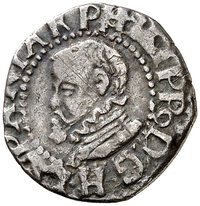
Description:
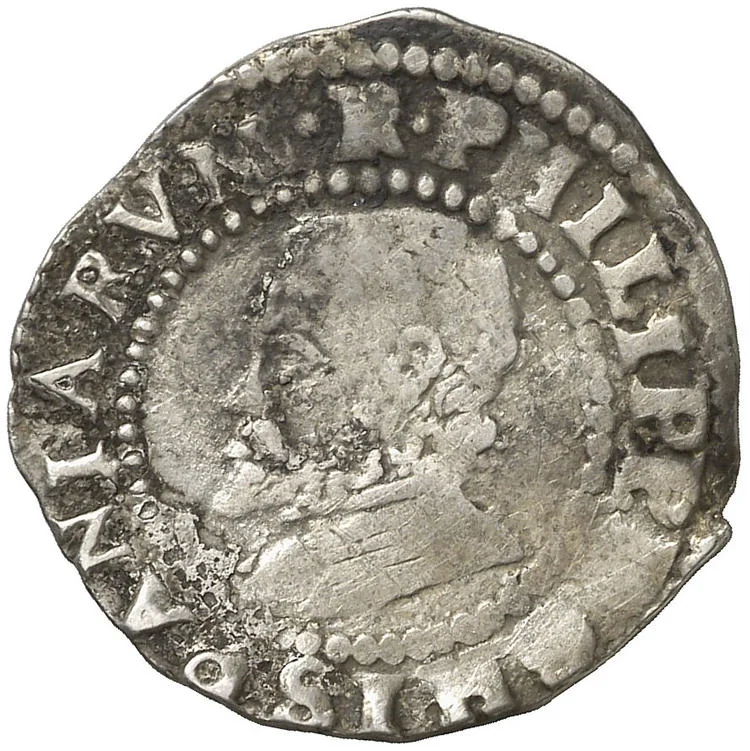
Bust left, legend within beaded circles.
Inscription:
PHILIPP9 D·G·HISPANIARVM·R·
Script: Latin
Reverse
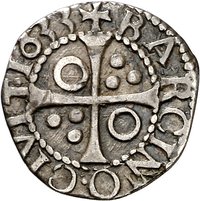
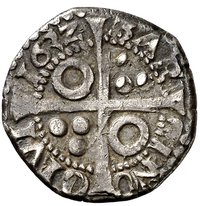
Description:
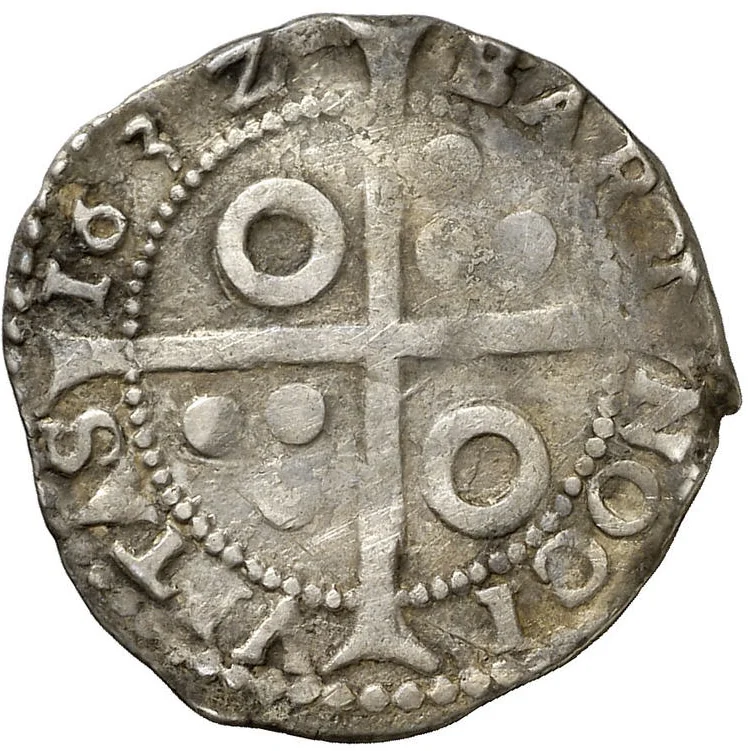
Cross with annulet in first and fourth quarters, three bezants in second and third. Legend within beaded circle.
Inscription:
BARCINO CIVITAS 163Z
Script: Latin
Edge
Mints
| Name | Mark |
|---|---|
| Barcelona Mint / La Seca | — |
Mintings
| Year | Mint Mark | Mintage | Quality | Collection |
|---|---|---|---|---|
| 1630 | — | — | ||
| 1632 | — | — | ||
| 1633 | — | — | ||
| 1635 | — | — | ||
| 1636 | — | — |
Historical background
In 1630, the Principality of Catalonia operated within a complex and strained monetary system, caught between local traditions and the fiscal demands of the Spanish Crown. As a territory of the Crown of Aragon with its own constitutional laws (constitucions), Catalonia minted its own currency at the Barcelona mint, primarily the croat (a silver coin) and the sou, which was tied to the local accounting system of lliures, sous, and diners. However, this system was deeply entangled with the broader, struggling currency of the Spanish Habsburg monarchy, particularly the ubiquitous silver real and the increasingly prevalent and destabilizing vellón—a debased copper coinage.
The period was marked by a severe monetary crisis that had engulfed the entire Spanish Empire. To finance endless wars, the Crown in Madrid had dramatically increased the minting of pure copper vellón coinage, severing its link to intrinsic silver value. This led to rampant inflation, price volatility, and a flight of good silver currency out of circulation (Gresham's Law). While Catalonia defended its right to control its own mint, it could not isolate itself from this flood of Castilian copper, which disrupted local commerce and created widespread distrust in the currency.
This monetary instability exacerbated the already tense political relationship between the Catalan institutions, the Generalitat and Consell de Cent of Barcelona, and the government of King Philip IV and his minister, the Count-Duke of Olivares. The Crown's simultaneous demands for greater financial contributions for its European wars, coupled with the economic chaos caused by its monetary policy, sowed deep resentment. The currency situation of 1630 was therefore not merely an economic issue but a key point of constitutional and political friction, foreshadowing the greater conflicts that would erupt in the Catalan Revolt (Guerra dels Segadors) a decade later.
The period was marked by a severe monetary crisis that had engulfed the entire Spanish Empire. To finance endless wars, the Crown in Madrid had dramatically increased the minting of pure copper vellón coinage, severing its link to intrinsic silver value. This led to rampant inflation, price volatility, and a flight of good silver currency out of circulation (Gresham's Law). While Catalonia defended its right to control its own mint, it could not isolate itself from this flood of Castilian copper, which disrupted local commerce and created widespread distrust in the currency.
This monetary instability exacerbated the already tense political relationship between the Catalan institutions, the Generalitat and Consell de Cent of Barcelona, and the government of King Philip IV and his minister, the Count-Duke of Olivares. The Crown's simultaneous demands for greater financial contributions for its European wars, coupled with the economic chaos caused by its monetary policy, sowed deep resentment. The currency situation of 1630 was therefore not merely an economic issue but a key point of constitutional and political friction, foreshadowing the greater conflicts that would erupt in the Catalan Revolt (Guerra dels Segadors) a decade later.
✨ Legendary