

1 Groat – Principality of Catalonia
Spain
Context


Material
Diameter: 20 mm
Weight: 3.2 g
Silver weight: 2.98 g
Shape: Irregular round
Composition: 93.1% Silver
Magnetic: No
Technique: Hammered
References
KM: #Click to copy to clipboard4
Numista: #110657
Value
Bullion value: $8.35
Obverse
Description:
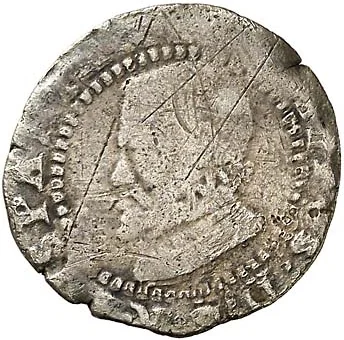
Bust left, legend within beaded circles.
Inscription:
PHILIPP9·D·G·HISPANIA·R·
Script: Latin
Reverse
Description:
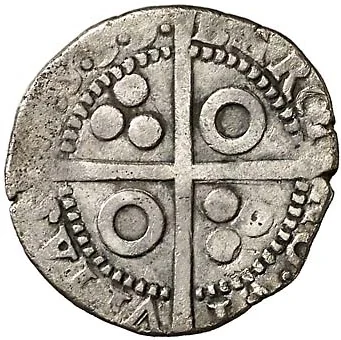
Cross divides legend, annulet in first and fourth quarters, three bezants in second and third. Legend between beaded circles.
Inscription:
BARCINO CIVITAS 1599
Script: Latin
Edge
Mints
| Name | Mark |
|---|---|
| Barcelona Mint / La Seca | — |
Mintings
| Year | Mint Mark | Mintage | Quality | Collection |
|---|---|---|---|---|
| 1599 | — | — | ||
| 1600 | — | — | ||
| 1607 | — | — | ||
| 1609 | — | — | ||
| 1610 | — | — | ||
| 1620 | — | — | ||
| 1621 | — | — |
Historical background
In 1599, the Principality of Catalonia, a territory within the Crown of Aragon under King Philip III of Spain, faced significant monetary instability rooted in the broader crisis of the Spanish monarchy. The crown's relentless spending on its European wars, particularly the ongoing Eighty Years' War in the Netherlands, led to repeated debasements of the central Castilian currency. While Catalonia maintained its own distinct monetary system, it was not insulated from these pressures. The influx of increasingly poor-quality Castilian reales and billon coins into Catalonia created a severe problem of "bad money driving out good," as described by Gresham's Law. Catalans hoarded older, higher-value Catalan and foreign coins, further disrupting local commerce and causing inflation in everyday transactions.
The Catalan authorities, the Generalitat and the Consell de Cent of Barcelona, responded with protective measures that highlighted the principality's autonomous fiscal character. They issued repeated proclamations (cridas) attempting to fix exchange rates and control the circulation of foreign and debased coinage, often banning or taxing the entry of specific Castilian issues. These efforts were largely reactive and struggled against powerful market forces and the sheer volume of poor money. The situation was exacerbated by periodic liquidity crises, as the physical shortage of trustworthy coinage hampered trade and credit, creating tension between the need for a stable medium of exchange and the economic realities imposed by the crown's imperial policies.
This monetary confusion occurred against a backdrop of social strain, including harvest failures and the lingering threat of banditry (bandolerisme). The currency instability effectively acted as a hidden tax, eroding purchasing power and fueling discontent among artisans, merchants, and peasants. It underscored the growing economic and political divergence between Catalonia and the Castilian center of the monarchy, a friction that would intensify over the coming decades. Thus, the currency situation of 1599 was not merely a financial issue but a symptom of the deeper structural conflicts within the Habsburg composite monarchy.
The Catalan authorities, the Generalitat and the Consell de Cent of Barcelona, responded with protective measures that highlighted the principality's autonomous fiscal character. They issued repeated proclamations (cridas) attempting to fix exchange rates and control the circulation of foreign and debased coinage, often banning or taxing the entry of specific Castilian issues. These efforts were largely reactive and struggled against powerful market forces and the sheer volume of poor money. The situation was exacerbated by periodic liquidity crises, as the physical shortage of trustworthy coinage hampered trade and credit, creating tension between the need for a stable medium of exchange and the economic realities imposed by the crown's imperial policies.
This monetary confusion occurred against a backdrop of social strain, including harvest failures and the lingering threat of banditry (bandolerisme). The currency instability effectively acted as a hidden tax, eroding purchasing power and fueling discontent among artisans, merchants, and peasants. It underscored the growing economic and political divergence between Catalonia and the Castilian center of the monarchy, a friction that would intensify over the coming decades. Thus, the currency situation of 1599 was not merely a financial issue but a symptom of the deeper structural conflicts within the Habsburg composite monarchy.

✨ Legendary