

½ Groat – Principality of Catalonia
Spain
Context


Material
Diameter: 16 mm
Weight: 1.6 g
Silver weight: 1.49 g
Shape: Irregular round
Composition: 93.1% Silver
Magnetic: No
Technique: Hammered
References
KM: #Click to copy to clipboard3
Numista: #110642
Value
Bullion value: $4.26
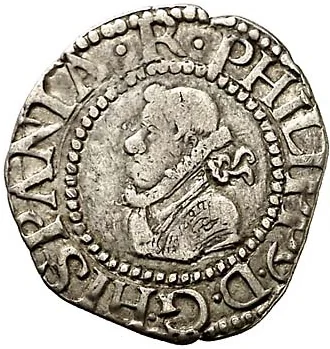
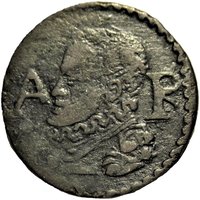
Obverse
Description:
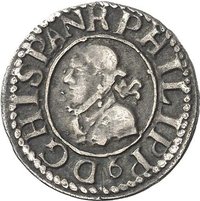
Bust left, legend within beaded circles.
Inscription:
PHILIPP9·D·G·HISPANIA·R·
Script: Latin
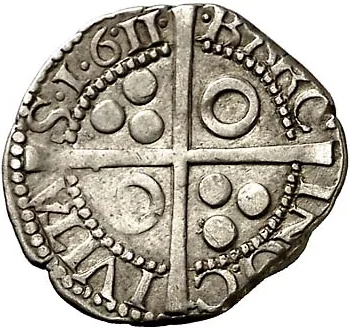
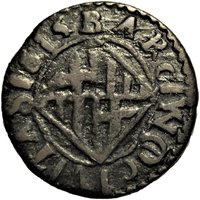
Reverse
Description:
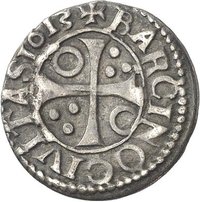
Cross divides legend, annulet in second and third quarters, three bezants in first and fourth. Legend between beaded circles.
Inscription:
BARCINO CIVITAS 1611
Script: Latin
Edge
Mints
| Name | Mark |
|---|---|
| Barcelona Mint / La Seca | — |
Mintings
| Year | Mint Mark | Mintage | Quality | Collection |
|---|---|---|---|---|
| 1611 | — | — | ||
| 1614 | — | — | ||
| 1620 | — | — |
Historical background
In 1611, the Principality of Catalonia, a constituent territory of the Spanish Monarchy under King Philip III, operated within a complex and strained monetary system. The principality minted its own distinctive currency, most notably the principat (or silver patacó), which circulated alongside a plethora of foreign coins, particularly Castilian reales and French écus. This created a bimetallic system of gold and silver, but one plagued by frequent fluctuations in value and exchange rates between these different coins, leading to commercial confusion and periodic disputes between the Catalan Corts (parliament) and the royal government in Madrid.
The period was marked by significant inflationary pressures, partly driven by the influx of precious metals from the Americas into Spain, which devalued the currency across the Habsburg domains. Furthermore, the Crown's relentless fiscal demands to fund its extensive European wars led to repeated debasements of the coinage. The royal authority often sought to manipulate the currency to extract short-term revenue, a practice opposed by Catalan institutions which viewed sound money as essential for economic stability. This tension was a persistent undercurrent in the political relationship between Barcelona and Madrid.
Consequently, the monetary situation in 1611 was one of instability and contention. Local merchants and the Generalitat (Catalan government) struggled to maintain reliable standards for commerce and public finance amidst royal interventions. The lack of a uniform, trusted currency hindered economic activity and fueled regional grievances, embedding the currency question within the broader struggle over Catalonia's fiscal autonomy and the centralizing policies of the Spanish Crown—a conflict that would intensify dramatically in the coming decades.
The period was marked by significant inflationary pressures, partly driven by the influx of precious metals from the Americas into Spain, which devalued the currency across the Habsburg domains. Furthermore, the Crown's relentless fiscal demands to fund its extensive European wars led to repeated debasements of the coinage. The royal authority often sought to manipulate the currency to extract short-term revenue, a practice opposed by Catalan institutions which viewed sound money as essential for economic stability. This tension was a persistent undercurrent in the political relationship between Barcelona and Madrid.
Consequently, the monetary situation in 1611 was one of instability and contention. Local merchants and the Generalitat (Catalan government) struggled to maintain reliable standards for commerce and public finance amidst royal interventions. The lack of a uniform, trusted currency hindered economic activity and fueled regional grievances, embedding the currency question within the broader struggle over Catalonia's fiscal autonomy and the centralizing policies of the Spanish Crown—a conflict that would intensify dramatically in the coming decades.
✨ Legendary